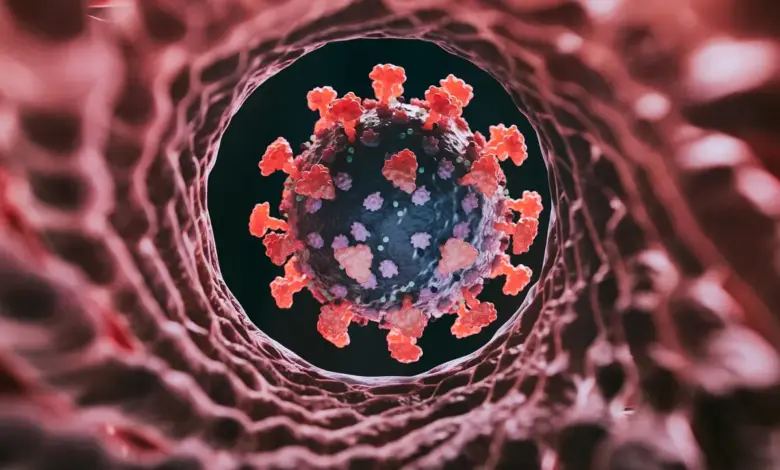
The cicada covid variant is showing low but rising signals in U. S. surveillance, creating an inflection point for public-health monitoring and response.
What Is the Current State of the cicada covid variant?
Federal genomic surveillance has identified the variant officially designated BA. 3. 2 and nicknamed “Cicada. ” The CDC’s Morbidity and Mortality Weekly Report notes that BA. 3. 2 was first detected in South Africa and later identified in the United States through traveler-based surveillance and clinical and wastewater sampling. As detailed in the report, the strain has been detected across multiple countries and in wastewater samples from more than two dozen U. S. states; in sequence data from a defined winter period it represented fewer than 0. 2 percent of sequences.
The Cicada virus stands out for extensive change in its spike protein relative to the strains used in the previous fall vaccines; the CDC noted roughly 70 to 75 mutations in that protein. Laboratory work cited in the CDC report showed the variant can evade antibodies in controlled assays, prompting the agency to call for continued genomic surveillance and observational studies of vaccine and antiviral effectiveness. At the same time, the CDC has not linked the variant to a rise in overall COVID case counts.
What If the Cicada Covid Variant Widens Its Reach?
Trend analysis centers on two constrained facts: BA. 3. 2 shows substantial spike mutations and it is appearing in wastewater and traveler surveillance across many states. Those facts create three realistic pathways.
- Best case: The variant remains a small fraction of infections, with mutations that reduce neutralization in the lab but do not translate to increased transmission or severity in the population. Hospitalizations and deaths remain within the ranges already seen in recent respiratory seasons.
- Most likely: BA. 3. 2 spreads slowly through pockets identified by wastewater and traveler surveillance, partially evades antibody responses, and requires ongoing observational evaluation to measure real-world vaccine and antiviral performance without producing a clear surge in cases immediately.
- Most challenging: The variant increases in prevalence and, combined with seasonal respiratory pressures, contributes to higher hospitalizations. In that scenario, existing immunity from vaccination or prior infection provides reduced protection against infection and some clinical burden increases, prompting intensified surveillance and targeted public-health actions.
What Happens Next — Scenarios, Stakeholders and Actionable Moves
Who wins and who loses will be determined by surveillance strength and clinical impact. Public-health agencies and genomic surveillance programs are advantaged when they can detect early spread through traveler, clinical and wastewater sampling; their ability to translate genomic signals into observational studies of vaccine and antiviral effectiveness will shape response options. Healthcare providers and hospitals will be most at risk in a worsening scenario if respiratory-season pressures rise, given the existing baseline of recent seasonal hospitalizations and deaths cited by the CDC.
Immediate, practical steps are limited to the actions already emphasized in the official report: maintain and expand genomic and wastewater surveillance, carry out observational evaluations of vaccines and antivirals, and monitor clinical indicators such as hospital admissions. Clinical guidance and treatment availability are central levers if real-world effectiveness against BA. 3. 2 proves diminished.
Uncertainty is real. Laboratory antibody escape does not automatically equal greater population harm, and the variant has remained a small share of sequenced viruses so far. But the combination of widespread detections in wastewater, traveler surveillance, and a highly mutated spike protein justifies vigilance rather than complacency.
Readers should expect ongoing updates from public-health authorities and watch local wastewater and clinical surveillance signals; institutions should prioritize genomic sequencing and observational effectiveness studies. Above all, maintain preparedness measures built during recent respiratory seasons and track the trajectory of the cicada covid variant