Xerri suspended for three matches — Tribunal calls blood-wiping act ‘disgraceful’ in shocking verdict

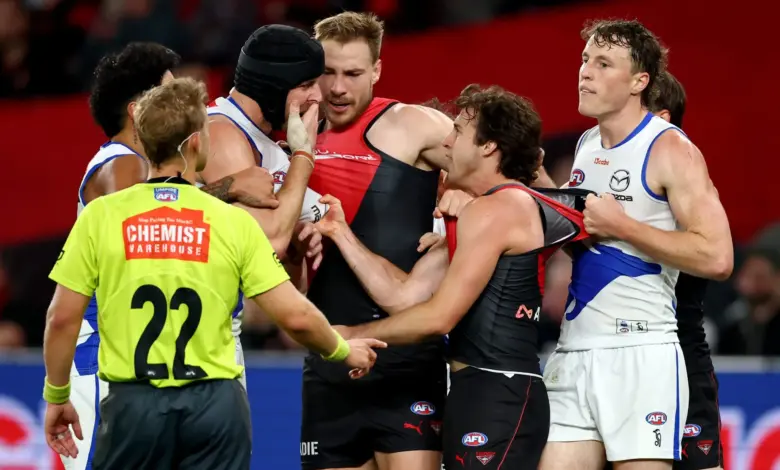
The North Melbourne ruckman Tristan xerri has been handed a three-match suspension after a Tribunal found his action of wiping blood on the face of Essendon’s Andrew McGrath was “disgraceful behaviour. ” The suspension, confirmed at the hearing, follows a guilty plea to a serious misconduct charge and leaves the player facing a spell on the sidelines for upcoming fixtures against Carlton, Brisbane and Richmond.
Xerri suspended for three matches: Tribunal’s reasoning
The Tribunal, chaired by Jeff Gleeson, considered both the act itself and mitigating evidence before landing on a three-match ban. “The intentional act of wiping blood from your nose on to the face of another player is disgraceful behaviour, ” Mr. Gleeson said in his summary. He added that “the blood could quite easily have made contact with McGrath’s mouth, ” framing the conduct as a direct risk to the opponent’s welfare.
North Melbourne entered a guilty plea to the serious misconduct charge but argued for a two-match suspension, pointing to the player’s remorse and previous one-match penalties imposed in separate historical incidents. The AFL sought a three-match suspension, describing the act as involving a “conscious disregard for the other player’s welfare. ” The Tribunal ultimately agreed with that position while noting that xerri’s remorse and remedial steps limited the sanction from being longer.
What happened on-field: the blood-wiping act and immediate fallout
The incident unfolded after xerri suffered a cut to his nose — which he said was caused by a forearm or elbow — and subsequently conceded a 100m penalty in a sequence described as extraordinary. In his evidence, xerri said he was being taunted by Essendon players who accused him of staging for a free kick, and that in a moment of poor judgement he extracted the blood and wiped it on McGrath’s face to demonstrate he was bleeding.
“It’s not right what I did. I’m sorry and sincerely apologise for that, ” xerri told the Tribunal. He admitted he had a “brain fade” and acknowledged he knew he had blood on his fingers when he made contact. The player said he called McGrath the following morning and the pair had a “good conversation, ” and that he had spoken with a doctor to better understand the risks associated with his conduct.
Expert perspectives and tribunal voices
Jeff Gleeson, Tribunal chair, described the conduct as “shocking” and highlighted the health risk posed by the act. His comments anchored the Tribunal’s view that the behaviour crossed a line beyond ordinary on-field provocation.
Justin Graham, North Melbourne representative, argued in mitigation that xerri’s admissions “went beyond what can possibly be discerned from the video and the stills in admitting his conduct, ” framing the plea and remorse as factors that should influence sanction severity. Andrew Woods, representing the AFL, urged a stiffer penalty, pointing to the potential escalation and welfare implications of the conduct.
The Tribunal also examined historical comparisons. It discounted prior cases involving Nathan Buckley and Jeremy Howe where blood was wiped on clothing rather than an opponent’s face, noting the distinction when assessing culpability and sanctioning.
Broader implications and a forward look
The decision signals a firm stance on actions that directly put another player’s health at risk, with the Tribunal emphasising both the intentional nature of the act and the potential for infection or other harm. The matter may also attract post-match review scrutiny, with references made at the hearing to possible further examination of the on-field sequence.
For North Melbourne, the three-match absence removes the ruckman from contests against Carlton, Brisbane and Richmond, a disruption the club must manage while the player reflects on his conduct and completes his suspension. The Tribunal noted that absent sincere remorse and the player’s subsequent steps to educate himself, a longer ban could have been imposed.
Will this sentence recalibrate how on-field provocations are policed and how clubs prepare players for the health and reputational risks of retaliatory acts by individuals like xerri?