The trailer for Drifter, written, directed and starring Sung Kang, lands as a clear love letter to tuner culture and the fast and furious franchise’s street-level roots. Kang’s real-world credentials — notably his 1973 Datsun 240Z nicknamed Fugu Z — combine with a cinematic turn that leans hard on drifting, mentorship and the iconic Toyota AE86. The result is a lean, genre-aware pitch that positions Drifter less as blockbuster bait and more as a potential cult centerpiece.
Fast And Furious Lineage and Tuner Roots
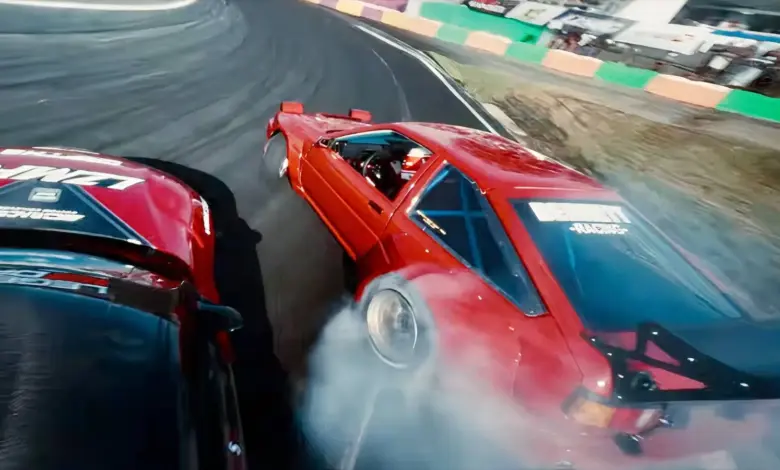
Drifter deliberately references the lineage of the Fast And Furious films through casting and car culture gestures. Sung Kang first appeared as Han in Fast And The Furious: Tokyo Drift and later returned to the franchise in Fast X; that continuity gives him a unique cultural standing to craft a film steeped in the same automotive subculture. On screen, the trailer centers a battered, tuned Toyota AE86 — an unmistakable nod to classic drifting lore and to the cult animated series Initial D — while off screen Kang’s ownership of a 1973 Datsun 240Z called Fugu Z underscores the project’s authenticity.
What the Trailer Reveals: Background and Context
The trailer sets a tight dramatic premise: a solitary racetrack janitor with a gift for drifting is haunted by a tragic past and given a single opportunity to compete at a pro drifting event. The movie description reads: “In a forgotten desert town, a solitary race track janitor with a gift for drifting is haunted by his tragic past. Given a single chance to compete at a pro drifting event, he discovers his raw talent is useless without the one thing he’s always avoided: connection with others. Under a hardened mentor, he must learn to trust his found family and transform his untamed, lonely art into a dangerous dance of partnership, or be consumed and controlled by the past he’s desperate to escape. “
Production details embedded in the trailer material point to authentic drift settings: some drifting scenes were filmed during time slots at the Legends Of Drift event in late August 2025 in New Jersey, while many trailer shots appear to be staged in the Southern California desert, with a track that looks suspiciously like Willow Springs. The Tokyo Auto Salon body kit is noted as an eventual commercial offering, signaling a bridge from on-screen design to real-world aftermarket culture.
Analysis, Expert Perspectives and Global Echoes
The film’s formal choices — mentor-driven training scenes, a lone prodigy arc, and a weathered hero car — align Drifter with the sports-movie formula that made Initial D a template for drifting narratives. The connection to the fast and furious mythos is explicit: Kang’s franchise pedigree gives the movie a built-in constituency while his hands-on involvement as writer and director aims to ensure fidelity to enthusiast detail.
The trailer’s embrace of community over spectacle frames a deliberate creative aim: this is positioned as an indie-spirited car-culture picture rather than a franchise-style tentpole. That positioning informs the biggest trade-off noted in pre-release commentary: the film is unlikely to replicate the mainstream breakout of the original Fast film, but it may secure dedicated, cult-level engagement. Box office outcomes are uncertain; observations in the available material note that a modest financial return would still validate the passion behind the project.
Sung Kang, writer-director-actor, Drifter (film) anchors the enterprise both on screen and off. His personal automotive interests — specifically the Fugu Z 1973 Datsun 240Z — are cited as part of what gives the film credibility within tuner circles. That credibility is further reinforced by the decision to film actual drifting segments at a recognized drifting event and by visible choices in car selection and setting.
Regional and international resonance is possible because drifting is a globally recognized subculture; the film’s references to Initial D and its visible use of an AE86 tune the movie to enthusiasts from multiple markets. At the same time, the production’s desert settings and American event shoots keep its texture grounded in a U. S. -based hand-built scene rather than an imported pastiche.
While analysis here remains tethered to the published trailer and production details, several clear implications emerge: Drifter seeks to translate insider credibility into cinematic narrative, to leverage a known franchise actor’s pedigree, and to convert real-world aftermarket elements — from a Tokyo Auto Salon body kit to the Fugu Z backstory — into audience currency. For fans who follow both the culture and the films, that synthesis is the core promise.
Will Drifter redefine what mainstream audiences expect from car films, or will it instead cement its status as a cult favorite among drift purists and Fast And Furious devotees? The trailer and production notes pose that question plainly, leaving the ultimate measure to audience reception and the film’s performance once it reaches theaters.