Angkrish Raghuvanshi Eyes Growth as Top-Order Batter and Wicketkeeper for KKR — Learning under Nayar the Priority

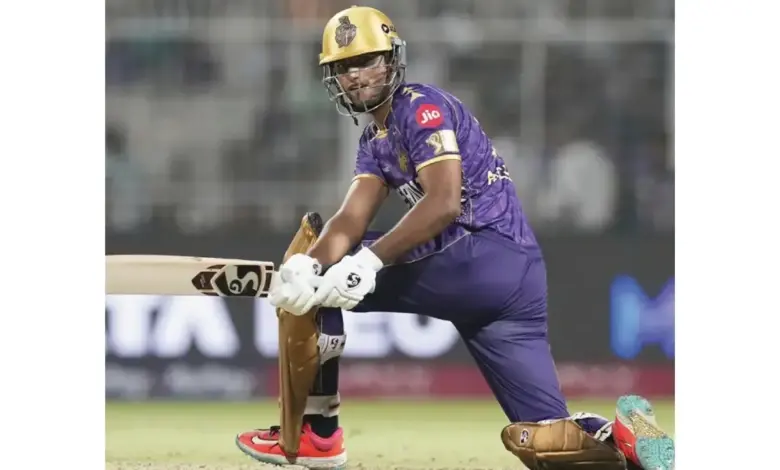
angkrish raghuvanshi has framed the coming months as a personal growth phase: focusing on multiplying his skills as a top-order batter and working on wicketkeeping rather than chasing national selection. The 21-year-old, who featured for Mumbai in the Syed Mushtaq Ali Trophy and the Vijay Hazare Trophy and now figures for Kolkata Knight Riders, says he measures success by team results while adding new dimensions to his game.
Background and context: roster competition and a role in flux
Raghuvanshi arrives at a club environment where wicketkeeping options are plentiful and domestic white-ball exposure was his primary recent pathway. Kolkata Knight Riders list specialist keepers in their squad while Raghuvanshi’s Mumbai white-ball seasons gave him game time in both the Syed Mushtaq Ali Trophy and the Vijay Hazare Trophy. He did not feature much in red-ball fixtures for Mumbai, and he has used limited white-ball tournaments as learning platforms rather than definitive assessments of readiness.
Team composition dynamics are central to why Raghuvanshi is emphasising versatility. In a squad that includes specialist wicketkeepers, his development as a dual-role player — top-order batter plus capable keeper — could expand selection permutations for the coaching staff in the early stages of the competition. He has said repeatedly that his yardstick for performance is team outcomes: “I only judge my performances based on whether the team has won or not, ” a stance that steers attention away from individual milestones toward collective objectives.
Angkrish Raghuvanshi: dual role and learning under Abhishek Nayar
The decision to add wicketkeeping to his skill set came from match needs in domestic T20 cricket: his Mumbai T20 side required him to keep, and he accepted the challenge. He described the experience plainly: “My Mumbai T20 team needed me to keep and so I said, ‘Why not? It’s a new challenge and I enjoyed it a lot and I’ve been practicing it quite a bit and we’ll see what happens with it. ” That practical, game-driven choice underpins his current development plan—deliberate practice on wicketkeeping combined with continued refinement of top-order batting.
Mentorship is a second anchor. With Abhishek Nayar now head coach, Raghuvanshi identifies coaching continuity as a lever for rapid learning. On the coach’s influence he said, “He has a great cricketing mind and (he is) a great person. I have already learned a lot from him and this season will be nothing different. I’ll continue to learn a lot from him and hopefully we win a lot of matches and the tournament together. ” That endorsement signals a working relationship that Raghuvanshi expects to translate into clearer tactical roles and technical tweaks.
Expert perspectives and strategic implications
Angkrish Raghuvanshi, Kolkata Knight Riders and Mumbai keeper-batter, speaks directly about mindset and process: “I don’t really think about that too much. I just think about improving my own game as much as I can… I’m just trying to improve day by day and learn and get as better as I can. ” Those words frame a development-first strategy rather than a selection-driven career plan.
Operationally, that approach changes how coaching staff might view him. A player who prioritises team wins and day-by-day improvement can be slotted into specific roles—middle-phase consolidation, depth as a wicketkeeper, or a surprise top-order call-up—depending on match context. It also affects load management: Raghuvanshi has already experienced an on-field scare when stretchered off after an attempted catch, an event he described as briefly alarming but followed by medical checks and a speedy return to play. That incident reinforces the pragmatic tone he uses when discussing preparation and fitness.
For the team, a multi-capable option eases selection dilemmas in the tournament’s early weeks when combinations are tested and balance is contested. For Raghuvanshi personally, the immediate metric remains team success and continuous improvement rather than external selection benchmarks.
Looking ahead, angkrish raghuvanshi’s stated focus on practice, match-readiness, and learning under a coach with prior professional experience sets a clear developmental path. He is candid about past tournament outcomes for Mumbai—no white-ball silverware this season—and frames those results as fuel for improvement rather than as failure.
Will that mindset translate into a defined role for the team and measurable contributions on the scoreboard? angkrish raghuvanshi’s preparation and stated priorities make him a candidate to influence selection debates internally, even if his public stance remains squarely on self-improvement. The broader question is how versatility, mentorship under Abhishek Nayar, and a team-first approach will reshape his opportunities as the competition unfolds—an evolution worth watching as the season progresses.