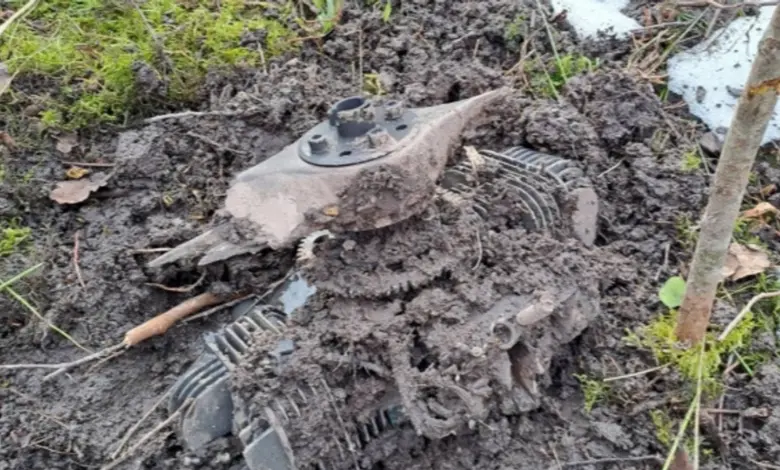
Ukrainian drones crossed into estonia and Latvia overnight, with one striking the chimney of a power plant in Auvere, Estonia, and another exploding in the southern Kraslava region of Latvia. No major damage or injuries were reported, but officials in Tallinn, Riga and Vilnius say the events expose shortcomings in detection, notification and layered air-defence readiness as Ukraine carried out a large operation against Russian ports on the Baltic Sea.
What exactly happened in Estonia and Latvia?
Verified facts: Ukrainian unmanned aerial vehicles entered the airspaces of Estonia and Latvia from Russia overnight. One struck infrastructure — a power plant chimney in Auvere, Estonia — and another crashed and exploded in the Kraslava region of southern Latvia. Estonian Prime Minister Kristen Michal said the attack on the Russian port of Ust-Luga occurred in multiple waves; Estonian security police chief Margo Palloson described the object that hit Estonian territory as “a Ukrainian drone that deviated from its course, which was possibly affected in Russian airspace. ” Latvian President Edgars Rinkēvičs confirmed that the drone that hit Latvian territory was Ukrainian. Latvia’s Defence Minister Andris Spruds cut short a visit to Ukraine and returned home after the incident. Egils Lescinskis, deputy chief of the Latvian Joint Staff, said the drone most likely veered off course or was affected by electromagnetic warfare measures protecting some technically important objects. Lithuanian authorities noted a similar crash in their territory on the same night.
Analysis: The pattern — drones launched in operations against Russian facilities crossing into NATO airspace — highlights how modern long-range unmanned strikes can produce unintended cross-border impacts when navigation or countermeasures alter flight paths. The absence of major damage or injuries in these incidents is a factual mitigating factor, but the physical strikes on allied territory create political and defence-management risks that go beyond damage assessments.
Why are officials warning more incidents are likely and what defence gaps are exposed?
Verified facts: Estonia’s security police chief warned the country was likely to see “more such incidents. ” Egils Lescinskis said that local residents cannot “feel completely safe when military operations are taking place in neighbouring countries. ” The defence ministers of Estonia, Latvia and Lithuania released a joint statement stressing that recent incidents where foreign unmanned aerial vehicles crossed NATO airspace and crashed in the Baltic states demonstrate the need to further strengthen multi-layered air defence. The ministers called for accelerated NATO efforts to reinforce detection and interception capabilities and urged targeted increases in EU defence funding for long-term measures such as Eastern Flank Watch and the European Counter-UAV Initiative.
Analysis: Officials connect tactical realities — navigation failure, jamming and electronic warfare — with strategic vulnerabilities along NATO’s eastern flank. The call for “multi-layered” air defence implies gaps at several levels: early detection, identification, interception and cross-border notification. The ministers’ emphasis on keeping and strengthening NATO aircraft and air-defence systems in the region signals reliance on alliance assets while national capabilities are expanded.
Who must act, and what accountability is needed?
Verified facts: National leaders and defence officials in the three Baltic states have prioritized development of air-defence systems. The joint ministerial statement said that, while investigations into the circumstances are underway, the countries remain steadfast in supporting Ukraine’s right to self-defence and that allies must urgently reinforce capabilities required for effective detection and interception of unmanned aerial vehicles. Lithuania’s foreign minister highlighted the need for all countries to ensure airspace security and to inform neighbours when risks are apparent.
Analysis: The immediate policy imperative is twofold: clarify notification protocols between operating states and affected neighbours, and accelerate procurement and deployment of multi-layered counter-UAV systems to reduce the chance that defensive or offensive actions will spill into allied territory. Accountability measures should include transparent public reporting of investigation findings and timelines for capability improvements tied to the ministers’ joint commitments.
Verified facts and final assessment: The incidents — a drone strike on an Auvere power-plant chimney in Estonia and an explosion in southern Latvia — occurred alongside a large Ukrainian operation against Russian Baltic ports. Investigations are under way to establish all relevant details and circumstances. Analysis: These events underline the operational risks posed by long-range drone campaigns near allied borders and the urgent need for strengthened detection, interception and notification regimes so that estonia and its neighbours can manage wartime spillover without escalating tensions.