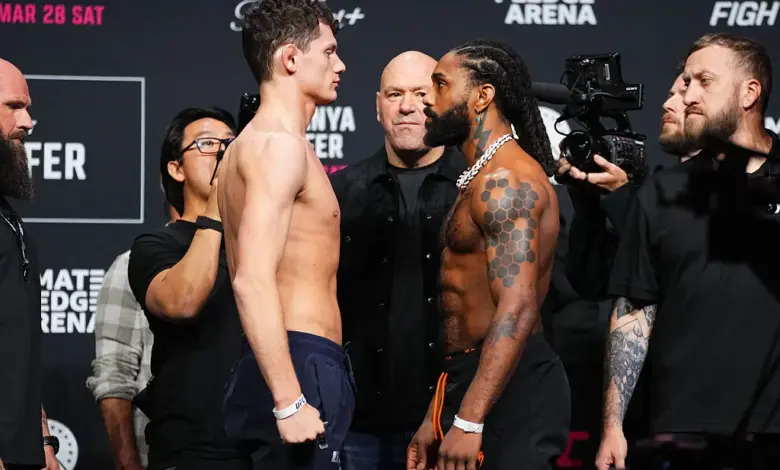
chase hooper returns to a familiar stage looking to halt a skid and reassert the momentum he carried through a five-fight win streak. The lightweight’s combination of size, finishing ability and a first UFC fight in front of a hometown crowd sets up a narrative that bettors and fans will parse closely ahead of the prelim at 5: 00 p. m. ET. Lines place Hooper well ahead on the board, but the matchup presents tactical questions that will determine whether this card marks a reset or a further detour.
Chase Hooper: Background & Homecoming
Hooper (16-4-1) is fighting at home for the first time under the UFC banner, a milestone he framed as a welcome homecoming. Earlier in his run he compiled five consecutive wins between May 2023 and April 2025 before a loss to Alexander Hernandez in August 2025 interrupted that stretch. At 26 years old, the record and recent trajectory suggest both upside and urgency: he remains young with time to climb the lightweight ladder, but the result in this matchup will influence immediate momentum.
Physically, Hooper holds measurable advantages in this pairing. He is the taller fighter at 6’1″ with a listed standing reach of 74″ compared with his opponent’s 5’9″ and 72″ reach. Those differences matter in both striking range and the ability to initiate or avoid clinches and takedowns. Across his 16 career wins, 12 have come by submission or knockout, and four of his six UFC victories have been finishes—statistics that underline a capacity to end fights when he can impose his game.
Deep Analysis: Why the Matchup Favors the Bigger Fighter
The matchup profile tilts toward Hooper in several concrete ways. The reach and height margins create a scenario where sustained movement and activity can keep his shorter opponent operating on the back foot. Hooper has demonstrated effectiveness when he is the bigger, more active competitor; that dynamic played into his multi-fight streak. Conversely, the smaller fighter in this matchup faces the dual task of closing distance repeatedly and navigating a high-finishing adversary.
From a betting perspective, lines reflect that perceived gap. Hooper is priced as the clear favorite on the board while his opponent appears as the underdog. Market pricing also signals expectations about fight duration: the bout is priced to finish before the scheduled 15 minutes at a rate that favors an early resolution. Those market markers align with Hooper’s career finish rate and with matchup geometry that can funnel the fight toward positions where he has historically found success—particularly on the ground, where a significant portion of his career finishes originate.
Still, stylistic caveats remain. The opponent is described as well rounded and busy in multiple phases, and a skilled smaller fighter who can neutralize distance or force grappling exchanges where he can reset positions would alter the probability calculus. The controlling variable will be whether Hooper can translate his size and activity into opportunities to finish without overcommitting to openings that invite counters.
Expert View, Broader Stakes and the Closing Question
“Earlier in my career this would have been a huge shock… I’m ready to put on a show at home, ” said Chase Hooper, UFC lightweight (16-4-1), framing the fight week as less pressure and more opportunity. That mindset matters: comfort and composure in front of a hometown audience can sharpen execution, while excessive distraction can erode it. Observers note both fighters maintain professional demeanors, suggesting a contest decided by technique and tactics rather than theatrics.
The immediate stakes are straightforward. A Hooper win restores the momentum he last enjoyed through April 2025 and preserves his path upward in the lightweight picture. A loss would extend a recent downturn and force questions about adjustments and next steps. On a broader level, the night offers a microcosm of how youth, physical traits and finishing ability intersect with match planning and market expectations—the same dynamics that shape fighter development across the division.
As the prelim clock approaches, bettors and fans will weigh size, finish rate and mental readiness against the known variables of styles and history. Will fighting at home supply the lift chase hooper needs to finish decisively, or will the subtleties of a compact, well-rounded opponent produce an upset that reshapes both fighters’ trajectories?