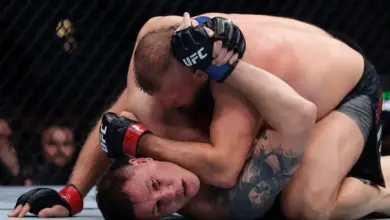
At 21, moses itauma has already compiled 13 professional wins, 11 knockouts and a nine-fight knockout streak — yet he has boxed just 26 rounds in his career. That paradox frames a fighter whose explosive résumé is matched by a restless hunger for longer tests and a public identity shaped by migration and racism.
How has Moses Itauma reached global attention in only 26 pro rounds?
The most immediate facts are stark. Moses Itauma has finished opponents rapidly: nine consecutive stoppages all inside two rounds and a 61-second dismantling of Dillian Whyte. His debut ended in 23 seconds. Those outcomes have produced attention disproportionate to the time he has spent inside the ropes.
That acceleration has left Itauma reflective. “It just went so fast, ” he says, noting the odd satisfaction of a two‑minute fight after 14 weeks of camp. He has 11 knockouts in 13 successful contests and, by those numbers, arrives at each new challenge with a compressed dossier of ring rounds. The consequence: the next opponent is not only a name on a card but a measuring stick for durability and process.
What does the Jermaine Franklin fight reveal about expectations and preparation?
Jermaine Franklin presents a contrasting résumé: an American who has gone the distance with established heavyweights. For Itauma the matchup is framed less as another highlight reel opportunity and more as a test he actively seeks. “Not only do I want to prove it to the fans and to the public, I want to prove to myself that I can do what I think I can do, ” he says, setting a private bar beyond knockout numbers.
Itauma has publicly explained periods of limited activity as the result of injury, difficulty finding opponents and a sparring incident. He insists he has not been idle in that time, describing ongoing training — sparring, running, lifting — even when not under the lights. The Franklin fight, staged in Manchester’s Co-op Live Arena, therefore functions as both a sporting challenge and a narrative pivot: can a fighter whose highlight reel dominates the conversation sustain a protracted contest and answer questions about his readiness for elite opposition?
How do identity, family and early hardship shape the man outside the ring?
The personal context complicates the sporting one. Enriko Moses Itauma is the youngest of three boys born in Kezmarok, Slovakia, to a Slovak mother and Nigerian father. A family migration spanning roughly 1, 050 miles to Chatham, Kent, followed encounters with racism that limited opportunities in their country of origin. Those experiences, Itauma says, factored in the decision to relocate and in the formation of a mixed-race identity he continues to negotiate.
Family remains central to his career: his brother Karol Itauma, a light-heavyweight, is present in fight-week duties and behind the cameras. The interplay between a tight family unit and public expectation is visible in moments of candidness from Itauma: after quick stoppages he has described a surprising emotional flatness, noting he sometimes felt underwhelmed when a months‑long camp produced a brief fight. That reaction underscores both the cost of preparation and a deeper craving for tests that justify sacrifice.
Verified fact: Moses Itauma is 21, has boxed 26 professional rounds, holds a nine-fight knockout streak and has recorded 11 KOs in 13 wins. Verified fact: Jermaine Franklin has previously gone the distance with prominent heavyweights and is positioned as a measuring opponent. Verified statement by the boxer: Itauma has cited injury and sparring incidents when explaining gaps in his schedule and has expressed a desire for longer fights.
What emerges from these documented details is not myth but tension: a fighter whose meteoric results invite premature coronation and whose own priorities push toward rigorous examination. That tension will be settled in performance — but it also begs institutional transparency around matchmaking, medical readiness and the pace at which prospects are elevated.
For the public reckoning ahead, stakeholders including promoters, matchmakers and medical teams should make available clear timelines and medical confirmations and clarify the criteria that place fast‑finishing prospects on major cards. Without that transparency the sport risks treating statistical spectacle as sufficient evidence of readiness, while fighters like moses itauma search for the substantive rounds — and the full recognition — that their records suggest they deserve.