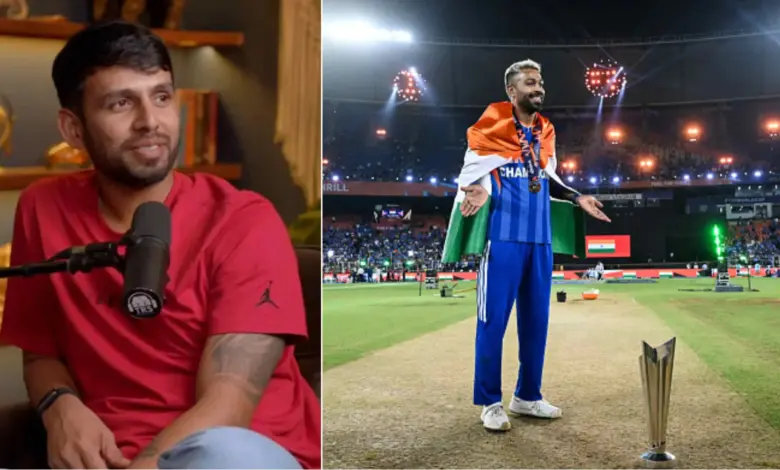
Jitesh Sharma said Hardik Pandya was the first person to message him after he was left out of India’s T20 World Cup squad — a private gesture that Sharma presents as part of a broader pattern of off-field support and mentorship from the Pandya brothers.
How did Jitesh Sharma describe Hardik Pandya’s response?
On Ranveer Allahbadia’s podcast, Jitesh Sharma characterized Hardik Pandya as unusually generous and consistently supportive of younger players. Sharma described Hardik as “the most helpful, ” noting that the all-rounder distributes bats to kids and once gave Sharma a bat without any ask. Sharma also named Krunal Pandya as another ready helper, saying “Krunal bhai, any time you call him, he’ll help and help a lot. “
Sharma recounted the single, specific moment of outreach that followed his omission from the T20 World Cup squad: “Hardik bhai was the first one who messaged me when I didn’t get into the World Cup team. He said just grow as a person as a cricketer. That’s it. ” That direct line of contact, as described by Sharma, served as emotional and professional encouragement at a moment he described as disappointing.
What else did Jitesh Sharma say about Hardik Pandya’s routines and role as a mentor?
Beyond the message, Jitesh Sharma placed Hardik Pandya’s outreach in the context of the all-rounder’s work ethic and personal routine. Sharma called Hardik “a very smart cricketer” and emphasized the daily regimen he observed while playing together for Baroda: intensive swimming, yoga and disciplined batting and bowling work. Sharma framed that routine as the foundation for Hardik’s success and as a tacit template he shares through mentoring gestures like gifting equipment and sending messages.
Sharma’s own professional circumstances formed a backdrop to these remarks. As a wicketkeeper-batter associated with India and Royal Challengers Bengaluru, he described both the sting of being left out of the national squad and the small, concrete signs of support he received from teammates and contemporaries. Sharma added that he has shown form in practice, including an intra-squad innings of 81 off 37 at the M. Chinnaswamy Stadium, and that he aims to use domestic and franchise opportunities to return to contention.
What does this outreach reveal about mentorship, selection pressure and accountability?
Verified facts: Jitesh Sharma said Hardik Pandya messaged him first after Sharma was omitted from the T20 World Cup squad; Sharma described Hardik as generous with equipment and as maintaining a rigorous personal routine; Sharma named Krunal Pandya as similarly supportive; Sharma referenced his own intra-squad performance and ongoing IPL prospects.
Analysis: The pattern Sharma describes — private encouragement from established players and hands-on mentorship through gifts and advice — highlights a parallel support system that operates outside formal selection and team structures. When elite athletes provide direct reassurance following selection setbacks, those gestures fill informational and emotional gaps left by formal processes. That dynamic can benefit individual players, but it also raises a governance question: if personal outreach becomes a primary channel of feedback, players without the same informal access may face a disadvantage.
Sharma’s testimony does not critique selection decisions themselves; it documents a response to one. The documented outreach from Hardik and Krunal Pandya, as presented by Sharma, underscores the role senior players can play in stabilizing careers and attitudes after public disappointment. It also points to the value of regular, structured feedback from governing bodies and franchises to ensure equitable treatment.
Accountability and next steps: Teams and selection panels should make mechanisms for clear, timely feedback and mentorship more visible and consistent, while franchises and state associations can formalize mentorship roles that senior players already fulfill informally. Such steps would preserve the benefits of personal support — the encouragement Sharma experienced — while reducing reliance on ad hoc channels that can vary by player network.
In the moment Sharma described, a single message from a senior peer made a measurable difference in how he processed a career setback. That private intervention, and the broader habits Sharma attributes to Hardik Pandya and Krunal Pandya, merits attention from administrators who shape pathways for emerging talent, and from players themselves as they navigate selection cycles. Jitesh Sharma.