King Charles and Cake Chaos: Unscripted Laughter at Eden Project Reveals a Different Royal Rhythm

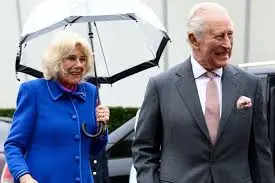
An unexpectedly stubborn cake and a too-large ceremonial sword produced an unguarded moment that drew laughter from the crowd and the royal couple. king charles and Queen Camilla giggled as they wrestled with a decorative cake while celebrating the Eden Project’s 25th anniversary in Cornwall, a scene that cut through the usual protocol and underlined a public focus on community events set for 5 to 8 June.
King Charles and the Eden Project: why this moment mattered
The visit anchored a milestone for a site known for its large domed biomes showcasing global plant life, and it brought together elements that have long defined the King’s public interests. The trip connected to work linked with the Duchy of Cornwall and the King’s long-standing attention to sustainability; he reflected on earlier visits by saying “there was nothing” growing when he first came, a comment that framed the site’s development over time.
What might otherwise have been a brief ceremonial task became a humanizing vignette: Colonel Sir Edward Bolitho, Lord Lieutenant of Cornwall, handed over a sword for the cutting, and the couple briefly faltered with the implement before sharing a laugh. The scene was bookended by small logistical missteps — the state limousine momentarily took a wrong turn, prompting the King’s quip, “Now you see us, now you don’t” — and by a vocal fringe of hecklers at a later stop in St Austell who were told to “shut up” by a woman in the cheering crowd.
Deep analysis: optics, community events and what a cake can reveal
Public ceremony often functions as choreography; small failures of choreography can recalibrate perception. The cake-cutting awkwardness offered a display of informality that softened the otherwise formal mission: launching The Big Lunch and The Big Help Out, street party–style events tied to community activity. That the couple then moved on to meet volunteers, teenagers and faith leaders at Holy Trinity Church in St Austell reinforced the day’s purpose as community-facing rather than pageant-driven.
These scenes operate on multiple levels. On one level, the shared laugh broke formality and demonstrated an accessible royal rapport that can play well with local audiences. On another, the visit reiterated a long thread of interest in environmental stewardship, underscored by the King’s attention to the site’s olive trees and a giant interactive “marble” run made from a storm-felled ash tree from the Duchy of Cornwall Estate. Viewed together, the optics of the day connected personality, place and purpose in a single public appearance.
Expert perspectives and wider royal context
Voices from the site underscored the visit’s focus on growth and sustainability. Andy Jasper, chief executive of the Eden Project, said: “The King is really interested in how Eden is just growing and he loves the sustainability aspect of this. He loves the gardens and he was just telling me how he loves to come back and see how it grows. ” That assessment frames the cake episode not as a diversion but as part of a larger engagement with the project’s environmental aims and community programming.
The visit also resonated within a broader week of royal moments. A separate round-up of the week’s activity highlighted other public stories: a high-profile charity bike ride, an impending Australia tour by Harry and Meghan that was already generating scrutiny, and continuing public curiosity about behind-the-scenes figures associated with the family. Those items, alongside the Eden Project appearance, suggest a royal calendar where small, unscripted moments can compete with larger narratives for public attention.
While the image of king charles and the Queen struggling gently with a ceremonial cake may be light in tone, it speaks to a durable public strategy: connecting ceremonial gestures to tangible community initiatives and environmental advocacy. That linkage matters as much as any perfectly sliced cake.
As the Big Lunch and Big Help Out approach, and as other royal outings draw separate scrutiny, will these candid public moments reshape how the monarchy balances ceremony with community engagement—and how the public chooses which moments to remember?