On a rain-slick morning in an industrial neighborhood, a refrigeration technician wipes grease from his hands, scrolls headlines on his phone and wonders whether his next job will be secured by skill or circumstance. The word palantir appears in a news transcript he saved; it frames a simple, stark message that has begun to ripple through break rooms and classrooms alike: prepare with a trade, or prepare by thinking differently.
What did Palantir’s CEO say about who will succeed in the AI era?
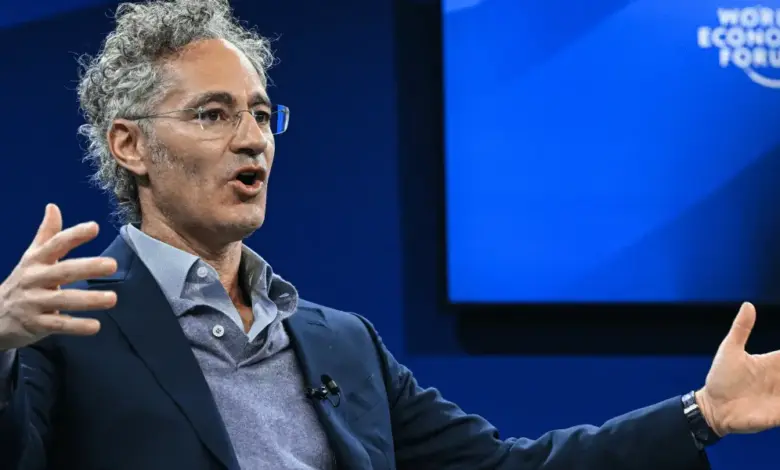
Alex Karp, chief executive officer of Palantir, told hosts on the Technology Business Programming Network that “There are basically two ways to know you have a future. ” He listed them plainly: “One, you have some vocational training. Or two, you’re neurodivergent. ” Karp, a billionaire who has spoken publicly about living with dyslexia, has framed neurodivergence broadly to include conditions such as ADHD and autism and described the advantage as a mindset that allows people to “be more of an artist, look at things from a different direction, be able to build something unique. “
How are institutions and companies responding to that claim?
Palantir has acted on the idea by creating programs that target both prongs of Karp’s argument. The company launched a Neurodivergent Fellowship with language in the job posting asserting that “Neurodivergent individuals will play a disproportionate role in shaping the future of America and the West, ” and positioned the program as a deliberate recruitment channel. Palantir also established a Meritocracy Fellowship aimed at high school graduates not enrolled in college; the first cohort attracted more than 500 applicants, admitted 22 participants, and required high academic test results to qualify. The program’s next round offers a monthly stipend and promises top performers a path to full-time work. Karp himself is slated to conduct final interviews for neurodivergent candidates.
What does this mean for workers, schools, and the labor market?
The CEO’s framing intersects with broader workforce trends. A Gartner study projects that one-fifth of sales organizations within Fortune 500 companies will actively recruit neurodivergent talent by 2027, reflecting employer interest in diverse cognitive approaches. At the same time, Karp has publicly argued that artificial intelligence will disrupt many white-collar roles and that vocational skills—electricians, plumbers, technicians—will remain difficult to automate and increasingly in demand. He has urged a rethinking of educational tests and pathways built around the industrial era, arguing that current measures miss talents better suited to an AI-driven economy.
Voices on the stage and in the workshop: who’s listening?
Karp’s remarks were made on TBPN to cohosts John Coogan and Jordi Hays and echoed lines he has repeated at international gatherings, where he warned that AI could “destroy humanities jobs” and described his dyslexia as formative. In workplaces, electricians and technicians weigh that message against steady demand for hands-on skills; in classrooms, some educators and parents are watching the fellowships and the stipended Meritocracy program as experimental alternatives to traditional college. Institutional actors—from the company’s leadership to workforce analysts at Gartner—are shaping hire-and-train experiments that mirror Karp’s two-path prescription.
Practical responses are emerging: companies piloting targeted fellowships, schools reconsidering vocational tracks, and employers adjusting recruitment for candidates whose strengths may not show up on conventional tests. The Meritocracy Fellowship’s pitch—offering a stipend, concentrated training, and a route to employment—illustrates one model for translating the CEO’s two-path claim into concrete opportunities.
Back beneath the fluorescent shop light where the refrigeration technician works, the question remains urgent but unresolved. He can enroll in a trade program this week and sharpen a visible, portable skill. He can also consider whether a different kind of assessment or a company fellowship could open a path that traditional schooling missed. Either choice, framed by the CEO’s comments, now feels like a bet on which kind of future will arrive faster.
As conversations about labor, cognition and AI accelerate, the simple binary Alex Karp offered—vocational training or neurodivergence—has already nudged employers and educators to act. Whether that nudge becomes lasting change or a contested chapter in labor policy will be decided in classrooms, hiring panels and workshop bays where people are quietly making their own calculations about survival and dignity in the age of AI. The refrigeration technician pockets his phone, ties off his gloves and walks to his truck, carrying the same question with him that brought him to the site: can a new program or his calloused hands give him a future in a world where palantir-shaped predictions are reshaping opportunity?