Billy Idol: Why the ‘Should Be Dead’ Documentary Reframes a Punk Rebel — 5 Revelations

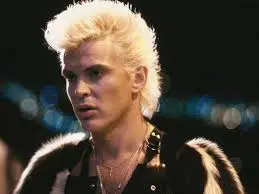
In an unexpected tonal shift that mixes swagger with self-scrutiny, the new film titled Billy Idol Should Be Dead forces a reassessment of the man at its center. At 70, billy idol watches his life played back — archival footage, gruesome hospital photos and clever animation — and offers what the film frames as a new vantage point. The documentary’s nearly two-hour retrospective collates excess, recovery and reinvention into a portrait that foregrounds survival as the central theme.
Billy Idol and Jonas Åkerlund: Making of a ‘Should Be Dead’ Tribute
The film, directed by Jonas Åkerlund, pairs a director known for courting rock’s wilder edges with a subject who thrived in the visual era of a fledgling 24-hour music video channel. Åkerlund’s approach combines a warmly sympathetic eye with a willingness to dwell on the sensational moments: near-fatal overdoses in 1984 and in the late 1980s, a collapse in a Bangkok hotel, and a motorcycle crash in Los Angeles that nearly led to leg amputation and curtailed a budding movie career.
That collision of spectacle and vulnerability animates the documentary’s structure. The closing new song, titled “Dying to Live, ” was written to unify those narrative strands and provide an emotional coda. Idol has spent roughly six years shaping the project, beginning around 2019, and has shown the film on the festival circuit in events such as Tribeca and Middleburg before its debut on a streaming platform on March 26 (ET). The film uses animated sequences to illuminate gaps in the archive while anchoring its claims with material such as hospital photos from the 1990 accident.
A life on the edge: drugs, MTV ascent and the archive
The documentary traces how billy idol converted a punk-era persona into mass visibility by moving to the United States at a moment MTV was hungry for image-driven acts. The film juxtaposes arena hallways from his youth with present-day shots that show him preparing for stage entrances alongside footage of grandchildren — a deliberate device to emphasize continuity and change. The film’s archival breadth is notable: it not only charts high-profile triumphs but preserves the darker episodes that nearly ended his life.
Two near-fatal drug episodes and a catastrophic motorcycle crash are presented not as lurid set pieces but as turning points. The film argues that those events reshaped both career trajectory and personal priorities. That framing opens questions about how rock stardom is remembered: is survival the counter-myth to the self-destructive rebel, or simply the next chapter in a long narrative of reinvention?
Voices within the film and what they add
The documentary assembles a roster of peers and interlocutors — including notable musicians who reflect on long professional relationships — to situate the central figure within a networked music history. Contributions from contemporaries and archival interviews provide corroboration for the film’s key claims about industry dynamics, visual culture and the toll of addiction. Idol himself speaks candidly on camera; as he positions it, the process of seeing his life boxed into a retrospective has been revelatory and oddly consoling.
“We deliberately wrote this kind of song to draw all of the strands of the doc together and give you an emotional end, ” says Billy Idol, singer-songwriter (Generation X). His participation as an interview subject and creative collaborator gives the film a confessional bluntness that the editing preserves without sensationalizing.
Why this matters now
The documentary arrives at a moment when retrospective media frequently recodes celebrity into lessons about resilience. By centering survival, the film reframes a career that might otherwise be condensed to peak-era hits and tabloid excess. It foregrounds how visual platforms transformed particular kinds of performance into enduring myths, and how those myths are revised when the archive is reread from a later vantage point.
For viewers and cultural historians alike, the film prompts a reconsideration of how the late-20th-century music industry manufactured personas and how those personas age. It asks whether the spectacle of near-collapse and recovery is now an essential component of legacy making in popular music.
As billy idol steps back into the role of subject rather than simply spectacle, the film leaves an open question about the currency of rebellion in later life: can reinvention outweigh reputation, and what does survival require from an icon built on risk?