Fbi Director Emails Breach: 300+ Personal Messages Published — A Deeper National Security Puzzle

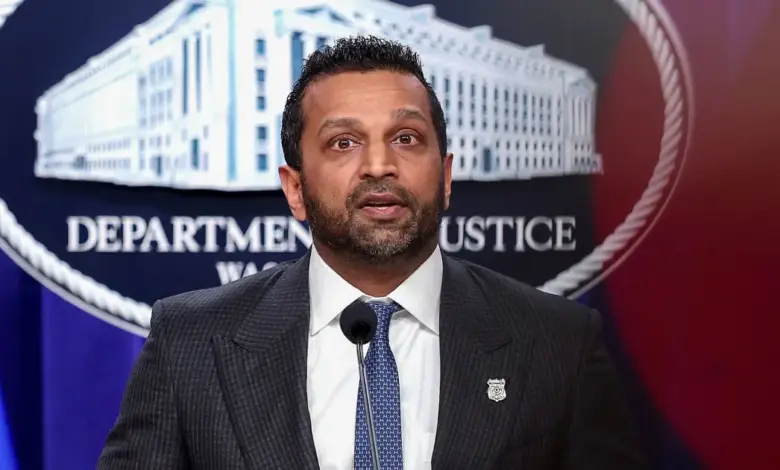
The personal email account of the fbi director has been breached by an Iran-linked group that published more than 300 emails and photos online, officials say. The disclosure — including private correspondence and photographs that the group asserts were taken from the account — was framed by the hackers as retaliation for recent seizures and a U. S. reward offer, and U. S. agencies have described the exposed material as historical and devoid of government information.
Fbi Director breach: Background and context
The intrusion was claimed by a group identifying itself as the Handala Hack Team, which posted a cache of emails and images it said came from the fbi director’s personal account. The group published what it described as a resume and photographs showing the individual in various private settings, and accompanied the material with taunting statements about the speed and ease of the compromise. The FBI acknowledged the campaign and characterized the files as historical and not containing government information. Handala framed the action as retaliation after U. S. law enforcement seized domains connected to the group and as a response to a reward offered for information on similar hackers.
Deep analysis — motives, methods and immediate implications
The leak arrives amid a sequence of related events noted by U. S. authorities: law enforcement actions that removed Handala-linked websites, an announcement of a reward of up to $10 million for information identifying members of the hacking group, and prior claims by Handala that it had carried out an earlier destructive cyberattack against a U. S. medical technology company. In its public messages, Handala asserted the FBI’s systems had been quickly compromised and positioned the operation as both retaliation and a demonstration of capability. U. S. agencies have tied the group’s activity to Iran’s Ministry of Intelligence and Security, alleging the sites were used for propaganda and psychological operations.
Operationally, the material posted spans many years: most of the files the group released are dated between 2010 and 2012, with the most recent item in the published collection being a travel receipt dated 2022. That temporal distribution suggests the compromised content is not newly created government material but older personal correspondence and media. Nonetheless, the appearance of private photographs online and the public framing of the intrusion create reputational and security management challenges beyond the question of classified content, including possible phishing follow-ups, identity exposure, and leveraged disinformation.
Expert perspectives and regional implications
The FBI provided a public statement acknowledging malicious activity targeted at the fbi director’s personal email information and said mitigation steps have been taken. The Justice Department undertook domain seizures tied to the group and described the Handala websites as channels for psychological operations and calls for violence. Handala said the breach was a direct response to those U. S. moves and to the reward offer, and declared that the action was only a beginning.
Handala has also claimed responsibility for a prior cyber incident at a U. S. medical technology supplier, asserting a destructive “wiper” attack and large-scale data takedown. In its own posts, the group said it had erased or affected hundreds of thousands of systems and extracted large volumes of data in that prior operation; U. S. officials recovered and attributed aspects of that incident in law enforcement actions. The group has invoked domestic incidents in Iran as motives for its attacks and linked its operations to wider geopolitical grievances.
Regionally, U. S. officials have framed Handala’s activity as part of an Iranian-aligned cyber campaign that blends hacktivism, intelligence tradecraft and psychological messaging. The interplay of domain seizures, reward offers, and public leaks demonstrates a cycle of action and retaliation that may complicate diplomatic and operational responses in the region, and that elevates concerns about escalation through digital channels rather than traditional kinetic means.
Operationally and legally, the U. S. response has combined monetary incentives for information, domain takedowns, and public attribution, positioning law enforcement as both a disruptor and a target in the digital contest. The publication of private material from a high-profile personal account underscores the continuing reach of actors who employ public shaming and data exposure to achieve political aims.
The fbi director’s breach therefore exposes contested terrain: the boundary between personal and official vulnerability, the limits of deterrence through takedowns and rewards, and the reputational fallout of imagery and correspondence released into public forums. It also raises pragmatic questions about how officials and institutions should balance transparency about breaches with the need to limit further dissemination of private material.
As U. S. agencies weigh next steps, the handoff between law enforcement action and public communication will be critical: officials must mitigate operational risk, preserve investigative options tied to the reward offer, and manage the broader strategic message the leak sends to other potential adversaries.
With private emails and photographs now circulating, the episode asks whether current disruption and attribution tools are sufficient to deter repeat operations, and how responses might change if subsequent leaks cross into government information or critical infrastructure targeting. Will the pattern of seizures, rewards and public disclosure break the escalation cycle, or will it further entrench a tit-for-tat approach to cyber confrontation?
The fbi director breach is a reminder that in the modern information battlespace personal accounts can be leveraged for public effect, and that legal, technical and diplomatic tools must be calibrated to limit harm while preserving investigative reach. What combination of policy, prosecution and resilience-building will reduce the appetite for such publicized intrusions — and who will set the next terms of engagement — remains an open and urgent question.