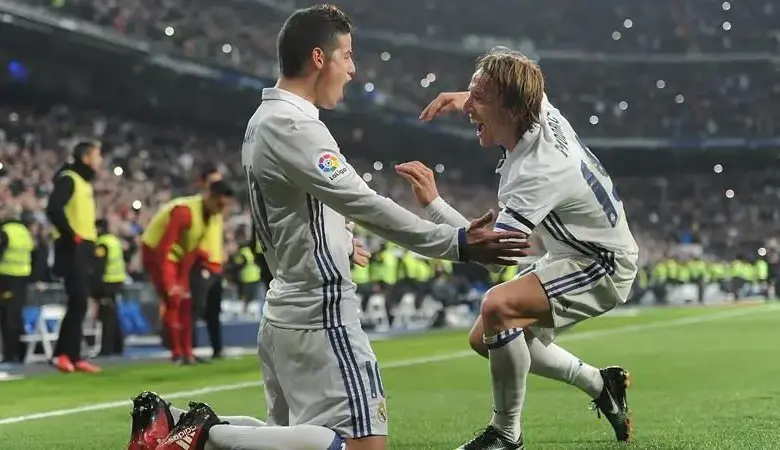
Under the bright lights of Camping World Stadium in Orlando, colombia walks onto the pitch for a friendly that feels like more than preparation: it is a meeting of eras. On one side stands James Rodríguez as a creative fulcrum; on the other Luka Modrić, still the midfield architect some years after their shared peak in European club football. The match is part of the final set of friendlies before the World Cup.
How a single match reflects a wider story about team evolution
The friendly in Orlando is compact in its facts but expansive in meaning. Croatia arrives with an unusual mix of hardened veterans and an incoming generation. Zlatko Dalić has been the national team coach since 2017 and, across his tenure, has led the side through more than a hundred matches, shaping a transition that pairs figures like Luka Modrić and Iván Perišić with emerging names such as Luka Vuskovic, a 19-year-old centre back who has drawn market attention and carries a Transfermarkt valuation cited in the roster discussion. Colombia, for its part, faces the immediate managerial puzzle noted by coach Néstor Lorenzo: limited rest between fixtures during this pre-World Cup tour and the question of how to manage minutes for key players like James Rodríguez.
What will the Colombia lineup look like?
Coaching decisions underline the human and tactical stakes. For the double-date window, the Colombian staff has weighed a mixed approach to selection so that the squad can compete in Orlando and preserve parts of the core for the next friendly. One possible starting eleven offered for colombia lists Álvaro Montero in goal; a back four including Daniel Muñoz, Davinson Sánchez, Juan David Cabal and Johan Mojica; a midfield with Jefferson Lerma, Gustavo Puerta and Juan Fernando Quintero; and an attack oriented around Jhon Arias, Luis Díaz and Jhon Córdoba. The availability and role of James Rodríguez remain a central variable: the player has logged limited minutes this year with his club and could be managed carefully across the two matches.
Social, economic and human threads woven into a friendly
Beyond tactics, the encounter illuminates broader dynamics. Croatia’s roster list reads as a catalog of European club ties — veterans tied to top leagues and younger players embedded at clubs from Ajax to Real Sociedad — demonstrating how international squads reflect continental labor markets and scouting networks. The emergence of a highly valued teenager like Vuskovic highlights transfer-market economics hitting national-team planning. For colombia, balancing player workloads is as much about safeguarding individual careers as it is about preserving national hopes; the minutes that players accumulate now affect their clubs, their market value and the emotional labor of returning to international duty after long seasons.
Voices from both camps carry weight even when they are not delivered as formal quotations. Néstor Lorenzo has signaled concern about turnaround times between fixtures, and Zlatko Dalić’s long managerial record frames Croatia’s approach as one that must manage an older core while integrating a new cohort. The encounter in Orlando therefore becomes a practical laboratory for leadership from those on the field — James and Modrić — and those on the touchline.
What happens on the field will also shape narratives: a strong showing by younger Croatian players could validate a generational handover; judicious minutes for colombia’s leaders could preserve momentum for the tournament proper. Both outcomes matter to supporters, clubs and the players themselves.
Back beneath the floodlights where the night began, the match closes a loop. The same stadium that hosts a tactical test also holds human stories of mentorship, endurance and transition. As colombia’s squad files off the pitch, the questions remain audible — which veterans will carry the torch, which youngsters will claim it, and how coaches will translate this fragile balance into World Cup readiness. The friendly in Orlando is a short game with long echoes.