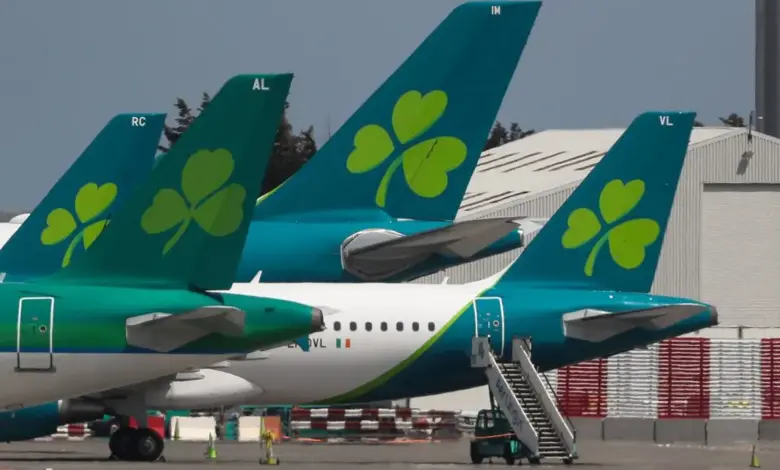
aer lingus new summer routes mark a notable expansion from Ireland’s two primary gateways, with seven brand-new connections announced that widen access to coastal, cultural and regional European destinations.
The inflection point: Why this summer matters
This announcement signals a strategic push to broaden short‑ and medium‑haul connectivity from Dublin and Cork. The carrier is launching five new services from Dublin and two from Cork, and is converting an existing seasonal link from Cork to a year‑round operation. The move pairs new point‑to‑point options with a confirmation that at least one previously seasonal route will operate all year, altering capacity flows for travellers and regional airports.
What the network looks like now — Aer Lingus New Summer Routes
The new connections include flights from Dublin to Asturias, Oslo, Tours, Inverness and Montpellier; Cork will gain direct services to Nice and Santiago de Compostela. The airline’s regional operation will play a role: Aer Lingus Regional, operated by Emerald Airlines, will operate some of the new services. The carrier has also confirmed that the seasonal Cork–Prague route will become a year‑round service.
- Dublin → Asturias
- Dublin → Oslo
- Dublin → Tours (Loire Valley)
- Dublin → Inverness (Scottish Highlands)
- Dublin → Montpellier
- Cork → Nice (French Riviera)
- Cork → Santiago de Compostela (gateway to the Camino)
- Seasonal Cork–Prague extended to year‑round
The carrier has highlighted customer convenience features alongside the route expansion: every fare type includes a 10kg bag as standard, with options for checking that bag at no extra cost. Susanne Carberry, Aer Lingus Chief Customer Officer, described the schedule as the airline’s most diverse yet and positioned the fare inclusion as added convenience for travellers preparing summer getaways.
Scenarios: What could happen next?
Best case — demand redistributes across the network, regional gateways see stronger inbound leisure traffic, and the year‑round Cork–Prague conversion sustains higher off‑peak connectivity. Most likely — the new services stimulate seasonal leisure travel to the named destinations, with some routes operating as summer‑heavy and others smoothing into shoulder seasons. Most challenging — load factors vary by market and a few routes underperform seasonally, prompting frequency adjustments or temporary suspensions.
All scenarios are bounded by a few concrete elements in the plan: the specific list of new destinations, the role of Aer Lingus Regional operated by Emerald Airlines on some services, and the fare policy that includes a 10kg bag across fare types. Those anchors reduce the degrees of freedom for outcomes but do not remove uncertainty about demand patterns and operational response.
Who wins and who loses is straightforward to map. Winners include travellers seeking direct access to Asturias, Oslo, Tours, Inverness, Montpellier, Nice and Santiago de Compostela; regional airports and tourism economies at those destinations; and leisure‑focused customers benefiting from the included baggage allowance. The airline gains network breadth and the potential to capture new traffic flows. Potential losers are competing carriers on overlapping routes and markets where demand fails to meet expectations, which could see reduced frequencies or competitive pressure on yields.
Readers should understand this expansion as a deliberate network diversification: more coastal, cultural and regional options out of Dublin and Cork, a conversion of a seasonal route to year‑round, and a combined mainline/regional operating approach. Travellers planning trips this summer should review schedules and baggage inclusions as part of booking decisions, while local stakeholders should prepare for increased leisure footfall in the named destinations. The announcement underlines a clear strategic pivot embodied in aer lingus new summer routes