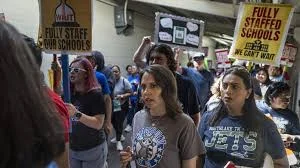
A nine-day teacher strike in Twin Rivers and a seven-day teacher strike in Natomas have left educators, parents and district leaders locked in negotiations defined by a stated $22 million gap, a contested health‑care proposal described by union leadership as a potential pay cut, and the arrest of a parent who demanded talks.
What is not being told about the Teacher Strike?
VERIFIED FACT — Twin Rivers Unified School District teachers went on strike nine days ago and, as of Tuesday afternoon, Twin Rivers Unified returned to the bargaining table. Natomas Unified School District educators have been on strike seven days with no new bargaining date set. Educators in both districts have been pushing for higher pay, fully covered health care for all educators and smaller class sizes.
ANALYSIS — The central question is procedural transparency: what are the concrete openings and non‑starters on the table, and why have differences persisted long enough to produce prolonged work stoppages in two neighboring districts? Public statements and actions named in the record point to both a numerical budget gap and a health‑care proposal structure that union leadership views as a disguised rollback. Those two elements—budget arithmetic and benefit design—frame the immediate impasse.
What do the statements and documents show?
VERIFIED FACT — Twin Rivers Unified has described its offering as “a meaningful proposal” and has quantified a $22 million difference between the district’s offer and the union’s demand. Brittoni Ward, president of Twin Rivers United Educators, has identified health care as a primary sticking point, saying the district’s proposal would sunset in 2027 and ultimately amount to a pay cut for members.
VERIFIED FACT — Assemblymember Maggy Krell (D‑Sacramento) requested that Twin Rivers district leaders and teachers’ union representatives restart negotiations after talks stalled. Within Natomas, a parent, Jessica Vroman, age 46, was arrested on trespass charges after she entered district offices that were closed during the strike; Sacramento police confirmed the arrest and Natomas Teachers’ Association representatives said Vroman has been released. Parent Ashley Battle, who is married to a district teacher, criticized the use of police in the incident.
ANALYSIS — The $22 million figure is the most quantifiable datum in the public record. That gap, if accurate and complete, is the primary lever each side will need to explain: where additional funds could be found, which budget lines would change, and whether structural tradeoffs—such as benefit sunsets—are acceptable to educators. Equally important is the political intervention by a state legislator, which signals external pressure but does not in itself resolve fiscal differences.
Who stands to gain, and what does accountability require?
VERIFIED FACT — Both districts are facing their first-ever strikes of this kind. Twin Rivers and Natomas carry the immediate responsibility to restart and sustain bargaining; union leadership and local parent advocates are exerting pressure to secure higher pay and fully covered health care. Sacramento police processed an arrest that has become a point of contention between parents and district authorities.
ANALYSIS — Stakeholders aligned with educators—union leadership and parents—benefit politically if negotiations yield improved pay and benefits. District leadership positions will be judged on their willingness to close the stated $22 million gap or to explain tradeoffs transparently. The arrest of a parent underscores legal and civic risks when district offices are closed and public pressure escalates; it also raises questions about how districts manage community engagement during labor disputes.
ACCOUNTABILITY CALL — For meaningful resolution, publicly available documents should clarify the composition of the $22 million gap, the specific terms and timeframe of any health‑care proposals, and the districts’ contingency plans for community access to administrative offices during a work stoppage. Neutral, named documentation of offers, counteroffers and any fiscal analyses would convert current assertions into verifiable entries for public review.
FINAL NOTE — The record as presented contains clear verified facts and explicit areas of uncertainty; closing that gap of information is essential to resolving the teacher strike and restoring classroom stability.