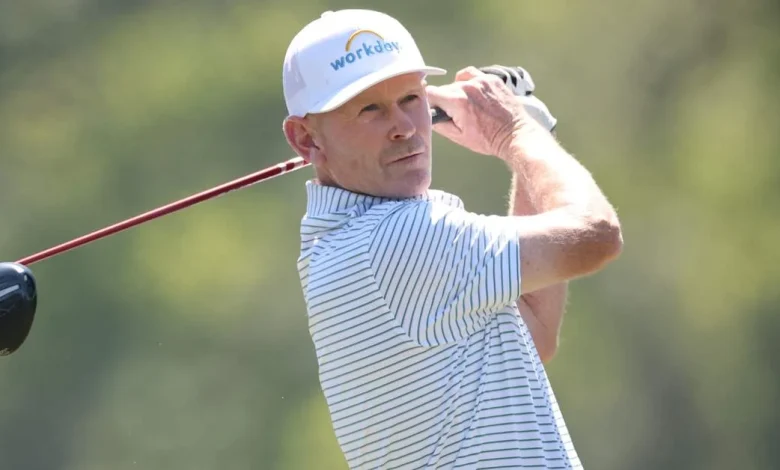
At the valspar championship 2026, 45-year-old Brandt Snedeker moved into contention with a third-round 67 that leaned heavily on an unexpected source: elite putting. The performance flipped the common script about equipment, age and momentum in tournament golf.
How did Brandt Snedeker rise at Valspar Championship 2026?
Verified facts: Brandt Snedeker, identified as the captain of the 2026 U. S. Presidents Cup Team, carded a third-round 67 that left him at 9-under and two shots behind Sungjae Im. On that round he hit eight of 13 fairways and seven of 18 Greens in Regulation, converted a perfect 11-for-11 in scrambling and sank a total of 116 feet of putts — the fourth-most in the field. He led the event in Strokes Gained: Putting and was first in overall Strokes Gained.
Snedeker started the day four shots back, recorded birdies on three of his first holes with putts from 16 and 17 feet, added a birdie on No. 11, and kept a clean card while playing the Copperhead Course’s final three-hole stretch — the “Snake Pit” — in even par.
Direct statements: Brandt Snedeker said, “The only thing I really care about when I’m putting is inside 6 feet. If I make my putts inside six feet, then I feel like everything else will take care of itself. ” That focus on short-range conversion was central to his move up the leaderboard.
What do the numbers and equipment changes reveal?
Verified facts: Earlier in the season Snedeker had missed four straight cuts. He had used the Odyssey Rossie II putter for his career but switched a few weeks ago to a TaylorMade Spider mallet. He described the switch as driven by data gathered on putting monitors: the data showed improved stroke and ball roll, and the change required adjustment to new speed characteristics of the putter. He said, “When you have actual data telling you that the stroke’s better, the ball’s rolling better, everything is better with this new putter, then it makes the transition easier. “
Analysis: The combination of a putter change supported by measurable data and an immediate uptick in Strokes Gained: Putting suggests a causal link between equipment decision and short-term performance. The round’s profile—high scrambling conversion, strong fairway accuracy, and leading putting metrics—indicates Snedeker’s result was not random; it was a compound effect of approach positioning, short-game execution and markedly improved putting performance.
What must be asked next and who is accountable?
Verified facts: Snedeker noted his health is “probably the best it’s been in 10 years” after returning from sternum surgery in 2023, and referenced his most recent Tour win as the Wyndham Championship in 2018. He framed his position plainly: “Nobody expects me to be here, to be honest with you, at 45. Nobody expects me to win tomorrow. So I’m going to have the most fun trying to prove people wrong and prove probably myself wrong that I can still do it. “
Stakeholder view: The primary beneficiary of this surge is Snedeker himself — performance, captaincy profile and competitive credibility. Other stakeholders include equipment manufacturers tied to the putter change and tournament competitors facing a resurgent veteran. Accountability questions center on transparency of decision drivers: how much did the monitoring data determine the switch, and what role did short-term practice protocols play in converting that data into putting gains?
Conclusion and call for transparency (analysis): The valspar championship 2026 round by Brandt Snedeker exposes a narrow but potent truth — measurable equipment adjustments, when paired with focused short-game strategy and regained health, can revive an established player’s competitiveness. For players, coaches and equipment partners, the obvious next step is clearer documentation of the data-to-decision pathway and the practice regimes that translate monitor metrics into tournament results. That transparency would help separate isolated hot streaks from reproducible performance improvements and give the public and professional peers a clearer picture of what this run actually signifies.