The fanatics flag football classic has become more than an exhibition: it is a live test of how NFL athletes, celebrities and the U. S. national program stack up ahead of the sport’s Olympic debut. The event gathers high-profile quarterbacks, coaches and specialists in a round-robin tournament at BMO Stadium in Los Angeles and puts selection debates and competitive balance under a public microscope.
What Happens When the Fanatics Flag Football Classic Meets Olympic Stakes?
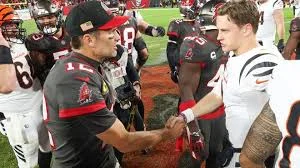
The Fanatics Flag Football Classic assembles a mix of NFL stars, marquee athletes and the U. S. men’s national flag football team for a one-day round-robin at BMO Stadium. Co-captains for the Founders include Tom Brady and Jalen Hurts; the Wildcats feature Joe Burrow and Jayden Daniels. The rostered field also includes non-NFL competitors from sport and entertainment, among them Logan Paul, IShowSpeed and Terence Crawford. The U. S. men’s team, which has not lost an International Federation of American Football tournament since 2018 and has won by an average margin cited in prior competition, will test itself directly against rosters drafted by NFL personalities and overseen by NFL coaching figures.
Coaches Sean Payton of the Denver Broncos and Kyle Shanahan of the San Francisco 49ers agreed to oversee teams for the event, treating it as more than a sideshow. Event co-promoter and participant Tom Brady characterized the rules and skill overlaps as a meaningful gauge for players who might appear at the Olympics. Former NFL quarterback and event co-commissioner Drew Brees framed the matchup as a clarifying moment for who should represent the U. S. at the Olympic level.
What If NFL Stars and Team USA Face Off in Los Angeles?
This exhibition produces three practical scenarios for Olympic preparation and public perception:
- Best case: NFL rosters adapt quickly to five-on-five flag rules, the event draws mass interest in Los Angeles, and cross-pollination accelerates elite training for Olympic selection.
- Most likely: Athletic advantages from NFL personnel meet the refined technique and cohesion of Team USA. The competition offers clear performance data without a decisive long-term shift in selection policy.
- Most challenging: Disparate rule familiarity leads to mixed results, underscoring divisions between professional speed/size and specialists’ game IQ, and creating friction over who should form Olympic rosters.
Organizers’ betting lines opened the amateurs as favorites in pregame markets, signaling outside expectations that Team USA’s cohesion could counter NFL athleticism. The tournament format, draft moments staged publicly, and coaching investments all combine to produce actionable evaluation points for Olympic selection committees.
What Should Fans and Officials Expect Next?
The event’s production brings national attention to five-on-five flag football in an Olympic context. Commentators Kevin Burkhardt and Greg Olsen are on the broadcast call, and the contest is set to play in front of a large-capacity venue in Los Angeles. The move of the event to BMO Stadium allowed Team USA’s inclusion after an earlier staging elsewhere. That relocation, prompted by broader logistical concerns, increased the exhibition’s relevance to domestic Olympic planning.
For athletes, coaches and federations, the practical takeaway is straightforward: this public, cross-category matchup will supply comparative footage and competitive benchmarks that did not exist at scale before. For fans and event planners, expect spirited debate over how to weigh athletic traits against specialized flag football experience when Olympic rosters are finalized.
Uncertainties remain. Rules differences, one-off performances and the exhibition format limit definitive conclusions. Still, the Fanatics Flag Football Classic will leave a clearer record for selectors, and for anyone weighing how professional football talent translates to Olympic flag competition.
Bottom line:
The Fanatics Flag Football Classic is a concentrated experiment in public — and its outcomes will influence perceptions and planning for the sport’s Olympic moment. Stakeholders should watch the matchups, study the cross-format tape and prepare selection criteria that recognize both elite athleticism and flag-specific expertise in the lead-up to the Olympics and the fanatics flag football classic