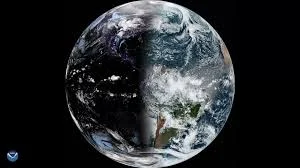
The spring equinox arrives as an astronomical pivot point on Friday, March 20, 2026 — the moment that marks the first day of spring and when the northern and southern hemispheres are equally illuminated. Yet while the spring equinox signals a clear celestial change, climatological records and local experience tell conflicting stories: the National Oceanic and Atmospheric Administration found that meteorological winter (December–February) was the second-warmest on record since 1895, even as many communities endured back-to-back snowstorms and sharp cold snaps.
What is not being told about seasonal records and the Spring Equinox?
Verified fact: The National Oceanic and Atmospheric Administration shows meteorological winter this season ranked as the second-warmest in the historical record stretching back to 1895. At the same time, regions including the U. S. Northeast experienced repeated intense winter storms and sudden cold outbreaks that left residents describing the season as relentless.
Analysis: Those two facts together reveal a communication gap between aggregate climate statistics and local lived experience. National and hemispheric averages can rise even while particular corridors of the planet receive extreme cold and snow. That divergence has practical consequences for public planning, emergency response and public perception of seasonal risk, especially at a moment when the astronomical marker of the season—the spring equinox—offers a simple narrative of transition that does not capture regional variability.
How does the sky explain the change: Sun, tilt, and timing of the Spring Equinox?
Verified fact: NASA explains that the spring equinox occurs when the Sun crosses the celestial equator, moving from south to north, and that Earth’s axial tilt of about 23. 4 degrees creates the seasonal cycle. On the equinox both hemispheres receive nearly equal amounts of sunlight and day and night are approximately balanced. Friday, March 20 is identified as the first day of astronomical spring for 2026; the precise astronomical moment this year falls at 10: 46 a. m. Eastern Time.
Analysis: The astronomical mechanics are straightforward and deterministic: the planet’s tilt and orbit set a predictable calendar of solstices and equinoxes. That predictability contrasts with the messier reality of weather and climate. The equinox sets the clock for daylight and the broad seasonal arc, but it does not dictate the timing or intensity of storms, nor the pace at which warmth returns to any given locality.
Who marks the moment and what does it mean culturally and for public accountability?
Verified fact: Cultural observances are tied to the equinox in multiple traditions. Nowruz, the Persian New Year, occurs precisely at the moment of the equinox. Many Pagan traditions observe the day as Ostara or Alban Eiler. Other seasonal observances cited for this period include Higan in Japan and Holi in mid-March. In the Southern Hemisphere the equinox marks the start of astronomical autumn and is associated with celebrations such as Mabon. Lunar timing related to this cycle was also recorded: a March full moon occurred earlier in the month and the next full moon will arrive on April 2 at 10: 12 p. m.
Analysis: The concentration of rites, festivals and agricultural calendars on the equinox underscores the social importance of a single astronomical instant. That same centrality creates opportunities and responsibilities for scientific institutions to explain how global metrics relate to local reality. When national climate summaries show near-record warmth while communities face severe cold, public trust in messaging can fray without clear, contextual explanation.
Accountability conclusion: The spring equinox is an immutable astronomical milestone, but its arrival exposes a communication imperative. Government agencies that publish climatological summaries and scientific agencies that explain orbital mechanics — notably the National Oceanic and Atmospheric Administration and NASA — should continue to present headline metrics alongside regional context and plain-language explanations so the public can reconcile record-level statistics with local experience. Clearer framing at the time of the spring equinox would help policymakers, emergency managers and the public navigate the mismatch between aggregate climate signals and the weather they actually feel.