The early arc of the nz vs sa five‑match T20 series has produced a striking paradox: South Africa demolished New Zealand for 91 in Mount Maunganui, yet New Zealand responded with a 68‑run win on a challenging Hamilton pitch, posting 175 for 6. What is not being told about the swing between those results?
What happened in Mount Maunganui?
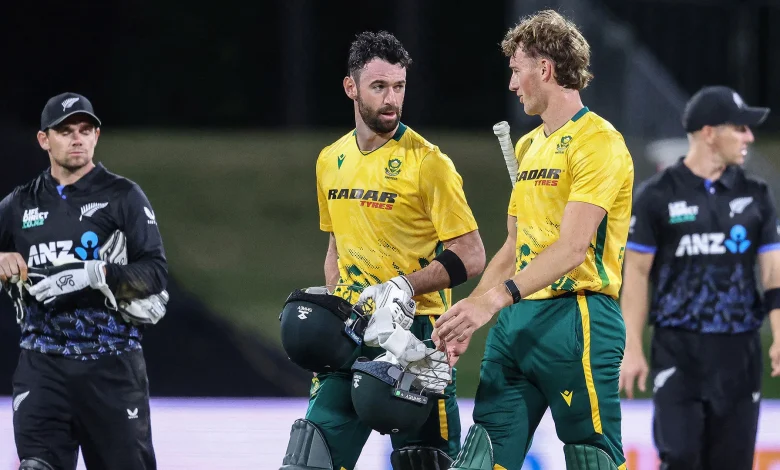
Verified facts: South Africa, fielding four debutants, bowled New Zealand out for 91 in 14. 3 overs and chased the total with seven wickets and 20 balls to spare. Opener Connor Esterhuizen finished unbeaten on 45 from 48 balls and sealed the chase with a six off Kyle Jamieson. Dian Forrester, also on debut, supported with 16 not out. South Africa captain Keshav Maharaj took 2‑25; Nqobani Mokoena claimed 3‑26 to dent any late New Zealand resurgence; Gerald Coetzee and Ottneil Baartman each contributed with wickets. New Zealand had eight players missing from their World Cup squad, including their top six batters from that tournament, and lost five wickets in the powerplay before collapsing to their 10th‑lowest T20 international total and their second‑lowest against South Africa.
Analysis: The Mount Maunganui result underlines how a depleted batting line‑up and a young South African attack executing plans can produce a lopsided scoreline. The debutants provided stability in the chase; Nqobani Mokoena’s three wickets completed the rout. The scale of the defeat is a clear, verifiable data point that reset expectations for the series.
How did New Zealand adapt in Hamilton and what role did personnel shifts play?
Verified facts: New Zealand posted 175 for 6 on a Hamilton pitch described in match commentary as not easy to bat on; Devon Conway top‑scored with 60. Lockie Ferguson credited New Zealand’s ability to adapt quickly to conditions and highlighted the team’s process of recalibrating what constitutes a defendable total on a given wicket. Ferguson also noted that Ben Sears took three wickets in that match, the same tally Ferguson himself achieved. Ferguson had missed the first T20I to be at home for the birth of his child and had also missed part of the summer with an injury. He said he enjoyed playing at home crowds and singled out Eden Park as often producing high scores because of short boundaries and a close crowd atmosphere. Ferguson additionally mentioned that his son Beau attended the Hamilton game in his first outing.
Analysis: The Hamilton turnaround is grounded in two verifiable elements: a higher team total and multiple wicket‑taking performances from the New Zealand bowling group. Lockie Ferguson’s comments frame those elements as the result of conscious adaptation rather than chance. The presence of returning personnel and working changes in bowling lines and variations—evidenced by Sears’ three‑wicket haul—appears linked to the improved outcome.
Nz Vs Sa: What do the contrasting results reveal about the series and what should the public know?
Verified facts: Across the two matches, South Africa demonstrated the immediate impact of fresh players in Mount Maunganui, while New Zealand showed the capacity to recalibrate in Hamilton. Both matches produced clear statistical markers: a 91 all‑out for New Zealand followed by a 175 for 6; three‑wicket hauls for Nqobani Mokoena, Ben Sears and Lockie Ferguson; and substantive contributions from debutants in the South African chase.
Analysis: When viewed together, the results expose a tension between squad depth and adaptability. South Africa’s use of debutants yielded a commanding opening win; New Zealand’s response highlighted processes for adjusting to pitch behavior and rebuilding after personnel absences. The series so far demonstrates that short‑series momentum can pivot sharply when teams respond to conditions and selection realities.
Accountability and next steps: The nz vs sa sequence of results raises concrete questions that merit transparency from team managements—how selection decisions account for player availability, how adaptation plans are formulated between matches, and how opportunities for debutants are balanced against continuity. Public clarity around these decisions would ground future assessments of both on‑field performance and long‑term squad development.