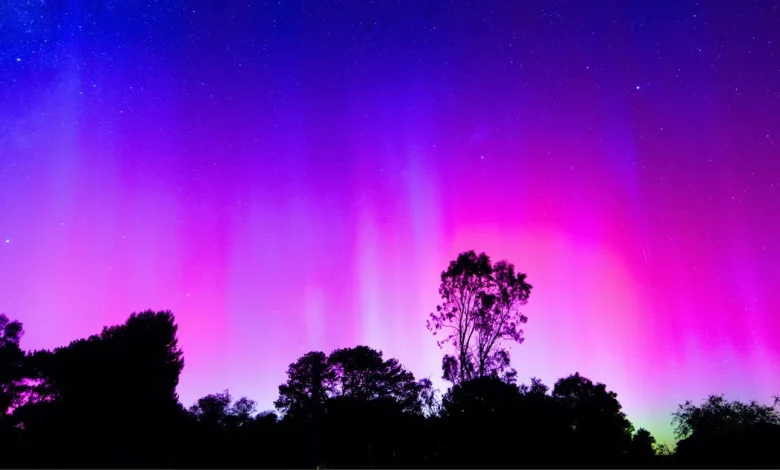
The aurora australis is set to return to southern Australian skies tonight, March 19, driven by a coronal mass ejection that launched from the Sun on March 16 during an M2. 7 solar flare. A G2 (moderate) geomagnetic storm is expected to peak, widening visibility beyond the usual southernmost zones to parts of Tasmania, Victoria, South Australia, Western Australia and southern New South Wales. The incoming CME is expected to reach Earth at around 8: 00 pm AEDT, with the best viewing window falling roughly 60–90 minutes after sunset when skies are fully dark.
Aurora Australis: Where to look
Clear, dark skies with a wide view of the southern horizon will give the best chance of seeing the lights. Tasmania remains the prime zone for full-colour displays, while regional Victoria and coastal spots reduce light pollution and improve visibility. Southern South Australia and southern Western Australia can catch streaks along the horizon if conditions align; parts of southern New South Wales are also listed among the areas where the phenomenon may appear. Urban viewers are advised to move away from city lights for any chance of a sighting.
What the forecasts say and what to expect
NOAA has classified the storm as G2 — a moderate event — which can sometimes push auroral displays further north than usual. The geomagnetic surge is driven by a fast-moving coronal mass ejection, and when the incoming charged particles collide with gases in Earth’s atmosphere they can produce bands of green and violet light that ripple across the sky. March is widely noted as a favourable month for these events because equinox-season geometry makes it easier for solar wind and CMEs to interact with Earth’s magnetic field.
How to watch and photograph tonight
Promising viewing conditions include clear skies, low light pollution and an unobstructed southern horizon. Plan to be in place at least 60 minutes after sunset and be prepared to wait; aurora are ephemeral and can intensify or fade quickly. For photographers, use a tripod, long exposure and high ISO to capture faint glows that may first appear as a subtle green before brightening if the storm peaks. Real-time monitoring of space-weather updates is recommended to sharpen timing and expected intensity as the CME’s path becomes clearer. The NOAA Space Weather Prediction Center and the Bureau of Meteorology provide ongoing guidance on visibility and peak windows.
Immediate reactions and preparedness
Officials at space-weather agencies have rated the incoming activity as moderate, and meteorological agencies are offering guidance on likely viewing conditions. Observers are being urged to seek dark sites and check local sky and cloud conditions ahead of tonight’s expected peak. Because aurora are inherently unpredictable, readiness and patience are the best tools for anyone hoping to witness the spectacle.
What’s next: tonight’s event will clarify how far north the auroral glow reaches and whether the G2 storm produces the stronger displays suggested in forecasts; watchers should monitor updates and be ready to move to darker locations if cloud or local light pollution threatens visibility. If skies clear and timing aligns, the aurora australis could provide a rare and vivid show for many parts of southern Australia tonight.