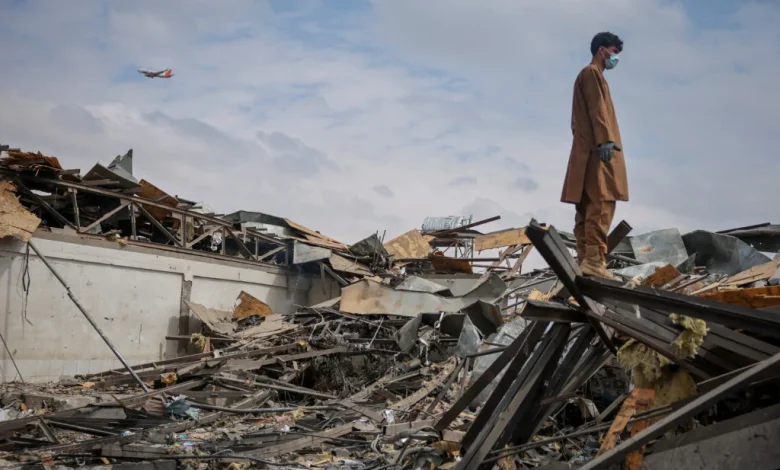
Rescue teams recovered bodies from the rubble of a drug rehab hospital in Kabul after an overnight airstrike that Afghan officials say killed hundreds, a dramatic escalation in the cross-border conflict between Afghanistan and Pakistan. Afghan authorities say the Omid Addiction Treatment Hospital was hit and large sections destroyed; Pakistan insists the operations targeted military facilities and dismissed casualty claims as propaganda.
Background and context
The strike struck at a site that had been expanded and renamed from the Ibn Sina Drug Addiction Treatment Hospital into the larger Omid facility, described by Afghan officials as a 2, 000-bed center established as part of government efforts to tackle addiction. Afghan Interior Ministry spokesman Abdul Mateen Qani said 408 people were killed and 265 injured, and that casualties were taken to several hospitals where crowds gathered to search for loved ones. Local footage showed security forces carrying casualties from the site using flashlights while firefighters struggled to extinguish flames.
Rehab and the targeting dispute
The attack has become the focus of a sharp dispute over intent and targets. Hamdullah Fitrat, Afghanistan’s deputy government spokesperson, said the airstrike hit the Omid hospital and that large sections of the facility had been destroyed. Pakistan rejected the accusation, insisting its strikes across eastern Afghanistan targeted military facilities and dismissing Afghan casualty claims as propaganda.
Pakistan’s Information Ministry said the Pakistani military had “precisely targeted” Camp Phoenix, which it described as a military ammunition and equipment storage site, and noted that the hospital was multiple kilometers from the former camp. The ministry also raised a question about why an alleged drug treatment center would be colocated with an ammunition site. That contention lies at the heart of the competing narratives: Afghan officials place the human toll at the center, while Pakistani authorities emphasize military targets.
Expert perspectives and immediate implications
Abdul Mateen Qani, Interior Ministry spokesman, provided the most specific casualty figures released by Kabul, saying 408 people had been killed and 265 injured. Hamdullah Fitrat, Afghanistan’s deputy government spokesperson, emphasized the scale of destruction at the Omid facility. Amir Khan Muttaqi, Afghan Foreign Minister, spoke about the incident during a meeting with foreign envoys, underscoring the diplomatic sensitivity surrounding the strike.
The competing assertions have immediate operational and humanitarian implications. Afghan officials say the Omid facility was a treatment center for people with addiction problems; Pakistan frames the action as part of a wider campaign against what it calls militant storage sites. Rescue and medical services in the area have been overwhelmed by casualties and by crowds searching for the missing, stretching local response capacity.
Regional consequences and an uncertain path forward
The strike represents a dramatic escalation in a conflict that has seen cross-border clashes and air operations in recent weeks. Pakistan alleges that militants find sanctuary across the border and that military action targets those threats; Kabul denies harboring attackers. The incident has increased regional tensions and risks further retaliation or expanded operations, raising questions about civilian protection and the location of military-related facilities near populated or humanitarian sites.
International calls for restraint have already been voiced by a range of diplomatic interlocutors, and the event will likely dominate diplomatic exchanges in the near term. For now, investigators and diplomats face competing claims: one side citing large-scale civilian casualties at a treatment center, the other citing strikes on a former military base that it says houses ammunition and equipment.
As Kabul tallies victims and Pakistan stands by its assessment of military targeting, one question remains central and unresolved: how will parties reconcile allegations that a treatment center was struck with claims that ammunition and equipment sites were the intended targets, and what safeguards can prevent further harm to civilians and critical health facilities as hostilities continue?