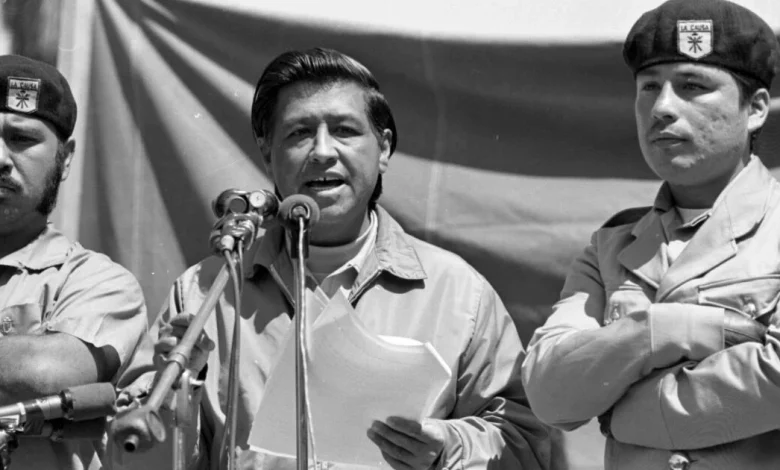
On streets where organizers once carried photos and banners of cesar chavez, planned tributes and marches have been called off and community calendars emptied. The United Farm Workers announced it would not participate in celebrations of its founder amid what the union described as “troubling allegations, ” and a string of Cesar Chavez–centered events from Tucson to San Bernardino has been canceled with little explanation.
Why did the United Farm Workers cancel Cesar Chavez events?
The United Farm Workers invoked a need to respond to serious claims when it said it would step back from annual tributes. The union characterized the reports as “incompatible with our organization’s values, ” and said some items were “family issues, and not our story to tell or our place to comment on. ” It singled out allegations that involved the abuse of young women or minors as particularly troubling and said those accusations were “crushing. ” The union added that it had not received direct reports nor held firsthand knowledge of the allegations, but that their gravity compelled the decision to halt celebrations.
What are organizers and institutions doing now?
Beyond cancellations in Tucson, Houston, Corpus Christi, San Antonio and San Bernardino, the union said stopping public events would “provide space for people who may have been victimized to find support and to share their stories if that is what they choose. ” The Cesar Chavez Foundation expressed sadness and shock at the allegations and said it was working with leaders in the farmworker movement to be responsive, to support those who may have been harmed, and to remain guided by a commitment to justice and community empowerment.
In planning next steps, the union signaled an intention to involve outside expertise. It is working to establish “an external, confidential, independent channel for those who may have experienced harm” during the early days of the union’s history. That channel is intended for people who wish to share experiences of harm, identify current impacts and needs, and, if desired, participate in a collective process to identify mechanisms of repair and accountability.
How does this moment fit into the movement’s broader history?
Cesar Chavez rose to prominence organizing migrant farmworkers in the mid-1960s, joining a grape pickers’ strike launched by Filipino organizers in Delano and helping shape a boycott that drew national attention. He fasted to protest violence surrounding the effort, and the union he helped build later secured contracts for thousands of grape pickers. Miriam Pawel, author of The Crusades of Cesar Chavez, credits Chavez with stunning accomplishments while also noting his failures, paranoia and a dictatorial style. Those mixed legacies help explain why the current allegations have prompted such intense soul-searching inside the farmworker movement and beyond.
For many, the UFW flag and Chavez’s public image became shorthand for dignity and nonviolence in a movement that won material gains for agricultural laborers. Now, with organizers suspending commemorations and institutions proposing independent channels for people to come forward, leaders are confronting how to honor gains while addressing alleged harms tied to the movement’s founder.
The cancellations have been uneven and localized: several events around the country honoring Chavez were canceled in recent weeks, and the union framed the pause as an opportunity to center potential survivors and to learn more before moving forward with public celebrations.
Voices from different corners of the movement have emphasized both caution and the need for process. The union’s decisions and the foundation’s commitment to support and accountability reflect an attempt to balance respect for the movement’s history with responsiveness to allegations that, if substantiated, would demand remedial steps.
Back on the streets where cesar chavez’s image once anchored marches and murals, organizers are now planning quieter work: opening confidential channels, convening experts, and giving people space to tell stories. The scene that once symbolized a unified cause has become a test of how a movement can hold its past and pursue justice at the same time—an unfolding process whose outcome remains uncertain but that, for now, has shifted attention from celebration to inquiry.