Porte Avions Américain Gerald Ford: How a Laundry-Area Fire Exposed Strain Aboard a Supercarrier

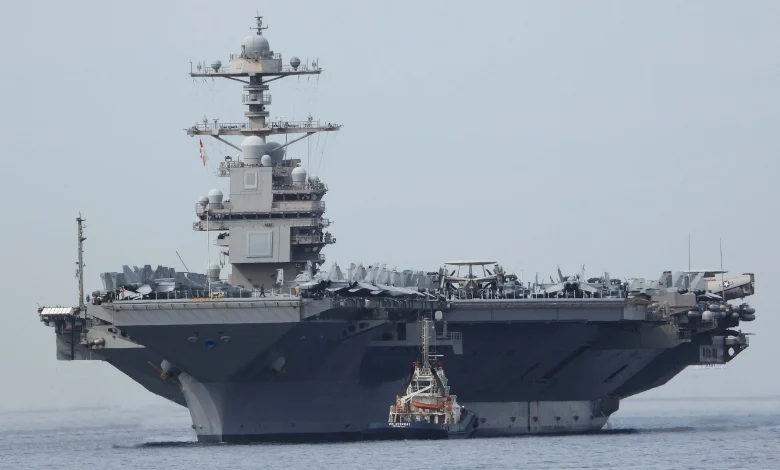
On the deck plates and narrow passageways of the porte avions américain gerald ford, routine work turned into a prolonged emergency when a blaze broke out in a service zone. Crewmembers fought smoke and heat as security teams contained the flames; what began in a confined area rippled into a logistical and human challenge that has not yet fully settled.
What happened on the Porte Avions Américain Gerald Ford?
A fire was declared aboard the USS Gerald R. Ford (CVN-78) on 12 March and was localized in a service area, likely the main laundry. The ship’s onboard security teams contained the blaze after several hours, and three sailors suffered light injuries. The US Navy described the carrier as “fully operational, ” with no damage to its nuclear propulsion plant or to aviation facilities.
Later information clarified the scale of the incident: firefighting efforts extended for nearly 30 hours, and nearly 200 sailors experienced temporary intoxication from smoke or fumes. Multiple compartments in living areas were affected, producing material damage and serious logistical disruption to daily life aboard the carrier.
How did the fire affect life and operations aboard ship?
The carrier houses roughly 4, 500 sailors, and about 600 were forced to vacate their bunks after the fire. Internal reorganization was necessary to maintain berthing and basic living conditions; many sailors spent nights on the deck plates, on the floor or on tables. Those conditions compounded existing hardships: the ship had already faced prolonged operational pressures and recurring plumbing failures that complicated daily life for crewmembers.
Operationally, the Ford continued to carry out flight operations despite the damage to living spaces. Yet the incident arrived amid an unusually long deployment cycle. The carrier departed Norfolk for what was initially a six-month mission and has since remained at sea through successive extensions, moving across the Caribbean, the Mediterranean and toward the Middle East. By mid-March the vessel had surpassed eight months continuously at sea, and planners raised the possibility that the total deployment could approach roughly 330 days — well beyond the Navy’s more customary six- to seven-month tours. Extended time underway increases wear on systems and fatigue among crews, and the recent fire underlines how a localized accident can ripple into broader operational and human consequences.
What is being done now, and what comes next?
Shipboard teams controlled the blaze and medical attention was provided to the lightly injured. The scale of damage to living compartments and the logistical burden created by displaced personnel have prompted naval planners to revisit force rotation and replacement options. One immediate operational response under consideration is accelerating the return to service of another carrier recently back in Norfolk to relieve the Ford.
Beyond shifts in ship rotation, the incident is likely to sharpen attention on maintenance cycles, crew accommodations and the cumulative effects of prolonged deployments on both personnel and systems. The carrier’s continued ability to conduct flight operations shows resilience; the same episode also highlights vulnerabilities that are costly in human terms.
Back where the alarm first rang, a laundry compartment that once served quiet, necessary work now bears the traces of a long fight. For the sailors who slept on tables and on the deck in the days after the fire, the porte avions américain gerald ford is at once an operational asset and a harsh reminder of the strain under extended deployment — a tension that naval planners must address before the next call to sea.