Imperfect Women: Inside a Six-Year Gamble That Brought an Eight-Part Thriller to Screen

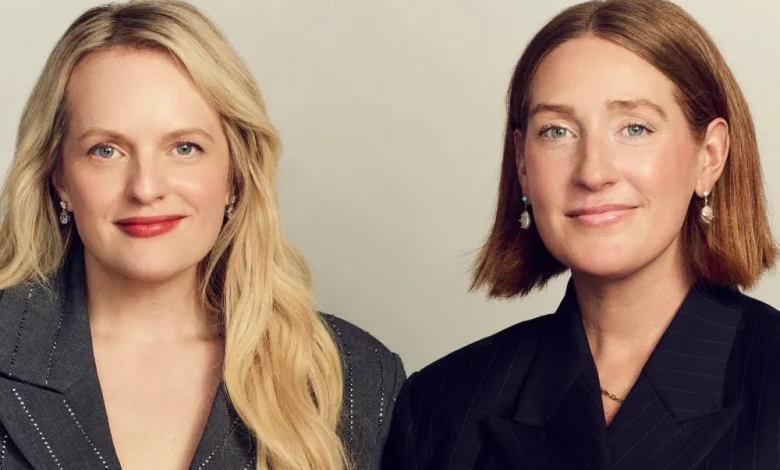
When Elisabeth Moss and Lindsey McManus first read Araminta Hall’s novel, they treated it as a personal talisman—an idea that would define their new producing banner and, eventually, the Apple TV series imperfect women. The project was the very first piece the pair pursued after launching Love & Squalor six years ago, but the road from manuscript to eight-part drama involved pandemic delays, off-the-cuff pitching and an unusually hands-on producer relationship that reshaped both careers.
Background & Context
The origin story of the adaptation is tightly tied to Moss and McManus’s decision to form Love & Squalor and to make that Araminta Hall novel their initial pursuit. Moss sent the book in the fall of 2019; two months later it became the first property they took out to studios and networks. That timeline meant a long gestation period, including pitching through the early days of the COVID-19 pandemic when much of the industry stalled. The series ultimately arrived as an eight-part drama that centers on a trio of friends whose secrets spiral into violence and tragedy.
That early, near-improvised approach to building a production company—emailing potential collaborators, meeting with talent, trusting instincts—formed the template for how Love & Squalor developed projects. Between 2020 and the present, Moss and McManus have produced or executive produced six titles, with three produced together. Their slate includes television projects and a first feature; they also hold a first-look deal with Hulu and Disney’s 20th Television, signaling an intention to sustain the banner beyond a single adaptation.
Imperfect Women: Production and Critique
Imperfect Women adapts Araminta Hall’s narrative into a limited series that relies on a star ensemble—Kerry Washington, Elisabeth Moss and Kate Mara are central—and a familiar murder-among-the-wealthy framework. The series’ setup and character dynamics were shaped by creator Annie Weisman’s adaptation choices and by the producers’ insistence on a specific tonal register. The finished eight-part form foregrounds entangled friendships—Eleanor, Mary and Nancy—and the fractures that push the story toward violence.
Not all responses to the series have been laudatory. One critical appraisal described the show’s execution as muddled within a crowded genre, using terms that characterize it as tired of familiar high-society murder tropes. That critique underscores the risk inherent in staging a prestige ensemble piece: strong performances and production investment can coexist with a sense that narrative invention has been limited. For viewers and industry observers, the tension between craft and originality will likely shape how imperfect women is received over time.
Expert Perspectives and Industry Impact
Elisabeth Moss, actor and co-founder of Love & Squalor, has framed the project as foundational to the producers’ partnership: “The first thing that we ever discussed together as a partnership, which was months before we ever officially had a partnership, was this book, ‘Imperfect Women, ‘” she said, describing the personal conviction that motivated the acquisition and pitch process. Lindsey McManus, president of film and television for Love & Squalor, emphasized the improvisational early phase of their collaboration: “We were in meeting rooms together, just sort of winging it, ” she said, highlighting a producing philosophy driven by instinct and relationships.
Their producing record since then—three joint projects among six credits in recent years, plus a first feature directed by a collaborator—illustrates an emergent model in which actor-producers take substantive creative roles rather than simply accruing executive producer credits. Partnerships and mentorships with established industry players and production labels have helped the duo scale ambitions without ceding control, an approach that could influence similar actor-driven companies aiming to balance prestige television with franchise opportunities.
At the level of wider industry consequences, the trajectory from book to screen in this case illuminates how literary properties continue to be a primary supply line for serialized prestige dramas. The production path—early acquisition, protracted development during a global production hiatus, and strategic alliances with distributors—offers a compact case study in contemporary series launching amid a crowded market for high-end drama.
As viewers weigh performances against structural choices and critics debate originality, the makers must grapple with what success looks like for such a personal, long-held project. Will the series’ star power and layered production story translate into a sustained cultural or commercial footprint, or will it be absorbed into an oversupplied field of similar narratives? For Moss, McManus and collaborators, the answer to how imperfect women lands with audiences will help define the next phase of Love & Squalor’s ambitions and the kinds of projects that follow this six-year gamble.