Users encountered elevated errors and internal-server failures as claude down became a trending technical problem, exposing conflicting accounts about who was affected and how resilient the service really is.
Is Claude Down? What the service status and trackers confirm
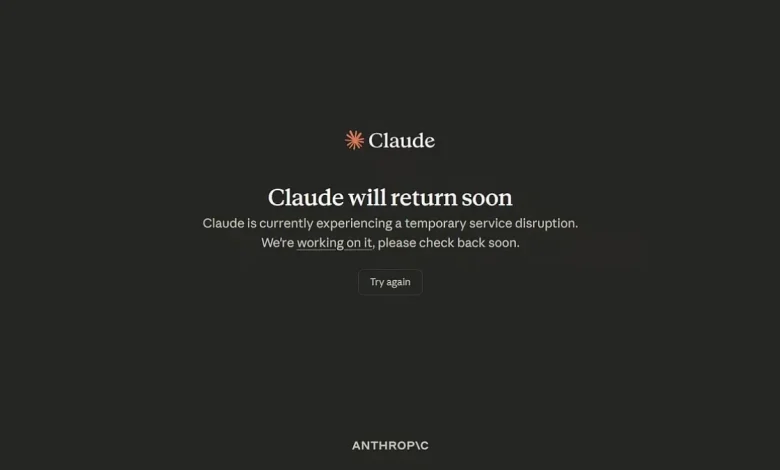
Verified facts: Anthropic’s system status page shows the service experienced “elevated errors” and identifies the affected components as the Opus and Sonnet systems. The status information notes the company identified the issue and is working on a fix but gives no cause for the disruption. A tracking site, Downdetector, logged thousands of user problem reports during the incident, with one report indicating over 5, 000 people had registered problems at peak and later counts in some regions falling to a little over 1, 000. Many users encountered API Error 500 messages, a standard indicator of an internal server error on the provider side, and messages of that form were circulated by affected users.
These items are documented directly on Anthropic’s status page and the Downdetector tracking entries; they represent the factual record shared by the company and the monitoring service during the outage.
Who is affected and where accounts contradict each other?
Verified facts: Public reports in service-tracking channels and user posts show disruption across regions. One set of tracking data and observers suggested the impact was concentrated on the free tier, while other reports described both free and paid users experiencing login failures, long request times, and timing out requests. The outage was not characterized as a full-service blackout; in some cases users could access the interface but received slow or non-responsive behavior.
Stakeholder positions: Anthropic’s status page confirmed elevated errors and indicated work on a fix, but offered no technical cause. Downdetector and aggregated user reports measured the scale of complaints. Users posted error payloads and messages that referenced API Error 500 and internal-server failures. Those who depend on the service for routine tasks reported disrupted workflows and longer execution times.
What the pattern of failures and contradictions means — analysis and implications
Analysis: The record presents two competing impressions. On the one hand, a targeted degradation limited to particular systems or tiers — Opus and Sonnet, and possibly free accounts — would signal an incident with constrained blast radius. On the other hand, contemporaneous reports of login failures, slow responses, and timeouts for both free and paid accounts suggest broader instability that impacts reliability for professional users as well as casual ones.
Viewed together, the facts show a service that can exhibit partial outages manifesting as elevated error rates, internal-server failures (API Error 500), and degraded latency. The coexistence of a status update that frames the event as an identified issue and tracking data indicating thousands of affected users highlights a communications gap: the company acknowledged the problem and remedial action but did not provide a technical explanation or a clear map of who was affected and why.
Accountability and next steps: For users relying on the service in time-sensitive or professional contexts, the incident underscores the need for clearer incident transparency and more granular status reporting tied to specific user tiers and system components. A public post-incident update that names the root cause, outlines corrective measures taken in Opus and Sonnet, and details mitigations for API Error 500 conditions would convert the present ambiguity into documented improvement steps.
For now, as the record shows elevated errors, thousands of problem reports, and internal-server responses, the central unresolved question remains: when the service shows the label claude down, will users receive precise, actionable information about scope, duration, and remediation?