Joe Kent Resigns: Five Revelations Behind a Top US Counterterrorism Official’s Break Over the Iran War


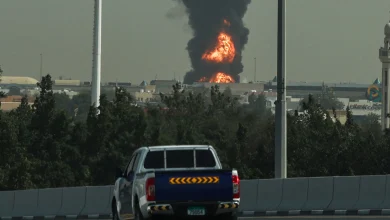
In a move that has jolted Washington, joe kent resigned as Director of the U. S. National Counterterrorism Center, saying he could not “in good conscience support the ongoing war in Iran. ” The departure — announced in a social media post — arrived amid escalating U. S. strikes, a closed Strait of Hormuz and widespread displacement inside Iran. The resignation stitches together personal conviction, institutional friction and a widening regional crisis with immediate implications for U. S. policy and domestic politics.
Joe Kent’s Resignation and Rationale
Kent framed his exit around a stark judgment: Iran posed no imminent threat to the United States and the administration entered the war under external pressure. In his public statement, Kent wrote that the war began “due to pressure from Israel and its powerful American lobby, ” and that he could not continue in his role while those conditions persisted. His departure came after several weeks of U. S. strikes that have intensified the conflict and prompted strategic disruptions, including the closure of the Strait of Hormuz.
The announcement intersects with broader strains inside government: Democrats had opposed Kent’s confirmation, citing past promotion of conspiracy theories and ties to far-right figures. Confirmation hearings had also scrutinized his participation in a secured group chat used by the prior administration’s national security team to discuss sensitive military plans. Those questions, combined with his public repudiation of current war policy, produced a rare, high-profile resignation at a senior counterterrorism post.
Background: Career, Controversies, and Personal Loss
Kent’s profile is a mix of long service and recent controversy. He served two decades in the U. S. Army with 11 combat deployments, including assignments with Army Special Forces and the 75th Ranger Regiment, and was awarded multiple honors, including six Bronze Stars. After retiring from the Army, he worked as a paramilitary officer at the CIA’s Special Activities Center and ran twice for Congress in Washington state, losing both contests to Marie Gluesenkamp Perez.
Appointed to his current position early in the administration, Kent carries weight from his operational record as well as exposure to contentious networks and wartime debates. His personal biography also includes profound loss: his first wife, Shannon M. Kent, a Navy cryptologic technician, was killed in a suicide bombing in Manbij, Syria, on January 19, 2019, a fact Kent has publicly commemorated. That loss, and his operational background, complicate simple characterizations of his resignation as purely political.
Expert Perspectives and Regional Consequences
Voices across the political spectrum underscored how the resignation amplifies debate over the war’s origins and aims. Senator Lindsey Graham, a prominent advocate of a tougher line toward Iran, said, “We haven’t underestimated Iran at all. We’re crushing them. ” That statement frames a contrasting view to Kent’s assessment and illustrates a fracture in Washington rhetoric about strategic objectives.
Kent’s own words serve as both explanation and critique: he declared that Iran posed no imminent threat and that lobbying pressure drove U. S. entry into the conflict. The divergence between a senior operational official’s judgement and public war aims creates immediate operational and political consequences inside counterterrorism circles.
The regional fallout is already measurable. The U. N. refugee agency reports that hundreds of thousands of Iranian households have been displaced by strikes, and the conflict has spread beyond isolated exchanges to affect trade routes and regional security. Rising oil prices, domestic unrest within Iran, and the spread of hostilities across the Middle East are cited as immediate ripple effects. Domestically, the resignation adds to electoral stakes as control of Congress remains contested and as leaders who favored stronger action defend their positions.
Kent’s resignation raises practical questions about continuity at the National Counterterrorism Center, the coherence of strategic messaging from Washington, and how operational judgment will inform future decisions. It also foregrounds accountability: how senior officials reconcile field experience, personal conviction, and policy disagreement under the pressure of active conflict.
As policymakers weigh personnel moves and strategic alternatives, one pressing question remains: will joe kent’s public break force a broader reassessment of the war’s justification, or will it harden the opposing positions he challenged?