Backstage lights still warm, a video clip loops on Demi Lovato’s phone as she smiles and writes, “Ahhh i loved surprising you all!!!” The moment captured the singer’s recent reunion with the jonas brothers — a spontaneous duet of the Camp Rock 2 hit “Wouldn’t Change a Thing” that has turned a rehearsal memory into a talking point for fans and industry observers alike.
Jonas Brothers surprise: what happened on stage and why it mattered
The surprise took place amid a crowd already familiar with shared pop‑culture history: Lovato and the former Disney Channel stars sang together, reaching back to songs that defined a generation’s teenage soundtrack. Lovato’s Instagram post, accompanied by the performance clip, fed fan speculation about what her upcoming It’s Not That Deep North American Tour might hold. The tour is an 18‑date North American run that begins in Orlando and closes in Houston, and Lovato wrote that she couldn’t wait for “so many more memories to be made… for now we can just relive this one!”
That reunion did not arrive out of nowhere. In August 2025 Lovato appeared on the opening night of the Jonas Brothers’ Greetings From Your Hometown Tour, joining them to perform “This Is Me” and “Wouldn’t Change a Thing. ” For audiences, these onstage crossings are reminders that pop careers often continue as layered collaborations: surprise appearances, shared pasts and the persistent demand for nostalgic live moments.
From stage to screen: Nick Jonas in John Carney’s Power Ballad
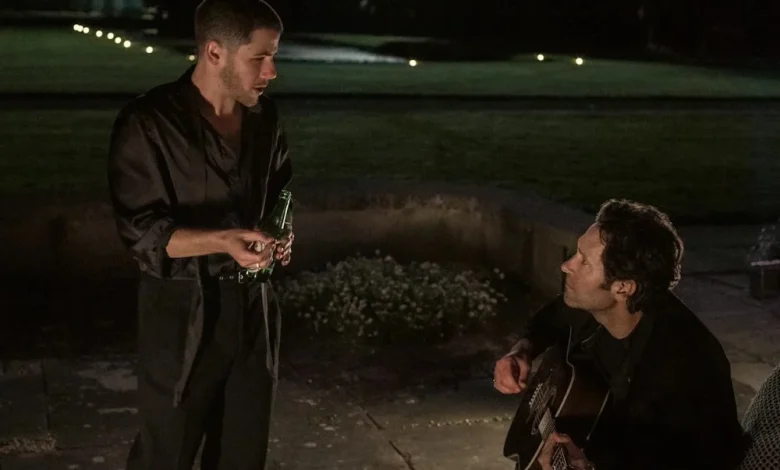
At the same time that the live stage is being refreshed by reunions, one member of the group has been moving into another medium. Nick Jonas appears in Power Ballad, a film directed by John Carney, where he plays Danny Wilson, a former boy‑band star attempting to reclaim a solo identity. Paul Rudd co‑stars as Rick Power, a wedding singer in Ireland whose life and lost musical ambitions intersect with Jonas’s character.
The film’s review describes John Carney’s work as embracing heartfelt, unguarded pop — an approach summed up in the review’s phrasing: “Own your sappiness! Forget the embarrassment. ” Carney’s previous films are noted as part of that lineage, and in Power Ballad the on‑screen meeting of a seasoned wedding singer and an ex‑teen idol becomes a study of how artists reconcile public persona and private longing. Marcella Plunkett and Beth Fallon are credited in the film’s cast, rounding out a world where the familiar textures of pop music carry serious emotional weight.
That trajectory — from teen‑market success to adult reinvention — mirrors what audiences witnessed in the surprise duet: artists who once occupied branded, youthful roles now remix those identities onstage and on film, sometimes in the same breath. For fans it offers both nostalgia and a new context in which to read familiar faces.
Specialists in musical storytelling might point to Carney’s films as a template for this kind of crossover: intimate narratives that ask performers to lay bare the contradictions of fame while celebrating the very pop songs that made them stars. The dynamic between Rudd’s character and Jonas’s character in Power Ballad, framed by the director’s sensibility, gives an example of how pop performers can be recast as actors and complex protagonists without losing the musical core that audiences expect.
Practically, the effects are visible. Lovato’s It’s Not That Deep Tour will take her across a North American slate of cities, and performances like the Camp Rock duet show how live shows are curated to create headline moments. On the other side, film roles offer artists like Nick Jonas a way to reframe their public work and reach different audiences, blending stage credibility with cinematic character work.
The opening clip — a surprised crowd, three voices harmonizing on a beloved song, Lovato’s breathless caption — now reads differently. It points both backward to shared pop history and forward to ongoing reinvention: a single stage moment that threads through tour planning, fan culture and a band member’s parallel life in film. For those who watched it play out, the reunion was more than nostalgia; it was part of the long, open question about how artists like the jonas brothers will keep reshaping the stories that made them famous.