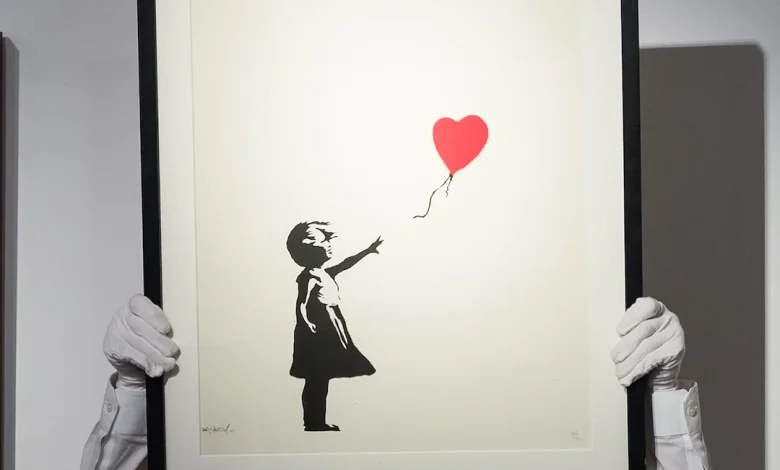
A lengthy investigative report has identified banksy as Robin Gunningham, a Bristol-born man who later changed his name to David Jones. The claim has reopened debate about artistic anonymity, personal safety and the blurred line between public work and private life.
What does the investigation say about Banksy?
The investigation connects the name Robin Gunningham — later legally changed to David Jones, material cited in the inquiry — with the body of work attributed to the street artist. It recalls earlier efforts from 2008 that made a similar identification and points to a turning point involving graffiti in a Ukrainian village damaged by shelling, where local witnesses described works created quickly by people with covered faces. The report links Gunningham, by then going as David Jones, to travel to that area and suggests he worked in partnership with Robert Del Naja, the Massive Attack frontman. The inquiry also states that Del Naja is not the artist but has likely partnered on projects over the years.
What are the principal voices responding to the claim?
Mark Stephens, described as the artist’s longtime lawyer, said the artist “does not accept that many of the details contained within your enquiry are correct” and stressed that Banksy’s anonymity is crucial because he has “been subjected to fixated, threatening and extremist behavior. ” Stephens added that “[working] anonymously or under a pseudonym serves vital societal interests, ” protecting freedom of expression when creators address sensitive topics such as politics, religion or social justice.
Banksy’s company, Pest Control Office, has been silent on the matter, stating the artist “has decided to say nothing. “
Steve Lazarides, identified as the artist’s former manager, offered a different angle. Lazarides said he had arranged for the artist to change his legal name when they parted ways in 2008 and suggested that searching for a man named Robin Gunningham would be “a straight dead end. ” He said, “I don’t remember whose idea it was, but I know for a fact it was me that set it all up. ” Lazarides added, “There is no Robin Gunningham, ” and, “The name you’ve got I killed years ago. ” On the question of the artist’s legal moniker he declined to disclose the new name, saying, “It’s just another name, ” and warned that “life-wise, you’ll never find him. “
What does this mean for anonymity, collaboration and the art market?
The investigation’s claims, and the responses they provoked, highlight three intersecting issues. First is personal safety: the lawyer’s comments link anonymity to protection from harassment and threats, framing pseudonymity as a shield that supports speech on contentious subjects. Second is collaboration: the report’s suggestion of partnerships complicates the image of a solitary street artist and raises questions about how credit is shared, how projects are planned and how collective action is reflected in solitary authorship. Third is legacy and value: linking a public name to a private life can change how works are contextualized and how markets, institutions and the public assess provenance.
None of the principal parties have accepted the investigative narrative in full. The artist’s legal representative rejects many of the detailed assertions, Pest Control Office has opted for silence, and the former manager insists the trail has been deliberately obscured by legal name changes and pacts of confidentiality.
The dispute returns us to the public spaces where the work appears: walls, buildings and, in one cited instance, war-ruined streets. For admirers and critics alike, the central question is less whether a single identity can be proved than what the work continues to say when viewed on its own terms.
As the debate unfolds, the claims in the report have already renewed attention on artistic anonymity and on the practical steps taken by those close to the artist to protect that anonymity. Whether the investigation ultimately resolves identity questions or only deepens the mystery, the immediate effect has been to force a public reckoning with how art, law and personal safety intersect.
The story closes where it began: a name on a page and a face on a wall. The investigation puts Robin Gunningham at the center of a long-running conversation, but those who once guided legal and personal choices around the artist say the trail was intentionally erased. For now, banksy remains a contested label — an argument over a name that may change how we read the works but cannot, by itself, alter the images on the street.