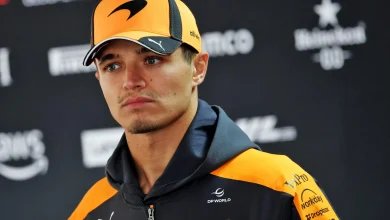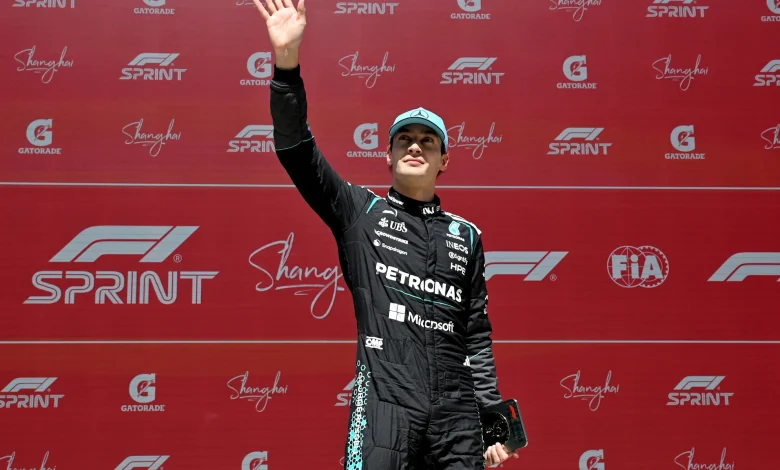
George Russell extended his perfect start to the season by winning the Sprint at the chinese grand prix, prevailing after an early multi-car tussle for the lead and surviving a late Safety Car period. The 19-lap contest saw position changes between Russell, Lewis Hamilton and Charles Leclerc, a decisive move into the Turn 14 hairpin, and a late pit-stop sequence that shuffled the order before the chequered flag.
Chinese Grand Prix Sprint: what unfolded
The Sprint began with Russell holding pole and maintaining the lead through the opening corners before Lewis Hamilton surged from P4 to challenge. Hamilton briefly took the lead with a Move into Turn 9, only for Russell to fight back into the Turn 14 hairpin on Lap 5 and open a gap. Charles Leclerc, who had started fourth on the grid, worked his way into contention and finished 0. 6 seconds behind Russell after late pit activity under a Safety Car called when Nico Hulkenberg’s stricken Audi required retrieval.
The late Safety Car prompted a flurry in the pits. Russell and others made late stops, while a handful of drivers—including Liam Lawson and Ollie Bearman—remained out and scored the final Sprint points. Kimi Antonelli recovered from a poor start to finish ahead of Oscar Piastri but served a 10-second penalty in the pits for contact with Isack Hadjar on the opening lap. Nico Hulkenberg, Valtteri Bottas and Arvid Lindblad failed to finish the Sprint.
Causes, consequences and the finer margins
The sprint highlighted how start dynamics, recovery drives and late-race interventions can alter outcomes over a short distance. Russell’s pole gave him the platform, but the early trades between the Mercedes pair and Leclerc showed the race for track position was finely balanced. Hamilton’s multiple overtakes and defensive moves allowed Leclerc to slip into contention, while Antonelli’s collision and subsequent penalty materially affected his result and opened space for competitors such as Lando Norris and Oscar Piastri to pick up positions.
The Safety Car triggered by Hulkenberg’s stricken Audi proved decisive. Teams that took the opportunity to pit reorganized the running order, while those who stayed out capitalized on track position. The Sprint classified a mix of late-stoppers and drivers who remained on track; that split shaped the final points distribution and left clear markers on strategic vulnerability in condensed race formats.
Collectively, the Sprint outcome at the chinese grand prix reinforced how small incidents—an opening-lap collision, a spin, a loss of power—cascade across a short race and into the main Grand Prix weekend. Penalties and on-track contact further underscored the margins separating a podium from a non-finish.
Expert perspectives and immediate implications
George Russell, Mercedes driver, recorded the Sprint victory and maintained a 100% winning start to the season in the Sprint format. Charles Leclerc, Ferrari driver, secured second place after recovering through the field. Lewis Hamilton, Mercedes driver, completed the podium despite being forced to stack during the late pit sequence. Kimi Antonelli, Mercedes driver, was assigned a 10-second penalty after contact with Isack Hadjar, the latter finishing P15.
Other notable performances included Lando Norris finishing fourth, Oscar Piastri sixth after being overtaken late, and Liam Lawson and Ollie Bearman taking advantage of staying out during the late caution to claim points. Max Verstappen (Red Bull) and Esteban Ocon (Haas) completed the top 10, followed by Pierre Gasly, Carlos Sainz, Gabriel Bortoleto and Franco Colapinto in the classified order.
Mechanical issues and incidents also had immediate impact: Valtteri Bottas suffered a loss of power, contributing to his non-finish, while Arvid Lindblad spun on the opening lap. The combination of on-track contact, penalties and mechanical troubles underlined the unpredictable character of the Sprint in shaping the weekend.
The Sprint result at the chinese grand prix leaves teams to reassess short-race risk appetite, pit sequencing under late cautions, and the cost of opening-lap incidents. With the Sprint producing a compressed but consequential sample of competitive dynamics, teams will be parsing tyre choices, restart behaviour and penalty exposure ahead of the main race.
How teams translate Sprint lessons into Grand Prix strategy will determine whether the weekend produces further surprises or confirms the pecking order revealed in the Sprint.
As the weekend progresses, one key question remains: can the Sprint form of the frontrunners be sustained over the longer Grand Prix distance, or will the chinese grand prix main race rewrite the order witnessed in the shortened contest?