Oscars 2026: Sinners Vying for Historic Wins Against One Battle After Another — Can It Pull It Off?

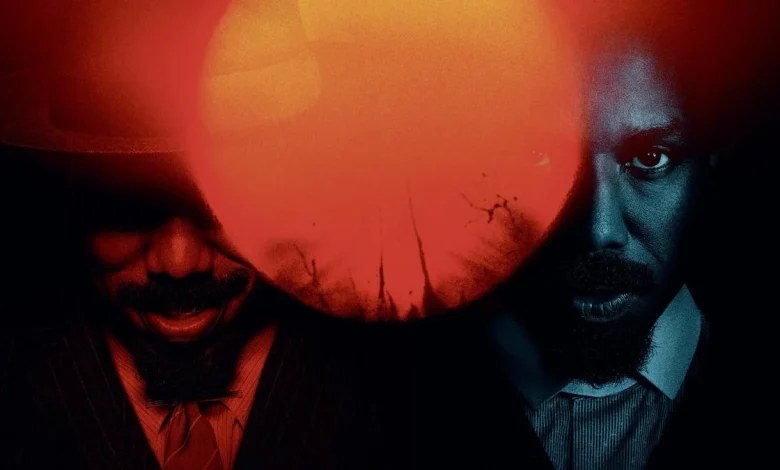
The Oscars 2026 race has narrowed into a two-film duel that few pundits expected a month ago: Sinners and One Battle After Another. Sinners, noted for Michael B. Jordan’s dual performances and a record 16 nominations, and Paul Thomas Anderson’s late-season favorite, with 13 nominations, now occupy opposing trajectories shaped by release timing, awards momentum and a BAFTAs controversy that reached voters as ballots were being finalized.
Background & context
The contest is framed by starkly different origins. Sinners, directed by Ryan Coogler, opened in April and became a commercial phenomenon, breaking box-office records while using a period vampire story as an allegory for racism. It earned a record 16 Academy Award nominations, including best actor for Michael B. Jordan and best director for Coogler. One Battle After Another, Paul Thomas Anderson’s adaptation of a Thomas Pynchon novel released in late September, underperformed at the box office but accumulated critical and institutional momentum, gathering 13 nominations.
The two films have followed opposing awards-season logics. One Battle After Another arrived in the fall and immediately claimed key prizes across the season’s biggest voting bodies: Critics Choice, the BAFTAs, the Golden Globes, the Directors Guild Awards and the Producers Guild Awards. No film that has taken that exact slate of awards in a single awards cycle has failed to win best picture at the Academy Awards. Sinners, despite its earlier release, has staged a comeback in the closing weeks, winning the top drama prize from the American Cinema Editors, best ensemble at the acting branch awards, and best original screenplay at the Writers Guild Awards — a combination of wins that history suggests is a strong indicator of success at the Oscars.
Oscars 2026: deep analysis of momentum and timing
Two central dynamics govern this duel: timing and momentum. Conventional campaigning wisdom favors late-year releases, which benefit from fresher memories among academy voters. One Battle After Another capitalized on that pattern with a late-September debut that sustained visibility into voting season despite weak box-office returns. By contrast, the April release of Sinners presented a longer gap between theatrical buzz and final votes, traditionally a handicap.
Yet awards-season outcomes are not determined solely by calendar placement. One Battle After Another’s sweep of major guild and critic awards established a statistical precedent that historically almost guarantees an Academy best picture win. Sinners’ surge in the final weeks — clinching editing, ensemble and writing honors — has created a countervailing statistical argument: no film that has combined those particular guild and branch prizes has failed to take the top Oscar. The result is a collision of two predictive patterns, each rooted in measurable award outcomes rather than speculation.
Complicating the arithmetic was an unexpected controversy at one of the season’s major ceremonies. During the BAFTAs broadcast an involuntary tic by Scottish Tourette’s campaigner John Davidson caused an on-air utterance of a racial slur. The broadcast left open questions about editorial choices in post-production. That episode reached many voters as they were finalizing ballots, injecting a reputational variable at a delicate moment in decision-making. The practical effect is hard to quantify, but timing again proved critical: a controversy occurring during ballot finalization can shift the calculus in a close race.
Expert perspectives
Ryan Coogler, director (noted for a prior blockbuster), anchors Sinners’ creative identity, with dual-lead performances credited as central to the film’s record nomination haul. Michael B. Jordan, actor, stands out for playing identical twins and is nominated in the best actor category. Paul Thomas Anderson, filmmaker, is the architect of One Battle After Another and has seen his film convert critical acclaim into a sweep of major industry prizes. Delroy Lindo, actor, figures in the Sinners campaign with a supporting nomination.
Industry voting patterns and the overlap of specific awards point to two competing predictive models: the late-season momentum that buoyed One Battle After Another, and the cross-branch victories that have propelled Sinners back into contention. Jessie Buckley, actress, is also noted within the season as a favorite in a separate leading-actor race for a different film, reflecting the fragmented nature of voter priorities across categories.
Neither model guarantees an outcome; both are built on historical correlations cited repeatedly during this awards cycle. The academy’s final decisions will hinge on how individual voters weigh recency, critical consensus and the symbolic stakes attached to each film.
As votes are tallied, the Oscars 2026 outcome will test which pattern proves more determinative: the late-year awards sweep or the cross-branch accumulation of honors that Sinners has achieved. Which precedent will the Academy follow, and what will it signal about the balance between commercial reach, thematic weight and awards-season strategy?