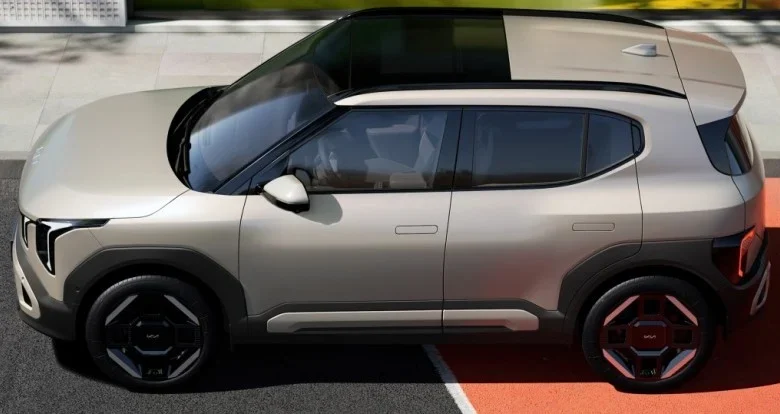
The arrival of new compact electric models has sharpened attention on how small differences reshape buyer decisions — and hyundai is at the center of that debate with its Inster model. The contrast between the Kia EV2 and Hyundai Inster lays bare a central trade-off: larger interior and longer maximum range on one side, lower upfront cost and greater maneuverability on the other. Close scrutiny of dimensions, battery options and subsidy eligibility shows why affordability in the city segment is not just about headline price.
Background & context: what the launches reveal
Kia has publicly presented the EV2 as its cheapest electric model and the car has already been observed on Korean streets without camouflage. The EV2 is expected to start around €29, 900 and deliberately uses a 400V electrical architecture rather than an 800V system, a choice that trades faster charging potential for lower entry cost. Battery offerings for the EV2 are a 42. 2 kWh unit and a 61 kWh unit, and the car includes both 11 kW and 22 kW AC charging by default. Inside, the package follows contemporary compact-EV conventions with two 12. 3″ touchscreens flanking a 5. 3″ climate-control display.
The Hyundai Inster enters the same city EV segment positioned for compactness and cost efficiency. Published dimensional data show a markedly shorter overall length and narrower body than the EV2, while maintaining a slightly longer wheelbase — a combination framed as advantageous for rear-seat comfort despite overall smaller exterior proportions. The Inster is offered with two battery sizes and two motor outputs, and its listed equipment and pricing emphasize a value orientation for urban purchasers.
Hyundai Inster vs EV2: compact trade-offs in numbers
Measured specifications expose where the two cars diverge. The Kia EV2 lists exterior dimensions that make it the larger vehicle: length 4, 060 mm, width 1, 800 mm, height 1, 575 mm, wheelbase 2, 565 mm. The hyundai Inster is more compact in length and width — 3, 825 mm and 1, 610 mm respectively — but with a wheelbase of 2, 580 mm. That slightly longer wheelbase on the Inster is presented as a feature for rear-passenger comfort despite the smaller exterior footprint.
Luggage and usable volume are another axis of differentiation. The EV2 publishes a trunk capacity of 362 liters. The Inster starts with 238 liters with seats in place, but folding or advancing the rear seats raises usable space to 351 liters and, with seatbacks folded flat, up to 1, 059 liters — a configuration that narrows the practical gap for shoppers who prioritize flexible cargo space for short trips.
Range and power figures further separate the two entries. Kia positions the EV2 with two battery choices: 42. 2 kWh delivering up to 317 km and 61 kWh delivering up to 448 km. The hyundai Inster is listed with 42 kWh for about 327 km and 49 kWh for about 370 km. Power outputs described for the Inster are 71 kW (97 hp) and 85 kW (115 hp), both front-wheel drive; the EV2’s exact motor outputs are being withheld, though both EV2 versions are expected to exceed 74 kW (100 hp). On maximum single-charge range the EV2 holds an advantage, while the Inster offers competitive mid-range figures in a smaller package.
Equipment and pricing further crystallize the market positions: the EV2 base Air trim includes 16-inch alloys, LED headlights, a six-speaker audio system, dual-zone climate control and roof rails. The Inster’s Klass trim emphasizes value items such as 15-inch steel wheels, heated and electrically adjustable mirrors, an electronic parking brake, hill-start assist, an emergency braking system and Stop & Go cruise control. Estimated starting prices diverge by market treatment: the EV2’s Spain price estimate sits near €25, 000 before discounts with possible subsidy advantages tied to local production, while the Inster is already listed from €25, 140 for its base specification and may reach lower net prices once national discounts are applied.
Implications and conclusion: who wins the affordable EV fight?
The technical and commercial contours drawn by the two launches point to a buyer decision governed by concrete use cases rather than brand alone. The Kia EV2 prioritizes interior space and maximum driving range, trading a potentially higher sticker for less frequent charging stops. The hyundai Inster prioritizes compact dimensions, maneuverability and a price proposition that can undercut rivals after incentives. Subsidy mechanics tied to production location further nuance cost comparisons, affecting the effective price for budget-sensitive buyers.
For urban commuters and pragmatic families alike, the matchup underlines that affordable electrification depends on the balance of cargo flexibility, real-world range, and total cost after incentives. Each model leans into a different combination of those elements. Which combination will tip the scale for most buyers in crowded city markets — the extra range and usable space of one model or the lower entry price and tighter footprint of the other — remains the central question as both reach showrooms and official performance figures are finalized. Will city buyers prioritize range and room, or will price and maneuverability decide the winner in practice?