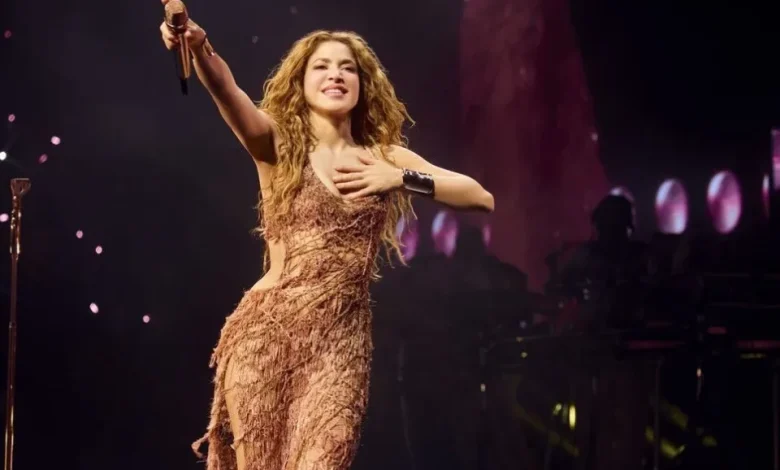
More than three decades into a career that has crossed languages and continents, shakira appears among 17 nominees for the Rock and Roll Hall of Fame — and a high-profile public endorsement now frames her nomination as both historic and urgent.
Who is publicly defending Shakira’s case?
Verified facts: Nile Rodgers, guitarist and founder of Chic and an inductee of the Rock and Roll Hall of Fame, issued a public statement endorsing Shakira’s candidacy. Rodgers emphasized that Shakira has spent more than thirty years bringing Latin American music and culture to international stages, and he asked whether it would be fitting for her to become the first woman from Latin America admitted to the Rock and Roll Hall of Fame. Rodgers shared his message in Spanish as well as in English and distributed it through his social media channels.
Analysis: An endorsement from a Rock Hall inductee who is also a recognized industry figure alters the nomination narrative from a purely procedural listing to a debate about institutional recognition and representation. Rodgers’ framing — that Shakira’s global impact justifies a historical first — elevates the question from fan enthusiasm to an argument about the museum’s remit and legacy. That shift increases public scrutiny on how the Hall balances popular influence with expert assessment.
What did Shakira tell her fans about the nomination?
Verified facts: Shakira used her WhatsApp broadcast channel to send an audio message thanking fans for supporting her nomination to the Rock and Roll Hall of Fame. In the recorded message she called her followers her “family, ” expressed deep gratitude for their ongoing support, and highlighted their role in the nomination process. The Hall’s selection process, as described in the nomination materials, combines votes from a group of 1, 200 industry experts and a daily fan vote that counts as an additional ballot; the public voting window allows fans to register daily preferences during the designated period. The nomination list for this cycle includes 17 acts and names ranging across genres and generations.
Analysis: Shakira’s direct outreach a personal audio on a broadcast channel demonstrates a strategic mobilization of her fanbase to influence the fan-vote component of the selection process. Where expert ballots are weighted by industry figures, the fan vote functions as a visible lever that can propel nominees into the final counting threshold. Her message underscores how contemporary campaigns for honors now blend institutional persuasion with mass mobilization through closed networks and social tools.
What are the stakes for the Rock and Roll Hall of Fame and Latin artists?
Verified facts: If elected, Shakira would be among a small number of artists chosen from the 17 nominees for this edition and would mark a first for her country in the Hall. The nomination criteria require that a candidate’s first commercial recording be released at least 25 years prior to consideration; Shakira meets that eligibility standard. Nile Rodgers framed the potential induction as a breakthrough for Latin female artists within the institution’s history.
Analysis: The combined facts point to a broader institutional test: whether the Rock and Roll Hall of Fame will expand its historical narrative to reflect artists who have driven global popular music outside the Anglophone mainstream. Rodgers’ citation of Shakira as a gateway figure raises expectations that an induction would not only honor one artist but also alter perceptions of whose contributions the institution values. That potential shift carries implications for future nominees from Latin America and other underrepresented regions.
Accountability and next steps: Verified facts are clear about mechanics — a list of 17 nominees, a selection process involving 1, 200 expert ballots plus a fan vote, and public statements from both Nile Rodgers and Shakira. Analysis shows that endorsements and organized fan engagement are now integral to the outcome. The Rock and Roll Hall of Fame should publish complete details of the voting timeline and the weight of the fan ballot in final counts to ensure transparency. Stakeholders — including industry voters, the institution, and the artist’s supporters — must be able to assess how representation is determined. For shakira, the nomination and the attendant endorsements crystallize a question of legacy: will institutional recognition finally match the global scale of her career?