Malte: A new Palermo route and a seaside campus rewrite how the island connects to the Mediterranean

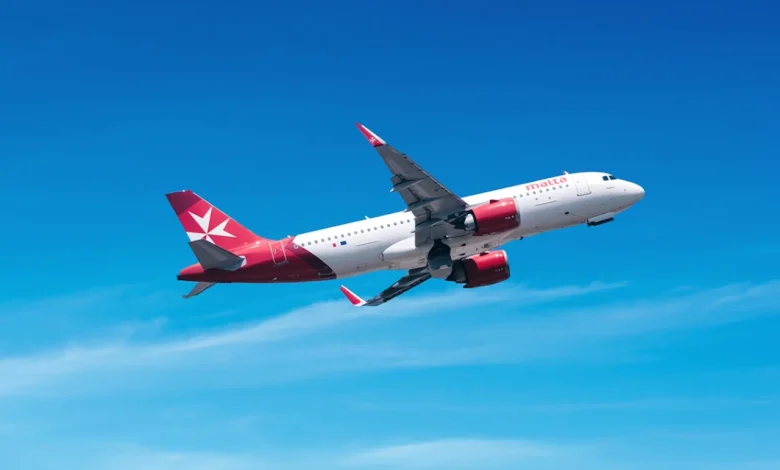
At Luqa airport the lights of an evening departure pick out the limestone buildings of the island as a KM Malta Airlines jet prepares to taxi — a small scene that for malte encapsulates twin shifts in mobility and education this summer. A new three-times-weekly Palermo service and a waterfront EF language campus are both being presented as practical moves to widen links across the central Mediterranean.
How will the new Palermo link change Malte’s connectivity?
The airline KM Malta Airlines will open a direct route between Malta International Airport (MLA) and Palermo Falcone–Borsellino (PMO) starting 30 May 2026, with evening flights on Tuesday, Wednesday and Saturday. Flight KM668 leaves Luqa at 20: 55 — 21: 30 on Wednesdays — and arrives in Palermo about an hour later; the return service, KM669, departs Palermo late in the evening and is scheduled to land back in Malta just before midnight. David Curmi, president of KM Malta Airlines, said: “We are happy to introduce Palermo as a new destination in our summer 2026 program. Currently, Malta is not directly linked to Palermo. This new route expands choice for Maltese travellers and encourages Sicilian and Italian visitors. “
KM Malta Airlines, created after the dissolution of the former national carrier in spring 2024, is concentrating on viable European routes with strong regional and tourist demand. The company already plans seven weekly flights to Catania, broadening options between the islands. Malta International Airport statistics show Italy is one of the principal source markets for visitors, ahead of the United Kingdom and France; in 2023 more than 900, 000 passengers travelled between Malta and Italy, a flow the new Palermo link is expected to grow.
What does a seaside EF campus mean for students in malte?
EF is relocating its Malta school after more than twenty years to a new waterfront campus at St. George’s Bay, opening for students on 15 June. Carsten Knobloch, Executive Director of EF Malta, explained the move: “Malta has become one of EF’s most important destinations, not only for its climate, but because students can combine academic progress, environment and an affordable standard of living. With this new campus we create a place where English learning happens naturally in an environment conducive to exchange. ” The facility spans four floors with modern classrooms, a large auditorium, dining and study areas and terraces overlooking the beach. EF Malta is an accredited Cambridge examination centre and welcomed students from more than 100 nationalities, aged from 7 to 85, reporting a 100% pass rate in its most recent Cambridge English session.
The placement of the campus by the sea is intended to knit everyday student life with the island’s tourism draw, making short stays and immersive programmes more attractive. That residential, activity-rich model mirrors other EF moves in the region and signals investment in long-term student engagement on the island.
Who is acting to strengthen tourism and education ties — and what next?
On the travel side, Gesap, the operator of Palermo airport, welcomed the connection. Gianfranco Battisti, chief executive of Gesap, called the line “a strategic route that consolidates Palermo’s role as a Mediterranean hub and strengthens exchanges between two historically and culturally close territories, ” and said it should stimulate international traffic and foster new tourist and commercial flows between Sicily and Malta. For educators, EF’s leadership framed the new campus as a commitment to place-based learning that leverages Malta’s multicultural identity and seaside setting.
Both moves are being presented as complementary rather than competitive: the airline expands practical access to western Sicily’s cultural sites such as Cefalù, Segesta and Erice, while the EF campus offers a steady stream of international students seeking immersive English study. KM Malta Airlines’ focus on regional European lines and EF’s campus investment together underline an emerging strategy to connect mobility and learning as pillars of the island’s summer economy.
Back under the evening lights at Luqa, the jet that will fly to Palermo waits while at St. George’s Bay the first students will soon step out onto terraces that look over the Mediterranean. For malte, these are small gestures with larger intent: more options to travel, study and meet across nearby shores — and a practical test of whether new routes and classroom walls can reshape the island’s place in the region.