Shock opening: Treasury Secretary scott bessent has authorized a 30-day waiver allowing sales of stranded Russian crude — a sharp reversal in policy that some analysts estimate could boost Russian oil receipts by roughly $10 billion in a month while officials frame the move as an emergency step to steady global markets.
What did Scott Bessent announce and why?
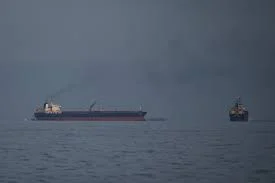
Verified fact: scott bessent, serving as U. S. Treasury Secretary, announced a narrowly tailored, short-term policy permitting the sale of Russian oil that had been loaded on tankers but remained unsold due to sanctions. The waiver is active for 30 days. scott bessent characterized the measure as intended to reduce the economic impact of the ongoing US–Israel conflict with Iran and to promote stability in global energy markets.
Verified fact: The administration maintains sanctions on Russia’s two largest oil companies, Lukoil and Rosneft, while exempting only the specific category of floating, previously stranded cargoes for the limited period.
What do the numbers and expert estimates show?
Verified fact: Analysts and institutions present divergent estimates of the waiver’s fiscal and market effects. One macroeconomic estimate puts possible additional monthly Russian oil export receipts at about $10 billion, with roughly half of that amount potentially paid to the Russian government in taxes. The Centre for Research on Energy and Clean Air (CREA) provides a lower estimate but concludes that the waiver would still allow Russia to clear some stockpiles and boost production. CREA’s energy analyst Isaac Levi noted Russia had slowed oil production because of storage constraints.
Verified fact: Market commentary highlights the limited scope of the move: commodity strategists have said the waiver will only modestly increase available supply and may only “scratch the surface” of supply disruption tied to the conflict in the Persian Gulf. Observers point to the continuing disruption of tanker passages through the Strait of Hormuz and an elevated international benchmark price for crude, which has remained substantially above pre-conflict levels.
Who benefits, who objects, and what does it mean?
Verified fact: Kremlin officials welcomed the waiver; Kirill Dmitriev described the change as evidence of Russia’s central role in global energy stability and said further loosening of sanctions was inevitable. Treasury defenders argue the measure provides no additional taxation windfall to Russia because the Kremlin already taxes oil at extraction, and that the action is narrowly tailored to address immediate market instability.
Verified fact: Critics pushed back strongly. Sanctions campaigner Bill Browder called the decision a grave error that would enrich Vladimir Putin and prolong the war in Ukraine. Ukrainian President Volodymyr Zelenskyy warned the move could provide Russia with about $10 billion for its war effort and said it does not help peace. Benjamin Hilgenstock, head of macroeconomic research and strategy at the Kyiv School of Economics, described the policy as a serious bailout if it persisted beyond a short emergency period.
Analysis: When these verified facts are placed together, the policy reads as a tightrope: a temporary, narrowly stated easing to relieve acute market stress while retaining broader sectoral sanctions. Yet the contrast between the administration’s market-stability rationale and expert estimates of potential fiscal benefit to Moscow exposes a real tension. The waiver reduces immediate logistical distortion in oil trading but also reintroduces volumes that may ease Russia’s storage constraints and partially restore export flows.
Accountability call: The narrow window and the administration’s stated objectives demand transparent, measurable guardrails. Public reporting should specify the volumes, buyers, and tax treatment of any oil sold under the waiver, and independent assessments should be commissioned to track actual revenue flows into the Russian budget. If the waiver is extended beyond its initial 30 days, parties who favor sanctions must explain on the record why continuation is necessary and how the additional risk to Ukrainian security funding will be mitigated.
Final assessment: The decision by scott bessent to authorize a 30-day waiver presents a policy contradiction — framed as a short-term fix for global market stability while carrying a credible risk of enriching the Kremlin. Verified fact: the waiver is limited to previously loaded cargoes for 30 days, but independent estimates and political reactions make clear that even a brief window could have material fiscal and geopolitical consequences.