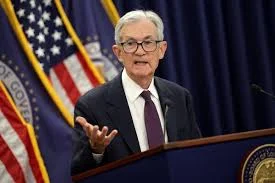
In a surprising legal rebuke, a U. S. federal judge has blocked subpoenas served to federal officials tied to a probe that touched on Jerome powell. The court concluded the subpoenas were entwined with an effort to influence the central bank’s leadership and policy choices, framing the investigation as a potential instrument to pressure the Federal Reserve to change course on interest rates and leadership.
Judge’s Ruling and Legal Findings
The ruling centers on subpoenas the Justice Department served as part of an inquiry described publicly as related to the management of a renovation at the central bank. The judge found a “mountain of evidence” suggesting that the inquiry’s real aim was to push the chair to lower rates or step down. Chief Judge James Boasberg, a U. S. federal judge, wrote: “The Government has produced essentially zero evidence to suspect Chair Powell of a crime; indeed, its justifications are so thin and unsubstantiated that the Court can only conclude that they are pretextual. “
Jerome Powell and the Question of Fed Independence
Federal Reserve Chair Jerome Powell disclosed the probe on Jan. 11 and characterized the action as a threat to Fed independence. He described the investigation as part of attempts by the administration to pressure the Fed to cut rates. The judge’s language echoed that concern, treating institutional independence as a core element in weighing whether the subpoenas were legitimate investigative tools or instruments of political pressure.
Expert Perspectives and Judicial Reasoning
Chief Judge James Boasberg’s written finding anchors the court’s rejection of the subpoenas in both evidentiary gaps and intent. The judge’s statement that the government offered “essentially zero evidence” of criminal conduct framed the subpoenas as legally unsupported and, in the court’s view, pretextual. Federal Reserve Chair Jerome powell’s public characterization of the probe as a threat to institutional independence was a central factual posture in the dispute between the parties.
The judge’s ruling does not resolve every outstanding legal question in the matter; rather, it blocks immediate enforcement of those subpoenas while the court considers the broader contours of the dispute. The written opinion places weight on the intersection of criminal investigatory standards and protections for institutional autonomy, signaling judicial sensitivity to perceived attempts by other branches of government to shape monetary policy through legal compulsion.
Regional and Policy Implications
Although the ruling arises from a narrowly defined proceeding about subpoenas and renovation-related documents, its implications reach into the political economy of monetary policy. By deeming the subpoenas to be pretextual and aimed at pressuring the central bank, the court has underscored an institutional firewall protecting the Fed’s decision-making from certain forms of executive pressure. Federal Reserve Chair Jerome powell’s disclosure and the court’s response together frame the episode as a test of that firewall.
The decision is likely to shape how future subpoenas aimed at central bank officials are evaluated, especially when queries overlap with politically charged policy disputes. The judge’s emphasis on the absence of evidence supporting criminal suspicion raises a threshold question for prosecutors contemplating investigative steps that touch on policy actors.
The ruling leaves open the potential for further litigation and procedural steps by the parties. For now, the blocked subpoenas represent a judicial check on investigatory tools when courts conclude those tools risk intruding on institutional independence without adequate evidentiary support.
What remains uncertain is whether this decision will recalibrate prosecutorial approaches to inquiries that intersect with policymaking, and whether it will deter or prompt new efforts to secure similar evidence through different means. As the legal process continues, the central question endures: will the courts continue to serve as a bulwark defending institutional autonomy against investigatory methods judged to be pretextual in motive and thin in evidentiary foundation in cases involving high-level policy actors like jerome powell?