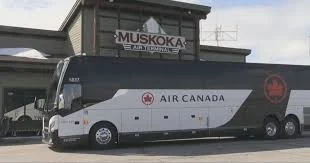
Starting June 15, Sarnia travellers will be able to book Air Canada tickets that include motorcoach connections to pearson airport as part of a one-year pilot designed to replace local flights with guaranteed ground links.
Current state and trend analysis: How the new Sarnia–Pearson motorcoach service is structured
The pilot launches with twice-daily coaches connecting Sarnia Chris Hadfield Airport to Pearson Airport. Passengers can buy Air Canada tickets that bundle the motorcoach leg; check-in, luggage tagging and issuance of boarding passes will be handled in Sarnia before departure. On arrival at Pearson, travellers use self-service express bag drop and then proceed through security to their gates. The arrangement includes automatic flight rebooking in case of coach delays. Parking at Sarnia airport will be free and the coaches will offer free high-speed satellite Wi-Fi.
Operational and financial arrangements are explicit: Sarnia council approved a $375, 000 minimum revenue guarantee to The Landline Co., which will operate the coach link for Air Canada. The pilot runs for one year and will serve as a demand gauge for the airport. Clare Webb, of Scottsdale Aviation, framed the move as a reliability play, noting weather historically disrupted local flights while coaches could still complete the trip. Nick Johnson, vice-president of Landline, positioned the service as a way to make travel easier and more affordable for Sarnia residents. Bernard Tavernier of Air Canada identified Sarnia as the sixth Ontario community to gain motorcoach connectivity alongside Niagara, Muskoka, Hamilton, Kitchener and Kingston.
What if the Pearson Airport connection changes local air service and demand?
The pilot is explicitly presented as both an alternative to and a test for air service. Terminal manager Mike Roberts described the project as a way to gauge demand at the airport and left open the possibility of future flights returning or a hybrid model of flights plus ground links. The one-year, twice-daily schedule, combined with ground-side check-in and baggage handling, reduces the friction of replacing a local flight with a surface connection, while the municipal revenue guarantee lowers the operator’s commercial risk. If usage is strong, the community could see restored or complementary flight options; if demand is weak, the region may rely primarily on integrated coach-to-air connections.
- Best case: High uptake of bundled tickets leads to sustained service and a revived mix of flights and coach links, supporting airport viability.
- Most likely: The coach pilot meets modest demand, proving reliable and affordable but not immediately restoring scheduled flights.
- Most challenging: Low ridership forces early reassessment; the revenue guarantee cushions short-term loss but long-term service remains uncertain.
Forward-looking actions: What travellers, operators and municipal leaders should watch
Travelers should evaluate the bundled ticket convenience — check-in, bag tagging and rebooking protections — as they compare costs and total journey time. Operators should monitor load factors, on-time connections and the incidence of weather-related flight disruptions that coaches can mitigate. Municipal leaders can treat the pilot as a low-risk probe: the $375, 000 guarantee reduces market entry barriers while providing hard data on demand. Over the next year, clear metrics on occupancy, missed connections, and passenger satisfaction will determine whether a hybrid model emerges or a return to local flights becomes viable. The initiative’s success will ultimately hinge on real-world usage during the pilot and whether the convenience of a single-ticket, coach-plus-flight journey convinces enough travellers to shift modes to pearson airport