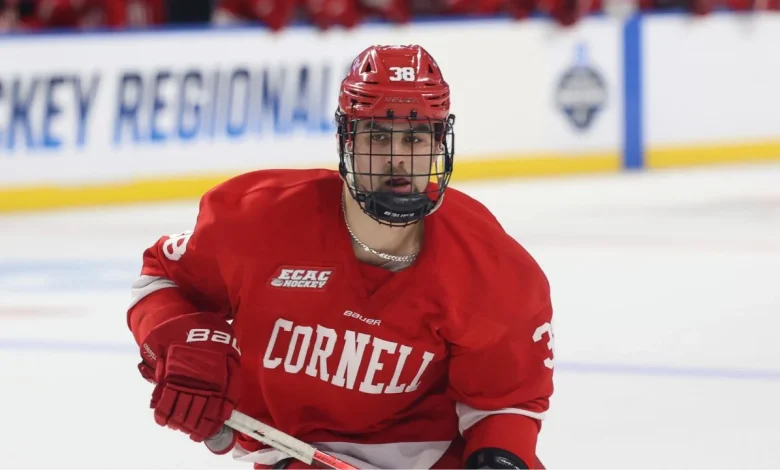
18 goals, 41 points and the NCAA lead in faceoff wins: the Calgary Flames have signed tyson gross to an entry-level contract after his breakout junior season at St. Cloud State University, a move that compresses a three-year college development arc into an immediate professional opportunity.
What do the verified facts show about Tyson Gross’s college résumé?
Verified facts: Tyson Gross is a 23-year-old centre, listed at 6-foot-3 and 195 pounds, who captained St. Cloud State University. In his junior season he scored 18 goals and recorded 41 points in 36 games. His final collegiate appearance came in a first-round NCHC playoff loss to the University of Minnesota-Duluth. Gross spent three seasons at St. Cloud State after junior stops with the Drumheller Dragons (AJHL) and the Fargo Force and Cedar Rapids RoughRiders (USHL). He led NCAA Division I men’s hockey in faceoff wins during his junior year and finished that season as his team’s leading scorer; he was also placed on the long list for the Hobey Baker Award.
Informed analysis: The statistical profile is compact but clear: Gross progressed each season at St. Cloud State, with a marked offensive breakout in his third year. Leading the nation in faceoff wins and finishing as his team’s top scorer are complementary indicators — a possession-focused centre who also generates returns on the scoresheet. His size and captaincy underscore a two-way, leadership element that NHL organizations typically prize when converting college free agents into professional depth pieces.
How does the Flames’ roster strategy explain this signing of Tyson Gross?
Verified facts: The Calgary Flames have three of their 50 NHL roster spots open. The club has been actively engaging with U. S. college players who can join after their seasons conclude; Gross’s season is already over, making his decision immediate. Craig Conroy, general manager, Calgary Flames, said the organization wants to work with college players to determine what is best for them — whether returning to school or signing — and emphasized that the team will not rush a player for a single season.
Informed analysis: The combination of open roster slots and the Flames’ public stance on deliberate integration creates an environment suited to immediate signings that still respect player development. Signing Gross now suggests the Flames view him as capable of contributing — or at least of being evaluated in NHL games before the season ends — while retaining the option to let him return to college if that aligns with player and club plans. This approach balances short-term roster needs with longer-term development goals.
Who benefits, who is exposed, and what should the public know?
Verified facts: Gross is a Calgary-born player who progressed through the Calgary Flames U18 AAA system and Springbank minor hockey. He was undrafted and was widely considered among the top NCAA unrestricted free agents entering the spring. Other collegiate players tied to the Flames’ radar include names being evaluated for potential late-season additions.
Informed analysis: For the Flames, adding a locally developed, high-faceoff-win centre like Gross advances organizational depth and signals active talent capture on the U. S. college front. For Gross, immediate entry to the professional ranks accelerates both opportunity and risk: burning a year of an entry-level contract can be advantageous financially and competitively if NHL minutes follow, but it also shortens the collegiate margin for error. The public should note the tension the Flames identified themselves — the club must balance not rushing prospects with the practical reality of roster windows and contract timelines.
Accountability call: The Flames should publish a transparent plan outlining how they will evaluate newly signed college players who join late in the season, including criteria for NHL deployment versus controlled development in lower pro ranks. That transparency would let fans and stakeholders assess whether signings such as tyson gross are driven by long-term fit or short-term roster convenience.
Verified facts are drawn from team rosters and statements and St. Cloud State University records; informed analysis is clearly labeled.