The Players and the ‘Fifth Major’ Fight: Inside Golf’s Obsession and the $35m Aussie Challenge

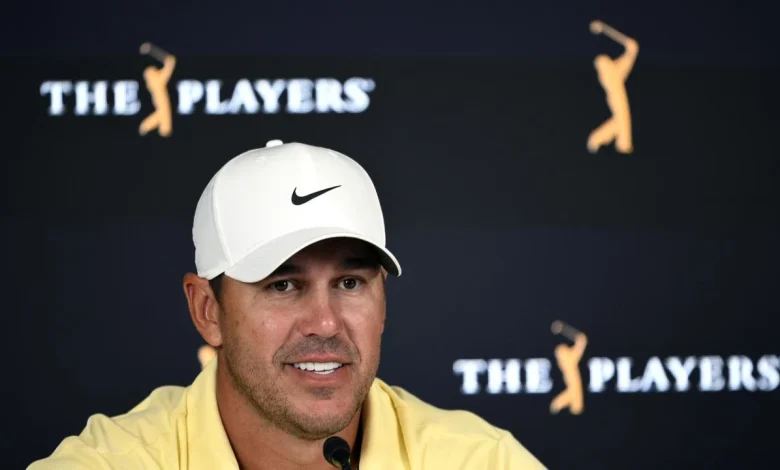
The question of whether the Players is a major has been reignited this season, and the players are squarely at the center of the argument. With tournament marketing pushing a major-like narrative and prominent figures publicly debating status, the 52nd staging of the event has become a referendum on prestige, field strength and the commercial forces reshaping elite golf.
The Players’ ‘Fifth Major’ Debate
Discussion has shifted from clubhouse chatter to headline contention: should this flagship event be elevated to equal standing with the four established majors? The debate intensified when a high-profile commentator argued that the event already meets a common definition of a major by assembling the strongest available field. Countering that, the defending champion framed himself as a traditionalist who recognizes the tournament’s stature but stops short of redefining the sport’s historic quartet.
Organizers have leaned into the controversy through bold marketing language, and that amplification forced a sharper reaction from those within the game. The players themselves have voiced mixed responses: some point to the event’s deep field and iconic setting as evidence of major-like importance, while others caution against retroactive reclassification and the risk of diluting long-established achievement markers in the sport.
Field Strength, History and What Contenders Say
The event returns as a star-studded stop on the calendar, described internally as one of the strongest week-to-week competitive fields — “no amateurs or club professionals, ” only top-tier professionals — reinforcing arguments for elevated status based on competition quality alone. The tournament’s history also matters: a marquee hole and a stadium-course setting contribute to a unique identity that top players covet adding to their résumés.
Matt Fitzpatrick has been explicit about where the Players ranks for modern contenders. Fitzpatrick said winning there would be “right up there” among career highlights, acknowledging it is not identical to a major but calling it “the next best thing. ” His mixed record at the course underlines the event’s difficulty: in five recent appearances he posted two top-10 finishes and three missed cuts, illustrating how the venue’s precision demands can separate contenders from pretenders.
Historical measures complicate the upgrade argument. No player has won the tournament more than three times since the event settled at its current venue, a record held by an early-era champion. Only one player has achieved consecutive titles, a rarity that underscores both the tournament’s unpredictability and the challenge of asserting long-term dominance here.
Commercial Signals, Competition Calendar and the Broader Stakes
The current season’s promotional push and references to large financial initiatives have added a commercial overlay to a debate that is fundamentally about sporting merit. Organizers and backers seem intent on positioning the event as a blue-ribbon stop, and that posture reshapes expectations for scheduling, player commitments and the way champions frame their careers.
At the same time, the tournament’s placement in the calendar and the concentrated field composition are practical levers that affect its perceived weight. For many players, winning the event carries near-major cachet because it tests elite skills against the tour’s top competitors in a course environment that magnifies small errors.
Yet, voices inside the game caution against simple equation of prize money or star power with canonical status. One senior commentator argued that by the definition of selecting the best against the strongest field, the event already meets the test. The defending champion pushed back gently, emphasizing respect for the sport’s four majors and signaling resistance to altering historical lines.
Operationally, the tournament will proceed as the 52nd edition across a four-day window in mid-March, with streaming and broadcast windows stretching from early morning through evening in Eastern Time on each competition day, offering continuous live access to rounds and shaping how fans and stakeholders experience the spectacle.
The commercial, competitive and calendar dynamics at work mean the conversation will not abate when the final putt drops. Whether promotion and financial muscle will ultimately convert prestige into formal recognition, or simply reposition the event within an increasingly crowded elite landscape, remains unresolved.
The players have made their positions clear: some embrace a new hierarchy driven by field strength and spectacle; others defend the sport’s historical pillars. Which view prevails will shape not only how victories are remembered but how the sport organizes its top weeks going forward.
As the tournament concludes and the debate moves from rhetoric to outcome, one question lingers: will results on the course and reactions from champions finally settle whether this event is simply a peerless tournament or the unofficial fifth major that many now claim it to be?