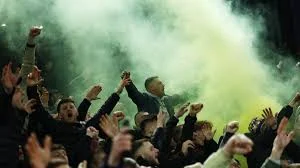
At least 214 recorded sex crimes and 450 alleged victims — these are the figures that sit behind the chant. The name jimmy savile, once ubiquitous in public life and now removed from plaques and buildings, still echoes around stadium terraces, reframing what many consider ‘banter’ into a civic question about law, decency and institutional memory.
Are Jimmy Savile chants being treated as tragedy chanting?
Leeds United Football Club has formally asked the Crown Prosecution Service and football authorities to treat chants referencing Jimmy Savile as the same category of offence known as tragedy chanting. The club argues that songs invoking Savile are distressing to victims and their families and should be captured by the public order offences and possible football banning orders that the CPS has applied in other contexts.
What does the official record say about the scale and locations of abuse?
A 2013 report by London’s Metropolitan Police and the National Society for the Prevention of Cruelty to Children found that the subject of the chants committed at least 214 sex crimes, including 34 rapes between 1955 and 2009, and that 450 people alleged they had been victims of abuse. The same report identified abuse at 28 hospitals across the United Kingdom, naming Leeds General Infirmary and Broadmoor among locations where victims ranged in age from five to 75. Those institutional findings underpin the claim that these chants summon a documented crime spree rather than a harmless anecdote.
Who is calling for action, what powers exist, and why have chants persisted?
Leeds United Football Club has lobbied for the legal category of tragedy chanting to be broadened so chants about jimmy savile would qualify as a public order offence. The Crown Prosecution Service currently defines tragedy chanting as abuse referencing fatal accidents or stadium disasters; examples cited by the CPS include Hillsborough and the Munich air crash. In 2023 the CPS tightened its approach, making tragedy chanting prosecutable as a public order offence with possible football banning orders, but the existing definition excludes references unconnected to football itself — the gap that Leeds seeks to close.
A spokesperson for the Football Association expressed strong condemnation of offensive, abusive and discriminatory chants and signalled support for clubs and fans who try to eradicate this behaviour from terraces. At the same time, public responses within fan culture range from condemnation to dismissal as ‘banter’; Dan Davies, a reporter who interviewed Savile many times, framed the chants as the equivalent of invoking unrelated notorious offenders to taunt a rival city. That moral juxtaposition — institutional fact versus fan practice — helps explain why the behaviour has persisted despite public outrage over the underlying crimes.
Evidence from the 2013 institutional report and the pattern of terrace behaviour present competing imperatives: the documented scale and settings of abuse demand recognition and protection for victims, while the CPS’s current legal framing limits immediate enforcement against non-football-related chanting. Leeds United’s request places that tension at the centre of a policy debate about whether the law should treat references to historical non-sporting crimes as tragedy chanting when used to antagonize rival supporters.
Verified fact: the Metropolitan Police and the National Society for the Prevention of Cruelty to Children detailed the crimes and locations; verified fact: the Crown Prosecution Service has defined and updated tragedy chanting law but excludes non-football-related references; verified analysis: those two facts together create a legal gap that allows chants invoking jimmy savile to continue largely unpunished. The club’s appeal for reform is a call to close that gap.
Accountability requires that the CPS, the FA and clubs set out a clear pathway: publish the legal rationale for current exclusions, allow an independent review of whether the tragedy chanting definition should be broadened, and provide transparent guidance to clubs and supporters. Victims identified in the 2013 institutional report deserve protection from public acts that recall documented abuse; public policy must reconcile free expression with protections against repeated public humiliation of those harmed. Until that reconciliation is explicit, jimmy savile will remain a provocation on terraces and a test of whether institutions will convert documented harm into enforceable safeguards.