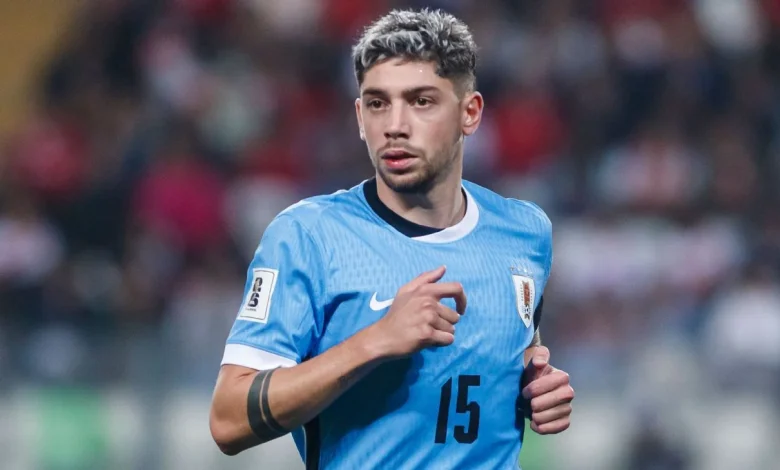
It is not just a leadership question — valverde sees the 2026 World Cup as a personal and national inflection point. At 27, the Real Madrid midfielder enters a tournament that will be Uruguay’s first major finals without the generation that included Luis Suárez, Edinson Cavani and Diego Godín. The expectation: a Valverde who combines relentless work rate with decisive contributions in the final third.
Background & Context: Group opponents and preparatory fixtures
Uruguay will open its World Cup campaign against Saudi Arabia on June 15, and will share a group that includes Spain and Cabo Verde. Spain is identified as the current number 1 in the FIFA ranking, a designation that frames the difficulty of the group. In the run-up to the tournament the March international window features several confirmed fixtures: Uruguay is scheduled to face England on March 27 at 16: 45 ET at Wembley and then Algeria on March 31 at 16: 30 ET at the Allianz Stadium in Turin. Spain will play Argentina on March 27 in Doha at 15: 00 ET (contingent on airspace conditions) and Egypt on March 30 in Doha at 13: 00 ET. Saudi Arabia will play Egypt on March 27 in Doha at 12: 00 ET and Serbia on March 30 in Doha at 11: 00 ET.
Deep analysis: What inheriting the armband truly entails
The headlines frame valverde as the natural heir to Uruguay’s captaincy and its symbolic spirit, but the practical demands extend beyond an armband. The context makes clear that Uruguay transitions from a generation headlined by storied forwards and defenders; leadership duties will fall on a new cohort. At his club, Valverde has been entrusted with sustained responsibility: he has captained Real Madrid in 32 of 38 matches in the 2025/2026 season. That level of domestic leadership establishes credentials, but club environments differ from national teams. In Madrid he operates alongside multiple global stars; with the national side, he must combine physical sacrifice — covering space, shielding teammates — with the added expectation of arriving in the opponent’s box, deploying his shot, and creating for attackers.
Expert Perspectives: Valverde and team leadership
Federico Valverde — midfielder, Real Madrid and the Uruguay national team — has been portrayed as clear in his aim that the 2026 World Cup should not be “just another” tournament for him and his country. Marcelo Bielsa — head coach, Uruguay national team — oversees a squad described as inheriting both the weight of history and the realistic standing of being a step below the global powers. José María Giménez — defender, Uruguay national team — is conventionally the on-field captain when available; the context notes that Giménez typically assumes the armband while present, creating a conditional leadership dynamic that elevates valverde as an operative captain should absences occur.
Regional and global impact: Friendlies as more than tune-ups
The March fixtures carry strategic weight beyond match minutes. Spain’s engagement with Argentina in Doha, and Spain’s position as the top-ranked nation in the FIFA table, present a barometer of elite-level readiness for Uruguay’s eventual group-stage adversary. Saudi Arabia’s Doha fixtures against Egypt and Serbia, and Spain’s matches against Egypt, intensify familiarity between potential group rivals and regional opponents. Uruguay’s matches against England and Algeria provide different stress tests: England will simulate the high-intensity demands and global scrutiny of tournament play, while the Algeria fixture will test tactical flexibility in more closed settings. The sequence helps clarify personnel choices and whether the coaching staff will invest the captaincy role in a highly visible attacker, a defensive voice, or the midfield engine represented by valverde.
Conclusion: Can valverde transform expectation into legacy?
The transition from an era defined by Suárez, Cavani and Godín to one that leans on new leaders leaves Uruguay at an inflection point. The calendar of March friendlies and the realities of the group stage set a clear trial by fire. Will valverde translate club captaincy minutes and relentless work rate into tournament-defining moments for a national side that prizes “garra” and leadership by example? The coming months will indicate whether his armband becomes a symbol of continuity or the beginning of a distinct Uruguayan chapter at the World Cup.