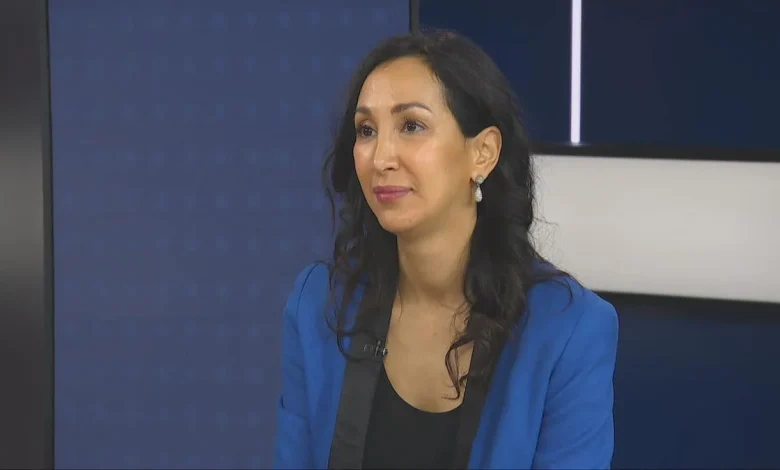
In a province where the fertility rate sits at 1. 33 children per woman, marwah rizqy says she learned of her expulsion from her party on the radio while driving — and now, as an independent deputy for Saint-Laurent, she is urging the state to fully cover assisted reproductive treatments and framing infertility as a medical condition that must not force couples into crippling debt.
How did Marwah Rizqy describe the PLQ crisis and her exit?
(Verified fact) Marwah Rizqy has stated she is at peace with her decisions but would have preferred a different ending to her time in the party. She said the moment she learned she was being ejected came while she was listening to the radio at the wheel and that no one had warned her beforehand. She added that she had not sought this outcome, that she endured it and had to take consequential decisions. She described herself as feeling “free” and emphasized her professional identity as a lawyer and officer of justice, saying she believes in institutions.
(Verified fact) The former party leader Pablo Rodriguez resigned amid pressure linked to allegations surrounding the party’s leadership race. The new party leader, Charles Milliard, chose not to reintegrate her but, Rizqy said, handled his part of the transition with personal courtesy by calling and meeting her.
(Analysis) That sequence — a sudden public ejection, a leader’s resignation, and ongoing criminal and ethical inquiries — frames Rizqy not only as a political casualty but as a figure invoking institutional process. Her insistence on acting in the name of integrity reframes her actions from internal dissent to a call for institutional accountability.
What investigations and fiscal figures underpin the dispute — and the fertility debate?
(Verified fact) Multiple investigations are under way: an inquiry by the commissioner for ethics, a penal-level probe by the DGEQ, and a criminal investigation by UPAC. The allegations tied to the party’s leadership race include an alleged purchase of votes called “brownies, ” reimbursed political contributions, and the possible use of public funds intended for Assembly activities for partisan purposes.
(Verified fact) On fertility policy, a CIRANO report by Marie-Louise Leroux is cited in the discussion of funding models for assisted reproduction. The debate references a marked rise in infertility prevalence — from an estimated 5% of couples in an earlier generation to about one in six today — and highlights the financial burden couples face: an average cost per child through assisted reproduction given in the debate ranges from $10, 000 to $40, 000. In 2023, the provincial program for assisted reproduction cost roughly $37 million, or about 0. 06% of the health budget noted in the same discussion. The World Health Organization is referenced as recognizing infertility as a disease. The RAMQ currently covers one treatment of assisted reproduction in part while covering sterilization procedures such as vasectomy and tubal ligation at 100%.
(Analysis) These fiscal figures and institutional recognitions turn what might be framed as a narrow political controversy into a policy crossroads. The same political actors involved in the party crisis stand alongside public debates about whether infertility should be treated as a fully funded medical priority. An aspirant premier, Bernard Drainville, is linked in the discussion to a pledge to restore three free assisted reproduction treatments; Marwah Rizqy has publicly urged the State to cover treatments in full, calling infertility a medical condition that should not bankrupt willing parents.
What accountability and policy steps are necessary now?
(Verified fact) Investigations by the commissioner for ethics, the DGEQ and UPAC remain active. Marwah Rizqy has emphasized that she spoke to the proper instances and that she believes in judicial and ethical institutions. She has also given interviews in which she framed her position on fertility funding and the need for state coverage.
(Analysis) The overlap of an internal party crisis and a broader public-policy debate creates two simultaneous imperatives: full transparency around the conduct of political actors and a sober, evidence-based review of fertility funding. The verified facts — active criminal and ethical probes, the stated financial burden on families, the CIRANO analysis of infertility trends, and the current limited coverage in provincial health insurance — together justify demands for both immediate disclosure in the political inquiry and a public policy process on assisted reproduction funding.
(Accountability) For democratic clarity and for the families cited in the debate, the next steps are clear and testable: ensure the integrity of ongoing inquiries by the commissioner for ethics, the DGEQ and UPAC; publish their findings in full when available; and commission a transparent policy review of assisted reproduction coverage that addresses the financial figures highlighted by CIRANO and the medical characterization noted by the World Health Organization. Only with that dual reckoning — judicial transparency and policy reform — will the public be able to judge the political fallout and the substantive claim advanced by marwah rizqy.