FAA grounds all Jetblue flights after airline request — ground stop lifted while cause remains undisclosed

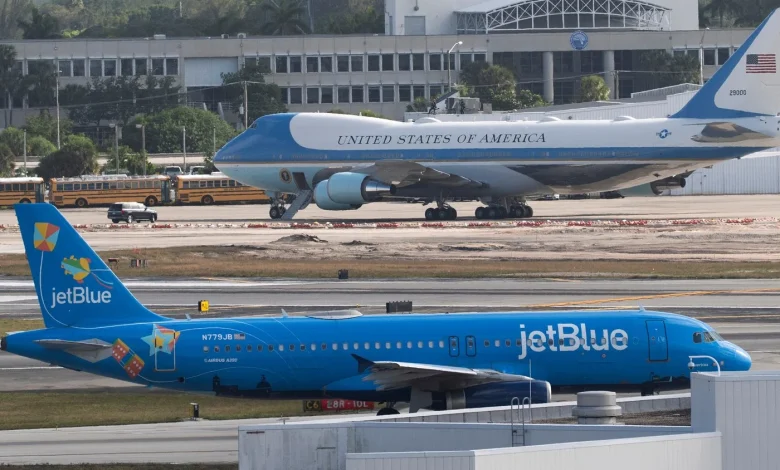
The Federal Aviation Administration briefly grounded all jetblue flights early Tuesday after the carrier requested a halt; the stoppage was lifted roughly 40 minutes after it began, while the airline said a system outage had been resolved.
What happened?
The Federal Aviation Administration (FAA) issued a ground stop for every flight operated by the carrier, citing a request from the airline in a notice posted to the agency’s website. The pause in operations was short-lived: the ground stop was removed about 40 minutes after it was imposed in one account and was described as having been canceled within an hour in another. The FAA’s public notice identified the action as having been taken at the airline’s request; the agency’s notice was the official record of the restriction posted online.
Why did Jetblue request the ground stop?
A JetBlue spokesperson said that a brief system outage had been resolved and that the carrier had resumed operations. The airline’s statement—limited to the single line that the outage was resolved—does not elaborate on the nature of the outage, which systems were affected, how widespread the disruption was, or what contingency measures had been invoked while flights were halted. Public records in the FAA notice and the airline’s brief comment do not explain why the airline initiated a complete ground stop rather than targeted cancellations or delays for specific flights or regions.
What are the operational and public implications?
The carrier maintains a large network and a significant operational footprint: the airline is headquartered in New York City, operates its flagship terminal at John F. Kennedy International Airport, and serves more than 110 destinations across the United States, the Caribbean, Latin America, Canada and Europe. A ground stop that covers the entire operation, even when short, can cascade in complex networks; a centralized halt requires rapid coordination with air traffic control, airport authorities, crews and customers. Given the scale stated for the carrier, the brief interruption underscores how a single systems issue—or the perception of one—can trigger a nationwide operational pause.
Public-facing information from the FAA and the airline is limited to the agency notice and the airline spokesperson’s statement that operations resumed. The FAA notice confirms the ground stop was requested by the airline and that the agency implemented the restriction; the airline’s comment confirms a resolved system outage and resumption of service. Beyond those two statements, the available record does not detail timelines for detection, escalation, mitigation, or whether regulators or third-party vendors were involved in restoring service.
Verified fact: the FAA issued a ground stop at the airline’s request and later removed it. Verified fact: a JetBlue spokesperson described the problem as a brief system outage that had been resolved and said operations resumed. Analysis: taken together, the FAA notice and the airline’s terse statement demonstrate that the operational pause originated with the carrier and that it was lifted after the carrier determined the immediate problem was addressed. Unresolved: the specific systems affected and the sequence of internal decisions that led to a complete national ground stop remain unspecified in the official notices.
Given the gaps in the public record, accountability will depend on more detailed disclosures from the airline and, if applicable, post-event reports from the FAA. For passengers, regulators and business partners, basic questions about the root cause, duration of internal mitigation steps, and safeguards to prevent recurrence remain unanswered in the material released so far.
The brevity of the public explanations contrasts with the broad scope of the action taken: an airline with a large route network requested a nationwide halt and then described the incident in a single sentence. That mismatch—between a sweeping operational decision and minimal public detail—creates a transparency gap that calls for fuller information from both the carrier and the regulator.
Closing demand: the FAA and JetBlue should publish a clear timeline and factual account of why the ground stop was requested, what technical or operational failures occurred, and what measures are being taken to prevent similar full-system interruptions in the future.