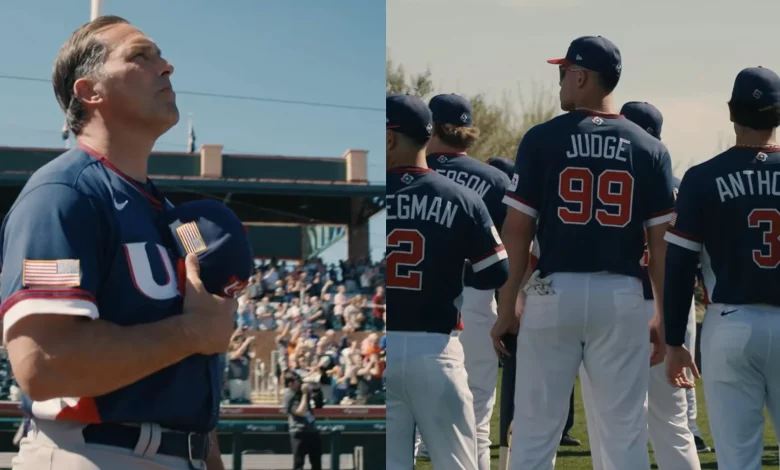
21-year-old roman anthony was assigned a simple errand — buy a gigantic Bluetooth speaker — and that choice to make a rookie the team’s de facto audio officer has become a revealing glimpse into Team USA’s attempt to build chemistry at the World Baseball Classic.
What was not being told about the bus ride to Daikin Park?
Team USA’s pregame transit to Daikin Park in Houston centered on a deliberately rowdy soundtrack. Mark DeRosa, head coach of Team USA, framed a specific selection — “Courtesy of the Red, White and Blue” — as the immediate go-to song to get players fired up. The coach placed the practical task of obtaining the sound system on Roman Anthony, a 21-year-old Red Sox player, who says his responsibility was limited to securing the speaker and handing it over to teammates for use.
Roman Anthony: rookie initiation or team-minded task?
Roman Anthony said he did not control the playlist; he had the duty of getting the speaker and making sure it was present for the bus ride. Mark DeRosa characterized the purchase as part of an intentional effort to set the vibe and foster bonding. Kyle Schwarber, a power-hitting designated hitter on Team USA’s roster, is identified as a country music fan and a likely participant in the sing-along, though Schwarber noted that he is not much of a singer. The combination of a coach’s explicit direction and veteran players’ enthusiasm turned one logistical errand into a team ritual.
What do these details mean for Team USA’s culture and performance?
The episode links small, orchestrated acts of camaraderie to a broader strategic objective: converting a highly touted roster into a cohesive unit capable of executing under international pressure. Mark DeRosa’s decision to task a young player with a visible, communal responsibility is a deliberate choice about role assignment and group dynamics. Roman Anthony’s compliance and subsequent description of his limited role — he did not touch the music, only the speaker — show how responsibilities can be symbolic as much as functional. Meanwhile, Kyle Schwarber’s embrace of the sing-along underscores veteran influence on emerging players.
At the same time, the context around the World Baseball Classic roster is charged. The tournament is described within the team as one where potential on paper must translate into execution on the field. Shohei Ohtani, playing for Japan, is presented as a force capable of shifting outcomes; his recent large offensive play and the memory of a pivotal strikeout against Mike Trout, an Angels teammate, are part of the competitive backdrop in which Team USA is attempting to build unity. The speaker episode is therefore not cosmetic: it is framed by coaching intent and roster composition as a psychological tool in a high-stakes setting.
Verified fact: Mark DeRosa, head coach of Team USA, directed that a speaker be obtained for the bus ride and identified a specific patriotic country song as the immediate go-to to get players fired up. Verified fact: Roman Anthony, a 21-year-old Red Sox player, was tasked with buying the speaker and stated that he did not control the playlist. Verified fact: Kyle Schwarber, a power-hitting designated hitter on Team USA’s roster, participated in the team sing-along and acknowledged his limited singing ability.
Informed analysis: The deliberate use of music and a visible rookie task suggests a coaching approach that prioritizes quick, shared experiences to accelerate bonding. When veterans lead the musical choices and rookies handle logistical duties, the team cultivates rituals that can translate into trust in pressure moments. That trust is precisely what Team USA will need when facing deep lineups like the Dominican Republic or balanced opponents like Japan.
Accountability call: The public should see more transparency about how coaching decisions aim to translate clubhouse culture into on-field results. Simple episodes such as the bus speaker — with roman anthony at its center — are useful tests of whether intentional bonding measures actually help teams convert talent into coherent performance at the World Baseball Classic.