Lindsey Graham Threatens to Reconsider U.S. Defense Pact After Riyadh Declines to Join Strikes — A Stark Contradiction

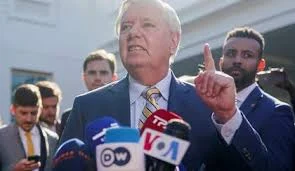
lindsey graham publicly questioned whether the United States should honor a long-sought defense agreement with Saudi Arabia after Riyadh declined to join U. S. -led military operations against Iran, warning that “Americans are dying” and that “consequences will follow” if regional partners do not engage.
What did Lindsey Graham warn Saudi Arabia and the Gulf?
Senator Lindsey Graham pressed a blunt question about U. S. commitments when he said the kingdom’s refusal to participate militarily undermined the case for a binding security guarantee. He wrote that the American embassy in Riyadh was being evacuated because of sustained Iranian attacks on Saudi soil, and expressed frustration that Riyadh had offered statements but not the military participation he views as necessary. Graham urged Gulf Cooperation Council partners to become more involved and concluded his message with a veiled threat: “If not, consequences will follow. ” He framed the argument in stark moral and strategic terms: “Americans are dying and the US is spending billions to dislodge the terrorist Iranian regime. “
What factual record ties Riyadh, Washington and regional action together?
Verified facts drawn from official statements and named actors show a complex, unfinished arrangement. The Saudi foreign ministry condemned the Iranian strikes as unjustifiable and said Riyadh retains “its full right to take all necessary measures to safeguard its security, sovereignty, and the safety of its citizens, ” while making no commitment to join U. S. military operations. The United States has taken concrete steps to deepen security ties short of a binding treaty: the administration described a $142 billion arms package for Riyadh and granted the kingdom major non‑NATO ally status, but a broader mutual defense pact remains unsigned.
On the political side, Senator Lindsey Graham has been an outspoken advocate for action targeting Iran. He has said he spent months pressing President Donald Trump to authorize strikes, raised the idea during a round of golf shortly after the 2024 election, and made repeated trips to Israel. Graham has said he spoke with Saudi crown prince Mohammed bin Salman to signal that U. S. strikes appeared likely and that he advised Israeli prime minister Benjamin Netanyahu on how to approach the president. He has described working with retired general Jack Keane and Marc Thiessen, and said that Israeli officials sometimes shared information with him that “our own government won’t tell me. ” These steps, he has said, were intended to escalate pressure on Iran and to signal likely U. S. action. The United States and Israel then launched coordinated operations that the U. S. named Operation Epic Fury, which killed Supreme Leader Ali Khamenei and other senior Iranian officials; Iran responded with missile and drone attacks against U. S. bases and regional partners.
What does this constellation of facts mean — and what should happen next?
Analysis (informed, distinct from verified fact): The tension is structural. Riyadh has sought a formal security guarantee but has not committed to join offensive operations; Washington has significantly deepened arms and diplomatic ties without finalizing a binding mutual defense treaty. Senator Lindsey Graham’s public warning leverages his political influence and personal involvement in pushing for strikes, converting frustration over partner restraint into a threat to withhold or reconsider formal protections. That converts a policy dispute into a test of alliance reliability at a moment when U. S. forces and regional partners are under direct attack.
Accountability conclusion (grounded in the verified facts above): Transparency is required from all named actors. The Saudi foreign ministry’s rejection of participation should be clarified in writing; the executive branch should explain what obligations, if any, a major non‑NATO ally designation creates; and Senator Lindsey Graham should detail the policy levers he envisions when he warns of “consequences. ” Policymakers and the public need clear answers about whether a large arms package and diplomatic assurances amount to an enforceable security guarantee or to a strategic partnership contingent on mutual political will.
Verified facts: Senator Lindsey Graham issued a public warning threatening consequences if Riyadh did not join U. S. military operations; the Saudi foreign ministry condemned Iranian strikes and asserted its right to safeguard sovereignty; the United States described a $142 billion arms package and conferred major non‑NATO ally status on Saudi Arabia while a broader mutual defense pact remains unsigned; Graham has described pressing President Donald Trump, speaking with Mohammed bin Salman, advising Benjamin Netanyahu, and working with Jack Keane and Marc Thiessen in efforts to build momentum for strikes. Analysis and recommendations are distinct from these verified facts.
The parties named in this record—Senator Lindsey Graham, the Saudi foreign ministry, the U. S. executive branch and regional partners—now face a clear public test: either Riyadh shares the military burden Graham calls for, or Washington must explain whether its security commitments hinge on that cooperation.