Inside the Sharjah Astronomical Observatory, technicians ran calculations that left many asking when is eid — and this year the academy predicts March 20 as the most likely first day of Eid al-Fitr for the UAE and a large number of Islamic countries.
When Is Eid expected in the UAE and Egypt?
The Sharjah Academy for Astronomy, Space Sciences and Technology, represented by the Sharjah Astronomical Observatory, forecasts that March 20 will usher in the first day of Shawwal and Eid al-Fitr for the UAE and most Islamic countries. Egypt’s working public is likewise awaiting the festival: astronomical calculations indicate the first day of Shawwal will astronomically fall on Friday, March 20, 2026.
For Egypt, the expectation is that the Eid al-Fitr holiday will run three days, starting on Friday, March 20 and continuing through Sunday, March 22, with the Cabinet preparing a decree shortly before the holiday to specify official days off for government offices and the Ministry of Labor to determine private-sector holidays. Employees are awaiting the Cabinet’s official announcement at the end of Ramadan to learn final details.
How did Sharjah astronomers reach a March 20 forecast?
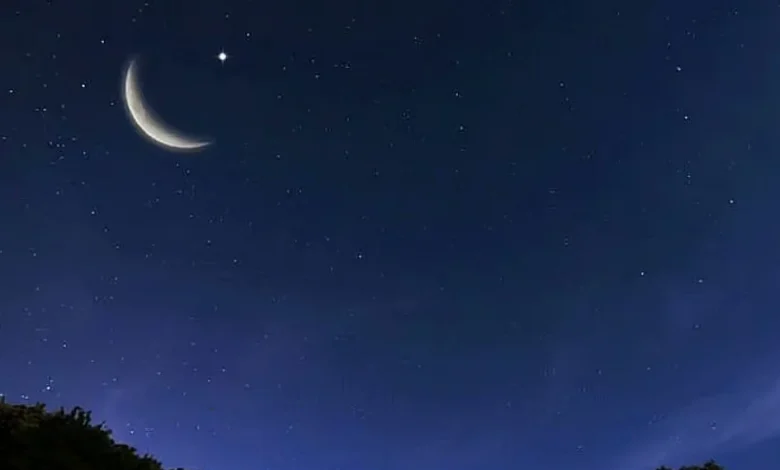
Calculations from the observatory show there is no visible new moon on Wednesday, March 18 — the 29th of Ramadan — because the moon sets before the sun that evening. The observatory detailed the moon’s surface conjunction over Sharjah on the following Thursday. By sunset that day the crescent would be only 14 hours and six minutes old, positioned about 6. 5 degrees in elongation from the sun and roughly six degrees above the western horizon, lingering about 29 minutes after sunset.
Those technical conditions make naked-eye sighting locally impossible and render telescopic sighting improbable. The observatory notes that advanced stacked imaging might capture the crescent faintly, while some Arab and Muslim countries with more favorable geography could glimpse the crescent either unaided or telescopically. Where sighting by eye or telescope is required, some states may opt to delay the start of Shawwal until Saturday.
“The academy forecast that March 20 ushers in Shawwal’s first day and Eid al-Fitr for the UAE and most Islamic countries, ” the Sharjah Astronomical Observatory said in its statement, laying out the calculations behind the projection.
What happens next for workers and officials?
Government and private workplaces are in a brief holding pattern. The Cabinet will issue a decree shortly before the holiday that will set official days off for government offices, and the Ministry of Labor will determine the holiday schedule for private employers. The anticipated three-day holiday gives organizations a planning horizon, but final confirmation awaits the Cabinet’s announcement at the close of Ramadan.
Back at the observatory, the numerical forecast has folded into broader practical choices: if the crescent is not seen locally, some states will follow the astronomical calculation and mark March 20 as Eid; others that require sighting by eye or telescope may delay. For people tracking the calendar, the technical details translate into a simple, urgent question: when is eid? The answer now sits between the academy’s calculations and formal government decrees, leaving families and workers preparing for celebration while waiting for official confirmation.