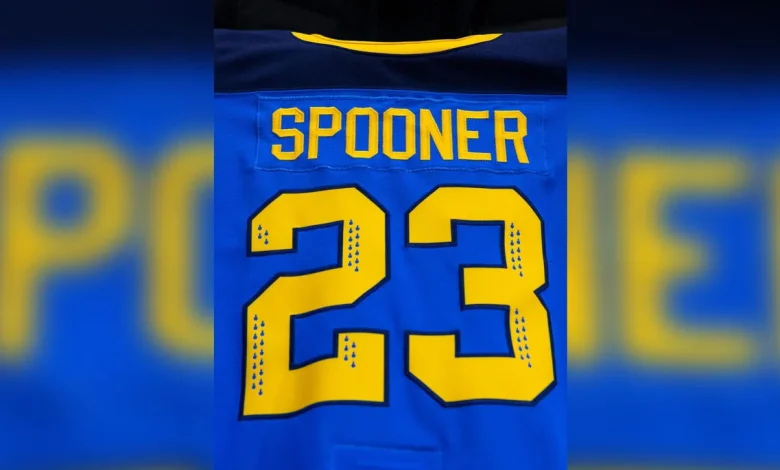
pwhl marked International Women’s Day’s one‑hour reduction by asking three players to swap No. 24 for No. 23 in noon ET games as a symbolic call to action. The change highlights the day being shortened to 23 hours because of Daylight Savings Time and asks fans to support girls’ access to hockey.
What Happens When Pwhl Players Wear 23?
During double noon ET matchups, Natalie Spooner, Vanessa Upson, and Anne Cherkowski took the ice wearing No. 23 instead of their usual No. 24. The league framed the move as “The 23 Hour Play, ” a symbolic initiative linking the shortened calendar day to the broader problem of girls and women falling short in access to funding, resources, and opportunity in sport.
- Natalie Spooner (Toronto Sceptres): two‑time Olympic gold medallist, recent Olympic silver medallist, with three goals and seven points in 19 games this season.
- Vanessa Upson (Minnesota Frost): 22 years old, in her first PWHL season after four years at Mercyhurst University as captain; after 14 games she had not yet recorded her first career point.
- Anne Cherkowski (New York Sirens): 23 years old, won gold and silver with Canada at the World Women’s U‑18 Championship in 2019 and 2020, with six points in 16 games in her first PWHL campaign.
Why Does This Matter For Girls In Sport?
The PWHL described the jersey swap as a symbolic call to action and paired it with fundraising and partnership efforts. Fans were asked to donate $23 to the Grindstone Award Foundation in Canada and Strong Girls United in the United States, and the PWHL cited the hashtag #23HourPlay for awareness. The league also connected the initiative to its broader community work, including a Mentorship Program run in partnership with Strong Girls United and Kyndryl.
The move was explicitly linked to research cited by the PWHL that shows girls drop out of sport at twice the rate of boys by age 14, a statistic the league used to explain why visibility and investment matter. Jayna Hefford, the PWHL’s executive vice‑president of hockey operations, said that playing sport positively impacts girls beyond the rink and framed the initiative as a step toward increasing access and belonging for girls in hockey.
What Can Fans Do On This Shortened Day?
The PWHL asked supporters to join the gesture by donating $23 to the named community partners and engaging with the #23HourPlay campaign. The league presented the jersey change as both a symbolic reminder and a practical fundraising prompt: while the day may have only 23 hours, the stated goal is to play for a future that demands much more for girls and women in hockey.
Players highlighted the framing in their own remarks. Natalie Spooner said that even with one fewer hour, celebration and calls for support remain unchanged and that wearing 23 is a way to call for more support so the next generation of girls in hockey do not fall short in what they need to achieve their dreams. The PWHL positioned the action as part of a season that it described as one of record attendance, rising viewership, and growing investment in women’s hockey.
The initiative is narrow in scope but clear in intent: three players, two noon ET games, one symbolic number and an explicit fundraising ask tied to established community partners. The PWHL’s 23‑hour gesture is meant to turn a calendar quirk into a reminder of unfinished work and a concrete opportunity for fans to contribute on International Women’s Day.