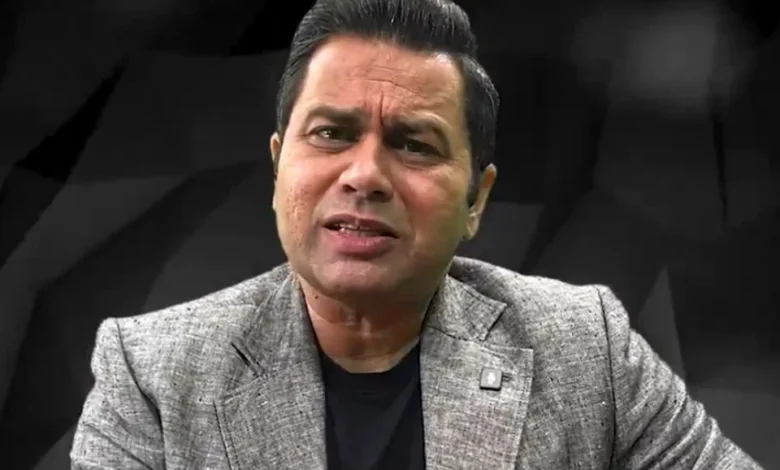
At the Narendra Modi Stadium in Ahmedabad on Sunday, 8 March, New Zealand will meet India in the T20 World Cup final — and the conversation has quickly focused on the pair at the top: Finn Allen and tim seifert. Former Indian cricketer and commentator Aakash Chopra has praised the duo’s consistency and offered a tactical blueprint for India to blunt their start.
Why does Aakash Chopra single out Tim Seifert and Finn Allen?
Chopra described the pair as among the tournament’s most explosive and consistent openers. “Finn Allen and Tim Seifert have been the most explosive and consistent openers in the tournament. Allen, in particular, is dangerous with his wide range of strokes, ” the former Indian cricketer and commentator said, highlighting a pattern of bold, high-impact starts that New Zealand has used to build momentum in big games.
Finn Allen’s unbeaten hundred off 33 balls in the semi-final at Eden Gardens is the clearest recent illustration of that threat. That innings has altered how opponents plan for New Zealand’s top order. Chopra’s praise places equal attention on tim seifert as a partner in the opening slot whose presence helps sustain the pressure Allen creates at the other end.
How can India try to contain Allen and Tim Seifert?
Chopra outlined a two-pronged approach focused on spin and disciplined, targeted pace. On spin he said: “He has been troubled a little by off-spin because as soon as he sees spin, he goes deep inside the crease, and then he tries to play shots only with his wrists. When you are playing shots only with your wrists, it might work on New Zealand grounds and on slightly flat pitches, but if there is class in bowling, he can get stuck there. ” Based on that read, Chopra suggested deploying off-spin as a way to force Allen back into his crease and limit his range.
Chopra pointed to off-spinner Axar Patel as a possible option: “Maybe Axar Patel. We don’t have an off-spinner, but Axar Patel could be that bowler who brings the ball in with the arm. If he goes deep inside the crease, the incoming balls can hit the pads or stumps at times. ” He also flagged the possibility of creating an inside-edge dismissal early by using the likes of captain Suryakumar Yadav’s trusted seamers in the opening overs. “Secondly, I am getting the feel from within whether he can get out an inside edge. It could be Arshdeep or Hardik Pandya. Can the inside edge go and hit the stumps?” Chopra asked.
On pace and line, Chopra advised keeping the ball tight around the stumps to limit Allen’s freedom on the off-side and suggested adjustments for bowlers who can vary pace and length to apply pressure in the powerplay.
What does this mean for the match and for tim seifert’s role?
The tactical debate frames tim seifert not simply as Allen’s partner but as part of a two-headed problem India must solve: neutralize one and the other can exploit field or match conditions. Chopra’s commentary elevates Seifert’s presence in the equation, arguing that India’s plans can’t focus on Allen alone. The underlying point is balance—spin to probe, tight lines from seamers to narrow scoring options, and a constant search for early breakthroughs.
Chopra also advised a measured pace plan for other bowlers: “Varun Chakaravarthy should bowl slightly slower, maintaining tighter lines to apply pressure, ” he said, mapping out variations India might deploy to frustrate New Zealand’s openers.
As the final approaches, the opening scene at the Narendra Modi Stadium takes on added meaning: the match will hinge on how India responds to the dual challenge posed by Finn Allen and tim seifert, and whether the tactical moves Chopra describes—off-spin into the footwork, tight lines around the stumps, and probing early overs—can turn high-octane power into moments of vulnerability. That tactical contest will decide whether New Zealand’s explosive starts translate into a title or whether India’s adjustments can rewrite the script.