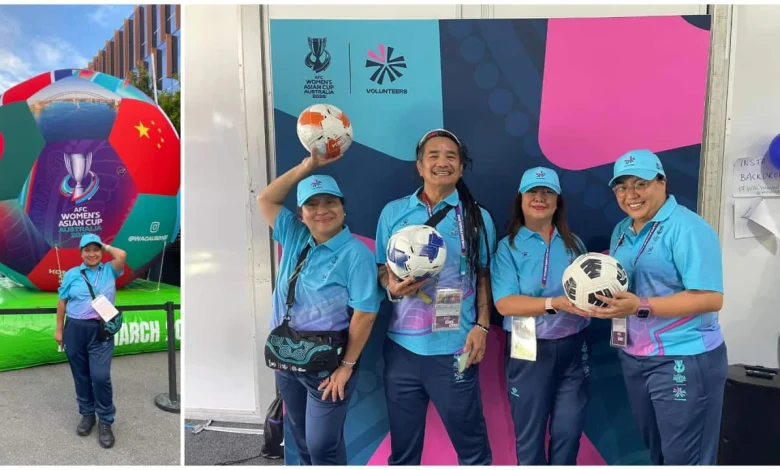
The afc women’s asian cup games have become a study in contrast: vibrant community mobilisation across Australian cities while the Philippine national team struggles to translate support into results on the field. A 3-0 defeat to South Korea in front of 2, 332 spectators at Gold Coast Stadium and earlier losses have left the Filipinas facing an uncertain path to the quarterfinals.
Are community marches and volunteers changing the momentum at the Afc Women’s Asian Cup Games?
Verified facts: Shirley Nield, President of the Gold Coast Filipino-Australian Cultural Ensemble, stepped into a volunteer leadership role to organise community support and flag-bearing duties for the Philippine national team. Filipino communities staged public marches — a “March to Match” in Gold Coast and a “Fan March” in Perth — timed with fixtures that included a match against the Matildas. Filipinas were welcomed by the Pinoy community in Western Australia ahead of their first match against Australia.
Analysis: The scale and organisation of fan mobilisation are indisputable. Leadership by named community figures and coordinated marches demonstrate sustained grassroots energy. Yet the direct effect of that support on competitive outcomes is not evident in match results. The team’s schedule and the communities’ events align, but the on-field record through the tournament’s early rounds shows a persistent performance gap that cannot be bridged by crowd presence alone.
What do the match facts and team statements reveal?
Verified facts: South Korea defeated the Philippines 3-0 at Gold Coast Stadium. South Korea opened their tournament with a 3-0 win over Iran and then beat the Filipinas to accumulate six points heading into a final group clash with Australia in Sydney on Sunday (ET). The Koreans held 77% possession in the match against the Filipinas. Goal sequence: Jeon Yu-Gyeong scored the opener 11 minutes into the game; Park Soo-Jeong doubled the lead four minutes later. In the 55th minute, Son Hwa-Yeon’s attempt was tipped over by Olivia McDaniel; from the resulting corner, McDaniel failed to clear and Mun Eun-Ju finished from close range. Carleigh Frilles tested South Korea goalkeeper Kim Min-Jung shortly before halftime. Mark Torcaso’s Filipino side were characterized as not matching the Koreans’ intensity and control. Coach Shin Sang-Woo said the opening matches of the tournament went plan, praised his younger players’ performances and expressed confidence ahead of the Australia match; he also noted he was not head coach when his side beat Australia four years earlier.
Analysis: The match details point to structural issues in possession retention and defensive transitions for the Filipinas. Two quick goals inside the opening 15 minutes left the team chasing the game, and a decisive set-piece sequence in the second half underlined vulnerabilities in aerial or physical duels at critical moments. The possession differential of 77% is an objective marker of control and territorial dominance by South Korea; it aligns with the scoring pattern and with the description of the Filipinas struggling to find footholds during the match.
What accountability and choices follow from these facts?
Verified facts: After the South Korea result, Philippines remain reliant on qualifying as one of the best-ranked third-placed teams if they are to reach the quarterfinals. Torcaso’s team will play Iran in their final group match on Sunday (ET).
Analysis and recommendation: The evidence frames two urgent priorities. First, technical adjustments are required — improving early-game defensive organisation and set-piece responses to prevent quick concession of goals and late turning points. Second, transparency around selection, preparation and in-tournament adjustments is necessary so stakeholders — players, coaches and the supporting community — understand the pathway forward. Community mobilisation has created a platform of support that can be leveraged for pressure-free preparation and morale, but it does not substitute for targeted on-field reforms.
Final note: The afc women’s asian cup games spotlight a persistent contradiction: grassroots enthusiasm, led by named volunteers and organised marches, has elevated visibility for the Filipinas, yet match-level metrics and outcomes reveal gaps that must be addressed if that support is to translate into durable tournament success.