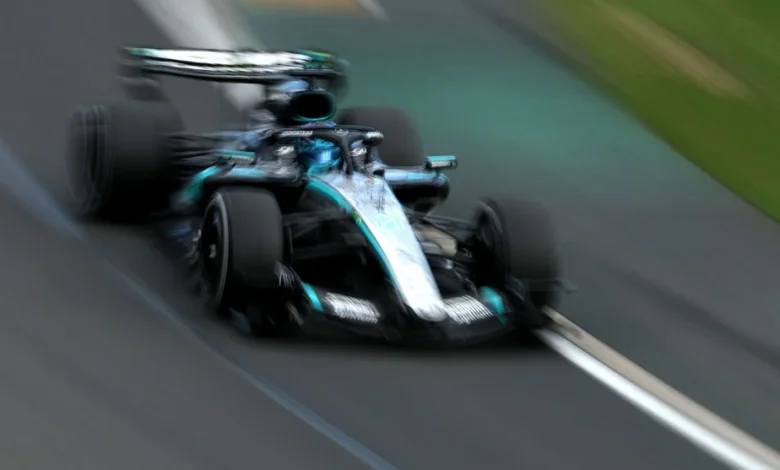
leclerc finished third as George Russell converted pole position into victory and Kimi Antonelli completed a Mercedes one-two at the Australian Grand Prix in Melbourne, a race that underlined how the new technical rules and the fresh power unit have opened a volatile opening chapter for the season.
Why Melbourne is an inflection point
Melbourne served as the first competitive test of the season’s regulatory reset and new power unit introduction. Mercedes showed clear pace from qualifying through the race, with Russell converting a one-stop strategy executed during a Virtual Safety Car (VSC) phase into a win. The race featured a high attrition rate: Oscar Piastri failed to take the start after losing control on the formation lap, several competitors retired mid-race, and Aston Martin withdrew citing vibrations from the Honda power unit that raised both reliability and safety concerns. The field now heads to Shanghai for the next round, which will feature the season’s first sprint format.
What Happens When Leclerc Battles Mercedes?
The early duels in Melbourne framed the season-level rivalry. Charles Leclerc moved into the lead at the start and traded positions with Russell during the first ten laps, showing Ferrari could challenge outright pace. Ferrari delayed stops during the VSC while Mercedes pitted and gained track position, a strategic swing that allowed Russell to reclaim and keep the lead. The Monégasque Charles Leclerc and the British Lewis Hamilton, of Ferrari, as well as the British Lando Norris, of McLaren, completed the top five behind the two Mercedes. Max Verstappen, who started deep on the grid, recovered to sixth. These on-track permutations—starting position swings, pit-timing decisions under VSC, and the new technical package—were decisive in Melbourne.
Scenarios: How the Australian Grand Prix Could Shape the Weeks Ahead
- Best case: Mercedes capitalizes on pace and strategy consistency; teams adapt to the new power unit and regulation set with few reliability surprises. The field tightens as rivals decode setup windows and pit timing.
- Most likely: Teams continue to see mixed results as setups and power-unit integration evolve. Strategic calls under safety interventions remain decisive, producing more position swings and occasional surprise podiums while reliability issues persist for a subset of cars.
- Most challenging: Key teams face ongoing reliability or safety problems with the new power unit, forcing withdrawals or limited running and causing a fractured championship fight skewed by availability rather than outright performance.
These scenarios are anchored in Melbourne facts: Mercedes’ qualifying and race pace; the effective one-stop under a VSC; multiple retirements including a non-start by Piastri; Aston Martin’s announced vibration and safety concerns; and the rapid recovery drives from drivers who started poorly.
Who Gains and Who Risks Falling Behind?
Immediate winners from Melbourne are Mercedes and its drivers, who converted qualifying strength into race control. The Ferraris showed sustained competitiveness in the opening stints but paid a strategic price during the VSC phase. Recoveries by drivers starting deep illustrate that the new era can still reward recovery drives. Teams already flagged with power-unit problems face the clearest short-term setback: Aston Martin’s inability to finish and stated safety concerns put it in the most precarious spot. Drivers who failed to start or retired early—most notably Oscar Piastri—lost a critical opportunity to gather data under the new rules.
Melbourne provided a concentrated set of signals: Mercedes’ early ascendancy, strategic importance of VSC timing, the tangible impact of the new power unit on reliability and safety, and the prospect of fluctuating order as teams head to Shanghai. With the grid already reporting a mix of pace and fragility, the championship picture remains open — and leclerc’s podium in Melbourne is a timely reminder that the battle for the top positions will be contested every session on track.