Under the night lights at Albert Park Circuit in Melbourne, the paddock hummed with a new sound and unfamiliar liveries — and when Gabriel Bortoleto clipped into a clean lap, audi f1 suddenly felt less like a future project and more like a present contender. The debut weekend delivered a top-10 qualifying slot, mechanical heartache and a portrait of a team still assembling its parts in real time.
What did Audi F1 achieve in Melbourne?
Short answer: a top-10 start and signs of midfield competitiveness, tempered by reliability problems. Gabriel Bortoleto took P10 in Q1 and repeated that performance in Q2, only to lose the chance for Q3 when a drive issue left him coasting back to the pit lane and unable to complete another run; he ultimately started 10th. His teammate, Nico Hülkenberg, backed him up by qualifying 11th.
“I just spent half a lap trying to engage gears, ” said Gabriel Bortoleto, driver for Audi Revolut F1 Team. “My gears were failing. The first time we had a reliability problem this weekend. Still strong, qualifying Q3 first time with Audi. I didn’t expect that. I don’t think many people did, and such a shame I couldn’t fight for more in quali, because I generally think that we had potential. “
“Positive, very positive, actually, ” added Nico Hülkenberg, driver for Audi Revolut F1 Team. He described a hectic session in which he dealt with multiple issues but managed a single clean lap that placed him where he was in the order. Together, the two drivers produced a statement: the car could run in the midfield and push for results when it held together.
How did the team build its engine and car?
The performance in Melbourne reflected years of transition. The former Sauber team went through a gradual restructuring over the past three seasons after being purchased by Audi, and that process involved management changes and a shift away from a long-standing customer relationship: for 16 seasons Sauber had used customer “plug and play” Ferrari engines and gearboxes.
Audi set itself the task of building a power unit from scratch at its Neuberg facility, together with a transmission, and marrying those elements to the Sauber chassis. The work was substantial; even established manufacturers have found the 2026 regulations challenging. In that context, an Audi F1 power unit not having run on track until January makes the Melbourne result more notable.
“I think the way we ran in winter testing, which was extremely conservative, sort of suggested to us it wasn’t looking too bad, ” said technical director James Key. He paid particular tribute to Neuberg for progressing from no track data to a position where the power unit could be run reliably in the opening race weekend, while stressing that more work remains to close performance gaps.
What comes next for the team?
The immediate target is simple and pragmatic: finish the race with at least one car and, if possible, score points. The longer-term project is explicit in the team’s planning and public statements. Gernot Döllner, CEO of AUDI AG, framed the debut as the start of a new chapter and highlighted the program’s wider ambitions: the entry into the sport is intended as a long-term commitment, with a goal to be in a position to compete for world championship titles from 2030 onward.
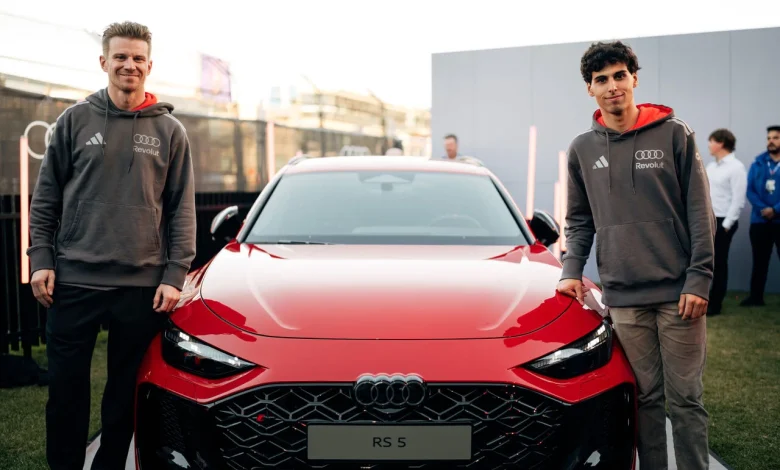
Off track, the team has used its presence in Melbourne to connect the brand and racing effort: an RS 5 was unveiled at the circuit, historic machines were displayed, and the team hosted public activations and career-focused initiatives. Allan McNish, responsible for the Audi Driver Development Programme, was on hand as part of that wider launch, linking the competitive project to a cultural and commercial push.
Back at Albert Park, the sight of mechanics crowded around transmission housings and engineers poring over telemetry came full circle: a team that has rebuilt its identity over three seasons, tested a brand-new power unit on the track for the first time this year and, in its first qualifying sessions, showed both the spark of potential and the blunt reality of mechanical fragility. The weekend left a clear question hanging over the grid — can the people who built this car turn that P10 into consistent points finishes? The answer will be chased, lap by lap, as audi f1 moves from surprised debut to steady contender.